Wednesday, May 25, 2011

On olives, longevity and litigiousness


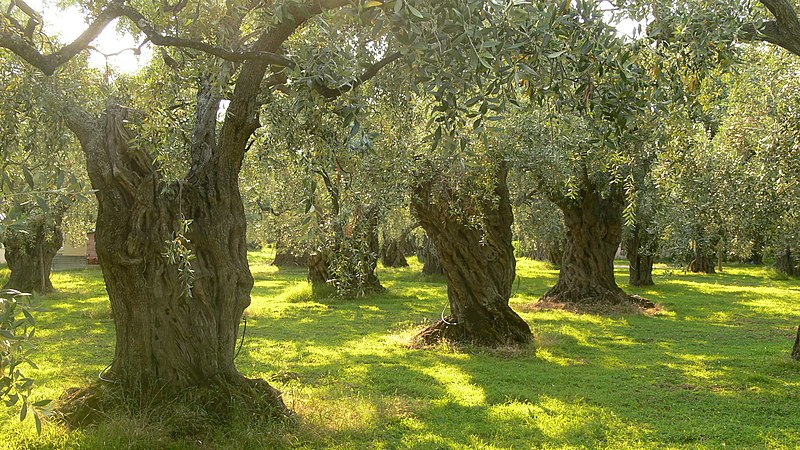
There's something serious about olive-trees. Gnarled, ironhard, producing grey-green leaves and succulent salty fruits often for centuries on end, they are frankly a bit special. Nowadays there is a connoisseur trade in ancient olive-trees, symbols of a timeless rustic lifestyle, old masters with bark on them.

In Greece olive oil was essential as a staple crop for local consumption and export, as it still is, and in Athens the trees were under regular inspection. Amongst them the sacred olive-trees were especially precious, as the un-named defendant of a lawsuit in around 395BC knew well. Scattered across the farms of Attica, some of them little more than stumps with fences around them, these trees were thought to descend from one presented to the infant city by Athene herself and were protected by religious law.

We know of the case, though not its outcome, from the speech written for the defendant by the professional speechwriter Lysias. The piece of land in dispute had once been confiscated from a discredited oligarch and since then resold to the defendant, who had proceded to rent it out to a series of tenants. The accusation had been made, for reasons unknown, that he had uprooted and removed a sacred olive stump from his land. This could have resulted in his exile and the confiscation of his property by the state, so the man's defence was robust.

The speech touches on several aspects of Athenian society. First the defendant denies that there had ever been this olive-stump on his land in the first place, then blames the Peloponnesian War, in which the Spartan army had devastated olive-trees, which take a generation to grow large enough to bear fruit, as a scorched-earth tactic. Why, he went on, should he do anything so stupid as to destroy a sacred object in broad daylight, when anyone could report him? Even if he had managed to keep it secret, his own slaves could have blackmailed him for ever after. In any case, there were no other olives on that piece of land and its absence would have been obvious for all to see. He has offered those same slaves for torture - a common tactic implying an absence of anything to hide - but his generous offer was spurned by his accuser, who dismissed slave evidence as unreliable.

The details go on, but the speaker ends with a familiar appeal. Since Athenian law concentrated not purely on the case but on the characters of the plaintiff and defendant, he plays up his services to the city - financing a trireme for the navy, supplying funds for a play at one of the dramatic festivals (themselves semi-religious affairs) - and piles on the sack-cloth and ashes. How unfortunate I would be, he says, driven into exile, torn from my children, leaving my mother destitute and my house deserted!

All about a tree-stump. But in the Athenian context it was a matter of enormous importance, bringing together religious belief, social and political jealousy, the master-slave relationship, past history, civic identity and the love of going to law. Being rich enough to equip a warship meant that this defendant was also rich enough to hire Lysias, but he had to deliver every word of the speech himself. On the Hill of Ares, before the King-Arkhon and jurors, with the prospect of exile in front of him, this unknown man was on his own.

It's in this context that I wrote A Pig in the Roses, which includes a trial held in this court - full details are at http://peteralanorchard.net/, along with my children's story The House in Athene Street, my short story collection Voices in the Past and the latest Anglo-Saxon story, Starlight.

STOP PRESS: A Pig in the Roses is a miserly $1.99 this week at Smashwords if you use coupon ST73U (offer ends on June 3).

Peter
http://www.peteralanorchard.net/
http://twitter.com/peteraorchard

Monday, May 23, 2011

Regency Romance and Cats


Grace Elliot - cat lover and romantic


I recently met another English historical novelist on Facebook - Grace Elliot, and was interested to discover that by day she is a vet.
I interviewed her to find out how historical romance and the world of science and animal medicine might meet, as they seem strange bedfellows. Although people might think it a little odd, incongruous even – evidence based science versus flights of imagination - Grace expained that the two very different occupations make perfect companions.

Grace said:
"Vetting is an emotionally draining job and as a professional I must hold my feelings in check, whereas writing is about expression and helping others to experience emotion. After a demanding day’s work, writing is my therapy; a completely different skill that helps me leave the pressures of work behind. Immersing myself in plot and description has taught me how to switch off from the real world and escape for a while to a time of satins and silks, where real men rode stallions and a woman with opinions was considered rebellious.

Deborah: What made you embark upon writing historical romance?


"Until five years ago, despite being an avid reader, I was prejudiced against the romance genre. Mistakenly, I had the impression romance was light weight fiction, a flimsy read for ‘losers’ (Before you throw things at the screen, let me say that it took me reading Prince Charming by Gaelen Foley, to see how utterly wrong I was.) In a eureka moment I realized there was enough pressure and angst in the real world, to make the escapism of reading historicals a sensible way of staying sane.
I describe myself as a ‘guerrilla’ writer. As a wife, mother and working woman, I take advantage of every spare moment and ruthlessly hunt out moments that would otherwise be lost to watching TV soaps (or doing housework!), to spend them writing instead."

Deborah:Tell us about your Regency debut novel, "A Dead Man's Debt" and what inspired you to write that particular story.

‘A Dead Man’s Debt’ is a story of blackmail, duty and unexpected love. I wanted to explore how an independent minded woman (Celeste Armitage) would fair in the Regency world of etiquette and restrictions. As a foil to unconventional Celeste, the hero, Lord Ranulf Charing, is a man hamstrung by duty who subjugates his own desires to protect the family’s reputation.
The inspiration behind the story for ‘A Dead Man’s Debt’ sprang from a portrait of the young Emma Hart (who later married Lord Hamilton and became Horatio Nelson’s mistress) The painting by George Romney shows an innocent yet lush young woman, scantily clad with a hint of bosom, brazenly staring out of the canvas with an allure that is quite hypnotic. It struck me as sensational for an 18th century work, that the sitter was not prim, proper, straight backed and starchy. At the time the picture must have been utterly scandalous.
So what if the woman in the portrait wanted to shock? From this, Lady Sophia Cadnum, (Ranulf’s mother) was born; a woman used as a brood mare, who resented her children. What if years later, this same portrait threatened to disgrace her son, forcing him to do the very thing she resented and marry from duty…"


Thanks Grace for taking the time to talk to me. You can find out more about Grace at
http://www.graceelliot-author.blogspot.com/
‘A Dead Man’s Debt’ is available on Amazon, Smashwords, Fictionwise as well as other eBook stores.


For more about Deborah -


Friday, May 20, 2011

Macaroni! And I Don't Mean Pasta


Every era has its extremes of dress. The Sixties had micro-minis. The Roaring Twenties had flapper dresses. Georgian England had macaronis.

Although today most fashion is geared toward women, the macaronis were men. "Macaroni" or "maccaroni", from the Italian word, maccherone, which literally means a boorish fool, described the height, and often the extremes, of male fashion in the mid 1700's.

Brought from the continent by idle young men on their Grand Tour, macaroni dress took the standard male wardrobe of wig, coat, waistcoat, breeches, stockings and shoes to absurd lengths. The express purpose was to shock people. And shock they did. Coats were tight. Huge buttons decorated short waistcoats. Narrow, dainty shoes sported buckles almost larger than they were. And copious amounts of lace, ribbon, ruffles and whatever other outrageous decoration took the wearer's fancy trimmed the outfits, with everything in gaudy colors and showy fabrics like silks and satins.

Perhaps the most obvious feature of macaroni fashion was the wig. As in these pictures, macaroni wigs were excessively elaborate and tall, and, by contrast, crowned with a tiny hat that literally could be removed only with the point of a sword.

Macaroni clothing was never mainstream. While the fashion provided a wealth of fodder for caricatures, most people laughed it off as the blatant posturing of immature males.

The word remains in the vocabulary, although today its definition has constricted to pasta. But several vestiges of its original meaning linger to confound us.

The Macaroni Penguin, a large crested penguin native to Antarctica and the southern tip of South America, owes its name to the Georgian macaronis. English mariners in the Falkland Islands, off the coast of Chile, named the bird. With its flamboyant, colored head feathers, the penguin reminded the sailors of the macaronis back home.

And Yankee Doodle "stuck a feather in his hat and called it macaroni".

Next time, Yankee Doodle and macaronis.

Thank you all,
Linda
Welcome to My World of Historical Hilarity!
http://www.lindabanche.com

Saturday, May 14, 2011

A Rake's Progress Through Literature

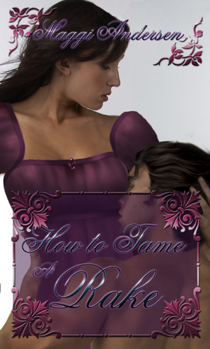
 HOW TO TAME A RAKE
Blake, Viscount Dangerfield must marry Wilhelmina Corbet, his cousin three times removed, or lose his inheritance. It is a codicil in his despised father’s will. That he must marry at eight and twenty, when life is just as he likes it comes as a shock, but to marry a drab hoyden just out of the schoolroom,  a hayseed from Northumberland, is deplorable. The last time he saw her she had her hair down and was climbing a tree.
When Willy comes to stay at Hawkeswood, she proves to be everything Blake feared and more, riding his father’s untamed horse and rescuing a fox cub with a broken leg. Blake grits his teeth and decides that after they marry, he will leave her in the country to raise his child, while he returns to London, where his men friends and the ladies of the opera know how to live.
http://www.amazon.com/How-Tame-Rake-ebook/dp/B003XYETXO/ref=sr_1_1?ie=UTF8&m=A24IB90LPZJ0BS&s=books&qid=1305336890&sr=1-1

RAKE is short for rakehell, a historic term for a man of immoral conduct, who uses women heartlessly for his own ends.
In Restoration English comedy  (1660-1688) the rake was a carefree, witty, sexually irresistible aristocrat. The merry gang of courtiers, of which the 2nd Duke of Buckingham and the Earl of Dorset were a part,  combined riotous living with intellectual pursuits and patronage of the arts. After the end of Charles II rein, however, the rake took a dive into squalor. His fate was  sealed in debtor's prison, venereal disease or in the case of William Hogarth's A Rake's Progress, insanity in Bedlam.
In 18th Century England, a rake was seen to be someone who wasted his inherited fortune on gambling, wine and women incurring vast debts. He was also a man who seduced innocent young women and left them pregnant.
 This thoroughly unattractive rakehell has been turned into a brooding hero by authors such as the Bronte sisters, and later, Georgette Heyer and Barbara Cartland. In modern historical romances, he continues to be redeemed by a feisty heroine.
My three novellas are available in e-book and are coming to print in an anthology, Regency Bucks soon.
HOW TO TAME A RAKE
STIRRING PASSIONS
LOVE AND WAR
http://www.maggiandersenauthor.com

Wednesday, May 11, 2011

Free historical short story


My historical short story, A New Dawn, is now available for FREE on my publisher's website.


Burb

Escaping a brutal father, Briony runs to James, the man she loves.
With his family’s blessing, they marry and prepare for a new life in a new country – America.
A wedding gift of two tickets to travel on an ocean liner is a wonderful surprise.
Full of anticipation and hope, they set sail.
Only, fate has sent them a challenge that tests, not just their strength and love, but their very survival.

Sunday, May 1, 2011

Ancient Greece for mystery-lovers... and for children

As I wrote my ancient Athens mystery, A Pig in the Roses, I grew rather fond of the hero's family: Diokles himself, the determined but harrassed merchant with a lot on his mind; his wife Helike, a bustling country girl making a go of city life; their young daughter Xanthippe, bright-eyed and curly-haired, desperate to achieve some grown up dignity in spite of the activities of her much younger brother Euphemos, a self-absorbed bundle of chaos.

One of the elements I tried to maintain in what is in places quite a dark book - it contains several deaths and some murky social undertones - was the picture of a normal family coping with a desperate situation while trying to maintain their normality. There was no criminal investigation in ancient Greece, and it was the duty of the family to pursue an offender and bring cases to court, so Diokles is knocked sideways when his wife's uncle Makron, earning a living in town as a stonemason and living with his hypochondriac ex-slave mistress in Diokles' house, is hauled before a magistrate and accused of murdering his brother, an elderly farmer.

The book is set in 431 BC, at the beginning of the Peloponnesian War between Athens and Sparta, a time of country folk abandoning their villages to cram themselves into every available living-space in Athens, of tensions and divided loyalties. The chain of events involves several murders and all the family becomes involved. Diokles bears the brunt of it, with his persistence, trading contacts and tendency to jump in with both feet, but Helike makes important contributions through her dealings with other wives and spiky encounters with another key figure, Melitta, a young Samian courtesan.

Xanthippe and Euphemos, too, have their parts to play, and it was involving the children which made me think there was a story for young readers to be made out of the family, or characters based on them. The result was The House on Athene Street, a 10,000-worder for the 9-12s. This is a much more straightforward plot. Those who read both books will recognise the family, but most of the names are changed and the hero is an elder brother, the 13-year-old Hermippos, created for the children's story. Athene Street keeps the social context, ditches the politics and goes for a kidnap and chase plot involving the youngest child, the Egyptian girl Tiya, who keeps a perfume-stall, Tiya's uncle Wenamun, a length of rope, a pottery horse and rider and a stroppy red-head up a tree. Hermippos, naturally, saves the day, with lessons learnt about loyalty, bravery, co-operation, difference and the persistence of small brothers.

The difference in writing between the two? Not much, really. The Pig is much the more complex and has elements which children will not (probably should not) follow, but still qualifies as a 'cozy'. The parents are seen in a protective role in Athene Street, with the children to the front of the action, and nobody comes to much harm except the villain's dignity.

Both books are Smashwords titles, are available in all the usual formats and are scheduled to appear at the main ebook sellers as part of Smashwords' premium programme. All the details, summaries, buy links and excerpts are on my website, http://www.peteralanorchard.net/, and my Smashwords page.

Saturday, April 23, 2011

Never let the facts get in the way of a good story

A very fanciful news item made the rounds a few weeks ago: the discovery of the first gay caveman. When I saw the story, I figured the headline writers were just being salacious, as such writers are. However, the "gay caveman" was the conclusion of the lead archeologist.

A few weeks later, a similar news item on the discovery of nine skeletons, mostly children, led to the lead: “The screams must have been unbearable.” The story goes onto say, “Dozens, maybe even hundreds, of women, babies and children were strangled, stripped of possessions and tossed into the ditch that encircled the fort.” The writer based the beginning entirely on supposition.

My former city editor used to say, “Never let the facts get in the way of a good story.” He was being sarcastic, of course, and I can only imagine his words—most of them unprintable—if either of these two news stories came across his desk.

The facts, in both cases, comprise of skeletons, and the items the bodies were or weren’t buried with. In the first case, a man from the Corded Ware culture was found buried in a manner previously only seen in graves for females. According to the article, the society, sometimes called the Battle Ax or the Single Grave culture, typically buried people with gender-specific tools—weapons for men, pots and jugs for women.

So what does this mean? Apparently that the man was gay. Lead archeologist Kamila Remisova Vesinova said, “From history and ethnology, we know that people from this period took funeral rites very seriously so it is highly unlikely that this positioning was a mistake. Far more likely is that he was a man with a different sexual orientation, homosexual or transsexual.”

Far more likely? Far more likely that the archeologist either is looking for publicity or she forgot to check her biases at the door. Almost all societies did—and do—take burial rites seriously.

I’m not saying that the man in question wasn’t gay. The fact is, we have no idea who he was, what he was, or why he was buried as a woman. As a novelist, I could spin quite a tale about how he came to be buried in such a manner. But that's the fun part of writing fiction. Nonfiction writers and journalists need to stick to the facts even as they questions them.

In the second story, we have no idea why the three adults, teenager, toddler and four infants ended up in a mass grave minus any possessions. The archeologist in charge believes it could be—could be—possible that more skeletons will be found in the ancient ditch, all victims of intertribal fighting during Britain’s Iron Age. While the theory is solid, “could be” is a long way from unbearable screams and unheeded pleas for mercy.

Am I the only one bothered by such lapses in academic and journalistic objectivity?

Wednesday, April 20, 2011

Interview: Diane Scott Lewis

Today at Historical Belles and Beaus we welcome historical author Diane Scott Lewis.

Diane has a new historical release, Elysium, a story about Napoleon and his exile on the island of St Helena and the people who went with him, including the delightful Amélie Perrault.

Diane, what inspired you to write this book?

Anne, thank you for having me here. When I wrote my first novel, The False Light, in my original ending (now deleted) I had my heroine travel to St. Helena to visit her old friend, Napoleon. I started to research his time on this rugged, remote, island, and became fascinated by his character, the politics that trapped him there, the people who traveled with him and the possibility he may have been poisoned. The island is intriguing with unusual flora and fauna and topographical features—a character in itself.

I decided I needed to write an entire book with Napoleon as a main character. I also created my heroine, Amélie, a strong-willed woman—the fictional daughter of the head chef—who would rally his soul and love him for himself. She suspects an assassin has been sent with their entourage to murder Napoleon, and ferrets out the culprit.

How did you choose the title?

In my research, Napoleon’s chamberlain—who took dictation and wrote the ex-emperor’s memoires—said he spoke like a spirit on the Elysian Fields. I chose the shorter, Elysium, which in Greek mythology is a “delightful paradise where the gods are sent to die.” Of course, it’s also very tongue-in-cheek, because St. Helena was far from delightful for Napoleon. To Amélie it was her paradise because she found love.

What is your writing process?

I rise early, because mornings are my best time with the most energy. I’m afraid I write by the seat-of-my-pants; in other words, I don’t follow an outline. All my early novels were conceived this way, just throwing ideas onto the computer screen, then researching as needed. This process led to long, rambling stories without enough focus. The False Light and Elysium were first created over ten years ago, and I had to trim them down after I learned about plot, theme and structure. From now on I plan to be more disciplined and at least have some idea where I need the story to go.

How hard, or easy, was the research for Elysium?

In the time before the internet, I spent hours at the Library of Congress researching books on Napoleon’s final exile. Some of the books were actually written during his time there, one in 1817, a marvellous resource. I purchased books recommended, such as historian Octave Aubry’s detailed Sainte-Hélène. I read books written by Napoleon’s valets who suffered with him on the island. I spoke regularly to a Napoleonic scholar who had visited St. Helena several times.
The research wasn’t easy, but I enjoyed the process.

Did you learn anything from writing and publishing this book? What?

I learned so much, I could have written another novel about the characters on St. Helena. In fact, I had to delete actual historical personages from the story because it grew too huge. Through my careful research, I learned that Napoleon wasn’t at all the extreme villain many have portrayed him as, and I tried to show that in this novel. I’m sure I’ll hear disparagement—as I did in one contest—over my effort to make him a rounded human being who desired love as we all do. I also discovered that many escape schemes were formulated to rescue the ex-emperor from his exile. I played on this theme in Elysium. Could Napoleon have escaped? In trying to publish Elysium, I found that mainstream agents and editors weren’t comfortable with me fictionalizing Napoleon, so I chose an innovative small press.

What is your favourite time of year?

The spring. I’m originally from California, where we had mild winters. Now I live in Virginia where it actually, gasp, snows! I run my heating bill up so high just to keep warm. When spring arrives, like now, and the flowers bud, the birds sing, I can stand on my front porch and not shiver, it’s like a reprieve from the Arctic.

What are you working on now?

Another historical—my favorite genre—Ring of Stone. The story is set in the late eighteenth century in Cornwall, England. My heroine, Rose Gwynn, aspires to practice as a physician, uncovers evil village secrets and finds love in the least expected place.

Do you have another release coming out soon?

I hope to have my sequel to The False Light, Without Refuge, out early next year.

Thank you for visiting us, Diane.

Elysium Blurb:
In 1815, Napoleon Bonaparte is exiled to remote Saint Helena. Amélie Perrault, the daughter of Napoleon’s head chef, is determined through healing herbs to rise in importance and is fascinated with the fallen French Emperor. After her beautiful singing voice catches Napoleon’s attention, she is drawn into his clash with their British jailers, court intrigues and a burgeoning sexual attraction.
Napoleon is soured on love. Since political maneuvers fail to release him, he desires freedom no matter the risk. Amélie suspects someone in their entourage is poisoning the emperor. Now she must uncover the culprit and join in Napoleon’s last great battle plan, a dangerous escape.

Elysium can be purchased here:
http://www.amazon.com/s/ref=nb_sb_noss?url=search-alias%3Dstripbooks&field-keywords=elysium+diane+scott+lewis

Or visit Diane’s website: http://www.dianescottlewis.com/

Friday, April 15, 2011

The Smuggler Squire


During the English Civil War, a new tax on domestic consumption, excise, was levied by Parliament to pay for the war. By 1660, this applied to items like chocolate, coffee, tea, beer, cider and spirits. Also in this year, all exports of wool was forbidden to promote the English wool trade, the penalty being the gallows for transgressors, or ‘owlers’ as they were called due to the fact they worked at night. In 1688, the excise was extended to include essentials such as salt, leather, and soap.

Collecting taxes was a cumbersome and inefficient process with a hostile population where communication and transport links were slow and inefficient, so whole communities tended to become involved in the 'free-trade', as it was euphemistically known. The farm labourer helped carry goods inland; the parson bought cheap tea and wine; the local squire lent his horses for transport; the wealthy merchant obtained cut-price supplies of silks and lace; and at the very pinnacle of society, members of the gentry conducted foreign business through intermediaries involved in smuggling. In the West Country, some houses would have a bottle bottom set in the plaster below a gable end of the house to indicate the owners were smugger sympathisers.

Whilst researching 17th Century smuggling in the Exeter area, I came across a character named Thomas Coumbe, known as The Smuggler Squire. Born in Devon in 1620, he married a tall, auburn haired beauty named Bridget, who was much younger than himself and reputed to be a descendant of Sir Ralph de Blanchminster, a Cornish Knight who followed Richard Coeur de Lion on the Third Crusade.

Coumbe became a church warden in 1666, and grew very wealthy from his association with the smugglers at Bude on the North Devon coast, where signal flares could be seen by the smugglers at sea.

In the 17th Century, sand was used to break up the heavy loam of Devon before the employment of artificial manures. The Smuggling Squire made a weekly trip between Tavistock and Exeter on his sand cart, in which he hid tobacco, silk, brandy and wine.

According to old deeds, he owned land from "Sea to Sea", i.e. from Exeter on the South Devon coast to Bude on the north, a distance of 53 miles. He had a number of illegitimate children, to whom no doubt some of the farms were bequeathed. Described as:

a brown, hard, stern looking man with one blue eye, over the other he wore a patch having lost an eye in a duel, and regularly dressed in leather with a *bob wig.

How could I resist adding this colourful man to my story?

* The most popular undress wig was the shorter, bob wig originally worn by tradesman who could not afford the longer wigs. Bob wigs were also the standard wig worn by Protestant clergymen of the 17th Century

Wednesday, April 13, 2011

Historical Fiction Book Trailers - Guest Cynthia Neale talks about her trailer for "Norah"

I met Cynthia Neale in the historical fiction group on She Writes. Her debut novel, Norah, about an Irishwoman in 19th century New York is just out.

I was impressed by the fact she has a book trailer, so I asked her:
What made you decide to have a book trailer?

Cynthia: My publisher, Lucky Press, recommended doing a book trailer. She is very progressive and there are other Lucky Press authors with book trailers that I took a look at. And then I also went on She Writes and looked at book trailers. I felt that if done professionally, a book trailer can be a great marketing tool. I had shivers watching a couple of book trailers and wrote down the titles of the books to buy in the future.

Did you do it yourself, or did someone else do it for you? If the latter, what sort of discussions did you have about its content?

My friend's son, Nathan Sorrentino, is a student at Geneseo College in New York State and he created a video for a course that caught the attention of Google who asked him to do some work for them. They live in Rochester, NY and when I visited there in October, we had dinner and brainstormed what kind of trailer I would like. He would do it for the experience and as a friend and I would give him a "tip." We e-mailed back and forth for a couple of months. I wrote up the text and he gave me links to music downloads with a one-time use fee (minimal). He found some images himself in archival material and I sent him photos of landscapes in Ireland I had taken in 2008. Nathan understood the legal requirements and the technical aspects of making this video, but he also could fathom the heart of what I wanted to relay in the video. He advised doing some tweaks here and there. I edited the text a few times and sent it to my publisher who also did some tweaks on my texts. Nathan is a talented young man and anyone who would like him to do a book trailer, should contact him. His information is on the credits at the end of the trailer.

Where did you source the images for the trailer, and how did you go about finding the music?

The sources are listed in the credits of the trailer. I listened to a lot of the music on various sites. I have a lot of Irish music I listen to and dance to, but I didn't want to go about getting permission, etc. I had even thought of asking some musician friends to play for the video, but time was of the essence. It took quite a few hours for me to pick out just the right music for the video, but I felt quite pleased with deciding on the tunes I found. And the cost was only about $30.00!

What sort of feedback have you had about the trailer and has it raised interest in your book?

Since the trailer went up mid-January, there has been nearly 1500 hits and many positive comments. Comments from some people in other countries, including Ireland. As an American writer, I wanted to be delicate, but strong, about the subject of The Great Hunger. I was not born in Ireland and many of the Irish-born still have a good deal of angst over this event in their history. I found that it was necessary to include the background (my first book material) of An Gorta Mor to make it understood what was at stake for the Irish, and especially Norah McCabe, to have immigrated to a city such as New York. I have had positive feedback from the Irish-born and from everyone who has viewed the trailer. Now...for a screenwriter!
Thank you Cynthia. Very best of luck with "Norah.

Deborah's Review Norah is a story of a young immigrant woman battling hardship, poverty and prejudice in New York in the 1850's. It has obviously been lovingly researched. The portraits of Norah McCabe and her family are beautifully drawn, and we catch most of the character of Norah from the attitudes of her Mam and Da who want the best for her but are unable to understand just how far she wants to climb. Cynthia Neale is particularly good at getting inside the minds of her characters to understand their motivations, although this is her first novel for adults - previously she has written books for children.

Make no mistake, although at times the language is lyrical, this tells it like it was, grit and all. All the hard facts of life for an Irish immigrant are between these pages; poor housing, the bordellos, street fights, and the cut and thrust of the gang underworld. At a time when to be black made you a second-class citizen, the book raises the question of what forms a person's identity, particularly for a white minority such as the Irish in New York.
Da discusses black equality with Norah:

"We all feel inferior, Norah."
"We all feel inferior? The Irish? Or all human beings?"

At times this novel is rather documentary in style, and it is certainly not the usual run-of-the-mill historical, but I can highly recommend it as a slice of real life for anyone with an interest in this period of New York history, particularly those with family or connections to Ireland. 

                                                  ***

Fancy making your own book trailer? Here's how with the excellent article by Brenda Coulter.

http://www.gather.com/viewArticle.action?articleId=281474977019853
And if you already have a book trailer out, or know of a particularly good one, please let me know!

http://www.deborahswift.co.uk/
http://www.deborahswift.blogspot.com/

Tuesday, April 12, 2011

Romanticism ~ Its influences on Art and Literature

I thought I'd look back over the history of art and literature, to understand the influences which informed romanticism and later, romance novels
The Basics of Romantic Art - 1800-1860


CASPAR DAVID FRIEDRICH Wanderer above the Sea of Fog

Romanticism - or the Romantic Era, first appeared in the second half of the 18th Century. It was an artistic, literary and intellectual movement,  a reaction to the Industrial Revolution, and a revolt against the aristocratic social and political norms of the Age of Enlightenment. It was also a reaction against the scientific rationalization of nature.

The strong emotions of  horror, terror, awe and trepidation became an authentic source of aesthetic experience. When confronting nature, untamed and picturesque, it was called 'the sublime'. An example  is Percy Bysshe Shelley’s poem Mont Blanc - the awe and spirituality the mountain inspires:

The secret Strength of things


Which governs thought, and to the infinite dome

Of Heaven is as a law, inhabits thee!

And what were thou, and earth, and stars, and sea,

If to the human mind's imaginings

Silence and solitude were vacancy?

The Industrial Revolution took hold in the latter part of the 18th century, beginning in England and spreading to France and America. This revolution, which although more peaceful than the French Revolution, wasn’t entirely free of violence, and brought with it a new market economy, based on new technology. The machine began to replace human tools and animal power. Villages became urban centers drawing people from farms and the countryside to work in the new factories. Not yet regulated, men, women, and children worked fourteen hour shifts, going weeks without seeing the sunlight. Cities grew and became dirty and crowded, the poor living in squalor, the air polluted by soot from smokestacks.

There were those who looked back with nostalgia to a romantic vision of the days when people worked the land under a clear sky, using animals to draw the plough.

 Romantics rejected the philosophy of reason, turning instead to emotion, imagination, and intuition. A life filled with deep feeling, spirituality and free expression were seen as a way of dealing with the dehumanizing effects of industrialization. Human beings were infinite, with godlike potential.

This was reflected in poetry such as Wordsworth's Tintern Abbey:
Once again
Do I behold these steep and lofty cliffs,
That on a wild secluded scene impress
Thoughts of more deep seclusion; and connect
The landscape with the quiet of the sky.
The Chancel and Crossing of Tintern Abbey, Looking Towards the East Window, by JMW Turner, 1794. Tintern Abbey was a monastery founded in 1131 and rebuilt in the 13th century. Abandoned in 1536, it was left to decay for two centuries. Artist Joseph Mallord William Turner paid two visits to the site, and it inspired him to paint this piece which juxtaposes the smallness of man alongside and wildness of nature, the unstoppable power of which has reclaimed this man-made edifice. The haunting abbey was a popular muse for many Romantics


JMW TURNER
Turner was fascinated by the mood of nature, her ever changing effects. He was always sketching the clouds, the sky, and his natural surroundings. Turner was particularly fascinated with the power of the ocean and said that he had once asked to be lashed to the mast of a ship in order to “experience the drama” of a mighty storm at sea. Romantics believed that God’s presence was embodied in nature and evidence of His existence. Turner saw light as a divine emanation and played with it in pictures to evoke that truth


JOHN CONSTABLE
Art began to demand an emotional response from the viewer, and a nostalgic yearning for a rural, pastoral life, the stirrings of life’s mysteries and an awareness of the power and grandeur of nature.

Frenchman Eugene Delacroix Liberty Leading The People. Art of this period also depicted the romantic ideal of Nationalism

Source: Wikipedia
The Norton Anthology of Poetry
Sydney University

Part II coming soon: The Romantic Novel

Monday, April 11, 2011

Guest Abigail Reynolds: The Scandal of Eloping in Regency England


Linda Banche here. Today I welcome Abigail Reynolds and the latest book in her Pride and Prejudice Variations, What Would Mr. Darcy Do?. Since Lydia's supposed elopement with Wickham is the starting point of this Variation, Abigail tells us about the scandal involved in eloping during the Regency.

Leave a comment with your email address for a chance to win the copy of What Would Mr. Darcy Do? which Sourcebooks has generously provided. Abigail will select the winner. Check the comments to see who won, and how to contact me to claim your book. If I cannot contact the winner within a week of the selection, I will award the book to an alternate. Note, Sourcebooks can mail to USA and Canada addresses only.

I always ask the author to select the winner, but I haven't heard back from Abigail, so I'm making an executive decision. The winner is Peggy Gabriel! Peggy, if I don't hear from you by May 15, 2011, I will award your prize to an alternate.

Welcome back, Abigail!

All the regency romances notwithstanding, marriage in Regency England was in most cases a business arrangement, often entered into by the parents of the prospective bride and groom as a way to increase the family fortune and/or prestige. Husbands and wives often lived separate lives, with infidelity occurring on both sides. That doesn’t necessarily mean they were unhappy with their marriages; it was precisely what they’d always expected marriage to be like. Love and passion didn’t have a lot to do with it, but that didn’t mean love and passion didn’t exist.

Elopements were the result of love or passion without the family stamp of approval. Most young gentlemen didn’t have the remarkable luck to fall in love with a woman who would be acceptable to his parents as a bride or to his own sense of family duty. Gentlemen and ladies who were of age (over 21) could legally marry whoever they pleased whether their parents approved or not, but the family would shun the wedding and snub the bride. It would likely lead to significant family strife if not disinheriting. A minister who performed such a wedding could find his living endangered.

Elopement was a way out. A couple, even ones who weren’t of age, could go to Scotland, where they could be legally married. It didn’t even require a clergyman, only two witnesses. On the Old North Road, the first town over the border was Gretna Green, so that was the usual destination for eloping lovers. The blacksmith performed most of the weddings there, with his anvil serving as an altar. To this day, Gretna Green’s main business is weddings.

When the newly married couple returned home, they presented their family with a fait accompli. Often the families would try to make the best of a bad situation and pretend they approved in order to avoid the scandal associated with elopement. But there was no way to get around the fact that a couple who eloped had not only been disobedient to their parents and disloyal to their duty to their family, but they had also spent the better part of a week unchaperoned on their way to Scotland. A wedding ring couldn’t wash out the stain. A lady who eloped was considered something of a fallen woman.

The scandal also engulfed the family. It was a sign of ‘bad blood’; it made anyone else in the family a much poorer marriage prospect, and the family might well find themselves shunned. In A Pemberley Medley, my new book of short stories, there’s a variation where Elizabeth suffers that shunning to such a degree that she is left to adopt reckless plans. Families wanted to hush up elopements, and that’s why Elizabeth thought that Darcy would want nothing more to do with her after discovering her sister’s elopement. If he had in fact been concerned with maintaining a high social status, that likely would have been true. Fortunately for all of us, Darcy’s love proved stronger than his pride!

One interesting point that’s rarely discussed is Georgiana Darcy’s near-elopement with George Wickham. Had Darcy been unable to hush that up, Georgiana’s reputation would have been in shambles. But you’ll hear far more from me about that topic in the future since the new book I’m starting follows that path!

Thanks for inviting me!


WHAT WOULD MR. DARCY DO? BY ABIGAIL REYNOLDS
This sexy installment in the Pride and Prejudice Variations series explores one of the roads not taken in Jane Austen’s original. Before Darcy leaves the Lambton Inn after learning the scandalous news about Lydia and Wickham, he and Elizabeth declare their true feelings. Determined to give Darcy up rather than drag his name through the mud, Elizabeth will have to choose between what is right, and what she wants more than anything...

About the Author
Abigail Reynolds is a physician and a lifelong Jane Austen enthusiast. She began writing the Pride and Prejudice Variations series in 2001, and encouragement from fellow Austen fans convinced her to continue asking “What if…?” She lives with her husband and two teenage children in Madison, Wisconsin. For more information, please visit http://www.pemberleyvariations.com/ or http://www.austenauthors.com/.

Sunday, April 10, 2011

Review: WHAT WOULD MR. DARCY DO? by Abigail Reynolds


Note: Abigail Reynolds will guest blog here tomorrow, and give away a copy of What Would Mr. Darcy Do?

What Would Mr. Darcy Do?
by Abigail Reynolds is a fast-reading sensual and emotional tale of love conquering all despite supposedly insurmountable odds.

In this latest of Ms. Reynolds's Pemberley Variations, Darcy, instead of concealing his feelings at Lambton, proposes to Elizabeth after she tells him Lydia has run away with Wickham. Despite his proposal, Elizabeth convinces herself the disgrace to her family is too high for his love to overcome. She requests time to consider, while ultimately planning to refuse. With reluctance, he accepts her delay, and then hurries to London where he deals with Wickham.

When he returns, he presses her for her answer. Misunderstandings continue until both Darcy and Elizabeth each explain the behavior which has so confused and angered the other. Love so long suppressed comes to the rescue.

This relatively short (227 pages) account of Darcy's and Elizabeth's tortuous journey to understanding, love and passion is a delight to read. Both have suffered for their pride and prejudice, but the self-knowledge gained and the explanations given for misconstrued conduct make their love the sweeter. I especially enjoyed their negotiations in setting and resetting their wedding day. Elizabeth wants the wedding a week after Jane's and Bingley's. Darcy wants it sooner. Both are so eager, they finally fix on the day immediately after the other wedding.

Two weddings in a row and twice the marital bliss. Another wonderful Pemberley Variation from Abigail Reynolds.

Thank you all,
Linda
ARC provided by Sourcebooks

Monday, April 4, 2011

Fragonard's Stolen Kisses and Love Letters...

The Stolen Kiss, c. late 1780's
By Raine Miller

Do you ever use art as inspiration for your writing? I do. In fact it was a painting that got me started on my very first story. People have asked me about the paintings featured on my website, so I thought I'd share the one in my header image. I actually have this print on a canvas on the wall above my laptop. I used it for inspiration for a scene in a WIP where the hero, Colin, goes after Elle and gets exactly what he was after, thank you very much!


 The artist, Jean-Honoré Fragonard, (pronounced without the /d/ at the end) was a French painter whose work became all the rage for the wealthy art patrons of Louis XV's pleasure-loving, licentious court. Let’s face it, these people were all about the sex and this very tenet of the culture influenced what Fragonard painted: mostly scenes of love and voluptuousness. Even though his painting was considered scandalous, it remained hugely popular with the hedonists of the day. History lesson: Louis the 15th was the French king just before the one who lost his head in the French Revolution. So, the wild revelry was great while it lasted.
 
A Young Girl Reading, c. 1776

The Swing, 1767

The reading girl in the yellow dress is an image much copied and reprinted, so you may have seen it before. Another vastly popular painting is the one of the girl swinging while her lover checks under her skirts. Ahem, yes, those French boys were naughty that way. 


The lady composing what appears to be a secret letter is also inspiring. What scandalous prose has she written? We are left only to ponder. The last one is my favorite. Aptly named, The Bolt, we get a clear understanding of the urgency of the scene and why he’s in such a hurry. As a device for creating tension in writing, the sliding or latching of a bolt always works well.

The Bolt, 1778


The Love Letter, 1770
So what happened to Fragonard, you ask? Well, the French Revolution happened, that's what. And it cost him his private patrons (they got the axe, or guillotine as it were) and he decided it would be a good time to get the hell out of France himself. Fragonard didn't return to Paris until early in the 19th c. where he died in 1806, almost completely forgotten.

For a half century after that he was ignored, not even mentioned in the 1873 edition of History of Art. Reevaluation by later scholars have changed that though, confirming his position among the all-time masters of French painting and one whose works will continue to inspire this writer every time she sets out to work on her stories.

All best history lovers,
Raine

Raine Miller loves exploring history from most any time. She finds herself best entertained by writing fiction based on the truth of the past. You can learn more about her writing and upcoming book by stopping by her blog:

Raine Miller Romance~where history comes...unlaced
http://www.rainemiller.com/

Saturday, April 2, 2011

Everyone loves a Wedding

With everyone in England getting a day off for the Royal Wedding, weddings are very much in people's thoughts and minds.

In the seventeenth century there were several interesting customs that our Royal pair might like to take up once they are married.

Ball -money
The first is that it is usual for the gentry to bestow charitable largesse on the poor, and for the bride to give out "ball-money" to her former female companions to help them buy finery and so find a husband.

In 1604 Dudley Carlton writes about a court wedding and says:

"there was none of our accustomed forms omitted; of bride cakes, sops-in-wine, giving of gloves, laces and points.... and at night there was sewing into the sheet, casting of the bride's left hose, and twenty other petty sorceries."

Bride cakes were a tradition where a cake of wheat or barley symbolising fertility would be broken over the heads of the bride and groom.

Lace and points
The Exeter merchant John Hayne laid out £5 13s for ribbons, posies, favours and points at his wedding in 1635. Gloves are given to the ladies and to the bell-ringers. Gloves symbolise the joining of hands, or the hand of friendship when sent to friends who care unable to be at the ceremony.The bride herself usually goes bare-handed.

Public Bedding
In order to make sure the marriage is consummated it is the custom for the wedding party to accompany the couple to bed. The bed is decorated with ribbons and herbs and flowers  for the occasion - rosemary, myrtle (known as the herb of wedlock) and maiden's blush were common choices.

Sops-in-wine
The couple were then fortified for the night by a special posset made of wine and spices. I expect that alcohol might have been essential if most of your neighbours were to witness the act!

Stocking-throwing
When everyone crowds into the bedchamber there's a game played where the bride's garters are removed and the young men seize upon them to put in their hats as a trophy. Garters are traditionally blue as they are associated with the Virgin Mary.The bride's-maids carry the bride into the chamber and the groom is meanwhile undressed and put into a nightshirt elsewhere, with much rowdiness and lewd jesting. After the groom's-men bring him to the bed, the couple's stockings are handed out and the assembled company tries to throw the garments backwards over their shoulders to hit the couple.

"if the man's stockings thrown by the maids, fall upon the bridegroom's head it is a sign she will be quickly married herself and the same prognostic holds good for the woman's stockings thrown by a man."
from the diary of William Lawrence 1661

It is customary to wake the couple early next morning with loud music - usually a fiddle and drum, and for the neighbours to enquire whether "it is done" before the pair are allowed to make their sheepish escape.

The Royal Wedding will probably be more traditional than most - I shall watch with interest to see if any of these 17th century customs have been retained!

The wedding in this picture by Jan Steen of 1667 looks particularly riotous, the man in the foreground decidedly the worse for ale!

You can find out more about my books at www.deborahswift.blogspot.com/