I'm so excited to have Mistaken Bride, book 2 of my Bride series, up for discussion on February 15. What a fun way to wind up Valentine's day 2011! Come by at http://byob2011.blogspot.com/
In Indentured Bride, book 1 Jenna Matthews flees Virginia and joins up with a wagon train that it's participants call the "Bride Train" because of a group of mail order brides on their way to Adler Creek, Wyoming. Jenna plans to ditch the group of women as soon as she can, but her plan goes awry and she soon finds herself walking down the aisle with deputy sheriff, Brett Parker. Brett has his own set of secrets which may ultimately destroy their relationship.
In book 2, Brett's older brother, Kendrick, is on his way to Wyoming with the information that could save Jenna's life. When he arrives in St. Louis he comes upon one of the most notorious bank robbers of all time, Black Bette. Taking her into custody with plans to bring her to San Francisco to stand trial, Kendrick soon realizes he has his hands full -- with the right woman. Or is she?
Indentured Bride was originally intended to be a stand alone book until I caught glimpses of Kendrick and his life. He's a man of his time, but even then, he stands on the crevase of two worlds. On the one hand he is an urbane Washingtonian, an attorney and at the same time a United States Marshal. On the other, he has loved his time in rugged Wyoming of the 1860's. Women flock to the good looking lawman, but nothing much about them appeals to him. The simpering misses don't see him as a man, just someone to get their MRS. from. When he meets the woman he is certain is Black Bette his world is turned upside down. Suddenly all the rules he's lived by are turned around. I loved writing him and getting to know him.
Bette, has a bit of me inside of her -- her love of language. You'll see what I mean when you read Mistaken Bride.
If you aren't a fan of, or haven't read westerns, in many ways, while in the historical western romance genre, the characters could, I feel, exist in any time and any place. They just happen to live in the 1860's.
Mistaken Bride is available from (among other venues) Awe-struck (http://www.awe-struck.net/), All Romance Ebooks (http://www.allromanceebooks.com/) and Smashwords (pdf-ebooks.net/sample/40260/mistaken-bride); Mobi-pocket (http://www.mobipocket.com/en/eBooks/eBookDetails.asp?BookID=390486)
Showing posts with label Regan Taylor. Show all posts
Tuesday, February 8, 2011
Mistaken Bride is up for a book club discussion book just in time for Valentine's Day
Labels:
Mistaken Bride,
Regan Taylor
I am Miss Missy, Empress of the Universe, Daughter of Satan, but you can call me Your Majesty.
Sunday, January 23, 2011
Western Romance, My First Reading Love
Well, westerns and time travel. The advantage of a time travel is that you can go anywhere you want and I do love the ones that take me back to my westerns. I was a little apprehensive when it came time to write my own, but I couldn't resist.
The idea of mail order brides intrigued me and I have a thing about law men...probably comes from dating a former Marine who became a U.S. Marshal. Hmmm, ya think? But the idea intrigued me long before my own hottie came into my life.
A couple of years ago my thoughts wove around the idea of a mail order bride hiding from heinous crime and, since I love reading and writing romance, meeting the love of her life. That became Indentured Bride. Along the way of writing Brett and Jenna's story I "met" Brett's brothers and his best friend. Well it only made sense that Brett's brother, a Marshal, would be the one to bring the evidence to save his bride from the hangman's noose.
This week Mistaken Bride debuted at Awe-struck (http://www.awe-struck.net/)! Kendrick Parker, Brett's older brother begins his trek west with the evidence to clear Jenna. Along the way though, he encounters a woman he is sure is the devilish, perfectly evil Black Bette. Taking the woman who calls herself Amanda into custody he drags her along the trail. But as the wagon train makes way west, he begins to question the rightness of his decision.
Following that too potent kiss, even days later, each night Amanda, as she made up their bed, tried a different arrangement to keep Kendrick at a safe distance. She told herself she was relieved he rode out early each morning and kept away from the train during the day. He took his supper with the men and kept his distance while she taught the children each night. Oh she’d feel his gaze on her each night. But he never approached. When it was time to turn in he’d enter the wagon after she was snuggled under the blankets.
As usual, tonight, she told herself it was because he was a disreputable rogue that he had kidnapped her against her will and stolen her livelihood from her, not because she was starting to want more than those kisses, kisses she was finding herself missing. “Poor excuse for a gentleman,” she muttered under her breath. “I can’t wait to see his face when he finds out what a mistake he has made. Of course, brute that he is he probably won’t even apologize let alone make reparations.”
“You say something, Mandy?” he asked as he climbed up in the wagon and took in her latest design to keep her distance from him. He startled her because he entered before she had turned in.
“No. Until you listen to what I have to say about who I really am, I have nothing to say to you.”
“Fine. So, that line of pots gonna keep you warm when the chill sets in tonight?”
“What do you care if I’m warm or not?” She turned and in the soft glow saw he had shaved the beard that had been growing over the past few days. Whether it was for his own comfort or the fact that this morning, when she woke, chest to chest with him, she grumbled when his beard abraded her cheek she didn't know. And, she reminded herself, she didn't care. She was strong enough to admit to herself that the real reason she groused at the beard wasn’t so much because it scratched her. No, the problem was it felt good. Too good. His beard was soft and made her wonder what it would feel like to run her fingers through his hair and know she was doing it. Not the unconscious entwining she engaged in when he kissed her. She wanted the freedom to do it the way he often threaded his own fingers through it. The blond locks crested his collar—shorter than many men of her acquaintance wore. He also eschewed the thick sideburns most eastern men sported. Kendrick Parker was definitely his own man. A very potent man from what she’d observed as he rode, gathered wood for the fires and strode about the camp. Taller and broader than most, he was a force to be reckoned with.
And stubborn as a mule.
No. He was more stubborn than a mule. You could pull a mule or kick it in the posterior and it’d get moving. Kendrick Parker just dug in and stayed there till he was good and ready to move.
“I care. Don’t want you getting sick and holding things up or making anyone else ill.”
“You’re too kind. I’ll be just fine without you accosting me in my sleep.”
“I don’t,” he paused for emphasis, “accost you in your sleep.”
“You most certainly do.”
“Lady, I can’t stand what little touching I have to do for appearances. I’m not about to touch you when I don’t have to.”
“That’s why you constantly paw at me in public before you force your kisses on me.”
“I don’t paw at you. And if I do touch you, it’s purely for appearances.”
“Well good. Which side of the pots do you want?” She huffed, hands on her hips, her stance defiant. For all the good it did. The man still made her feel weak-kneed.
Lord help her if he ever realized how she would watch for him during the day, drinking in the sight of him mounted on his horse. Sometimes she imagined herself sitting between his thighs on the big stallion. He was always there to help out the other men on the trail setting up camp or bringing buckets of water for the women. When it came to the children, especially when one of the younger ones would get cranky after a long day on the trail, he always spoke to them with fondness in his tone. A few days out of St. Louis he had begun to allow one of the children to ride a bit with him while he rode scout. When it came to Amanda, at least outwardly he treated her as a gentleman would. It was becoming increasingly necessary for her to remind herself what a troublesome man he was.
The idea of mail order brides intrigued me and I have a thing about law men...probably comes from dating a former Marine who became a U.S. Marshal. Hmmm, ya think? But the idea intrigued me long before my own hottie came into my life.
A couple of years ago my thoughts wove around the idea of a mail order bride hiding from heinous crime and, since I love reading and writing romance, meeting the love of her life. That became Indentured Bride. Along the way of writing Brett and Jenna's story I "met" Brett's brothers and his best friend. Well it only made sense that Brett's brother, a Marshal, would be the one to bring the evidence to save his bride from the hangman's noose.
This week Mistaken Bride debuted at Awe-struck (http://www.awe-struck.net/)! Kendrick Parker, Brett's older brother begins his trek west with the evidence to clear Jenna. Along the way though, he encounters a woman he is sure is the devilish, perfectly evil Black Bette. Taking the woman who calls herself Amanda into custody he drags her along the trail. But as the wagon train makes way west, he begins to question the rightness of his decision.
Following that too potent kiss, even days later, each night Amanda, as she made up their bed, tried a different arrangement to keep Kendrick at a safe distance. She told herself she was relieved he rode out early each morning and kept away from the train during the day. He took his supper with the men and kept his distance while she taught the children each night. Oh she’d feel his gaze on her each night. But he never approached. When it was time to turn in he’d enter the wagon after she was snuggled under the blankets.
As usual, tonight, she told herself it was because he was a disreputable rogue that he had kidnapped her against her will and stolen her livelihood from her, not because she was starting to want more than those kisses, kisses she was finding herself missing. “Poor excuse for a gentleman,” she muttered under her breath. “I can’t wait to see his face when he finds out what a mistake he has made. Of course, brute that he is he probably won’t even apologize let alone make reparations.”
“You say something, Mandy?” he asked as he climbed up in the wagon and took in her latest design to keep her distance from him. He startled her because he entered before she had turned in.
“No. Until you listen to what I have to say about who I really am, I have nothing to say to you.”
“Fine. So, that line of pots gonna keep you warm when the chill sets in tonight?”
“What do you care if I’m warm or not?” She turned and in the soft glow saw he had shaved the beard that had been growing over the past few days. Whether it was for his own comfort or the fact that this morning, when she woke, chest to chest with him, she grumbled when his beard abraded her cheek she didn't know. And, she reminded herself, she didn't care. She was strong enough to admit to herself that the real reason she groused at the beard wasn’t so much because it scratched her. No, the problem was it felt good. Too good. His beard was soft and made her wonder what it would feel like to run her fingers through his hair and know she was doing it. Not the unconscious entwining she engaged in when he kissed her. She wanted the freedom to do it the way he often threaded his own fingers through it. The blond locks crested his collar—shorter than many men of her acquaintance wore. He also eschewed the thick sideburns most eastern men sported. Kendrick Parker was definitely his own man. A very potent man from what she’d observed as he rode, gathered wood for the fires and strode about the camp. Taller and broader than most, he was a force to be reckoned with.
And stubborn as a mule.
No. He was more stubborn than a mule. You could pull a mule or kick it in the posterior and it’d get moving. Kendrick Parker just dug in and stayed there till he was good and ready to move.
“I care. Don’t want you getting sick and holding things up or making anyone else ill.”
“You’re too kind. I’ll be just fine without you accosting me in my sleep.”
“I don’t,” he paused for emphasis, “accost you in your sleep.”
“You most certainly do.”
“Lady, I can’t stand what little touching I have to do for appearances. I’m not about to touch you when I don’t have to.”
“That’s why you constantly paw at me in public before you force your kisses on me.”
“I don’t paw at you. And if I do touch you, it’s purely for appearances.”
“Well good. Which side of the pots do you want?” She huffed, hands on her hips, her stance defiant. For all the good it did. The man still made her feel weak-kneed.
Lord help her if he ever realized how she would watch for him during the day, drinking in the sight of him mounted on his horse. Sometimes she imagined herself sitting between his thighs on the big stallion. He was always there to help out the other men on the trail setting up camp or bringing buckets of water for the women. When it came to the children, especially when one of the younger ones would get cranky after a long day on the trail, he always spoke to them with fondness in his tone. A few days out of St. Louis he had begun to allow one of the children to ride a bit with him while he rode scout. When it came to Amanda, at least outwardly he treated her as a gentleman would. It was becoming increasingly necessary for her to remind herself what a troublesome man he was.
Labels:
Awe-struck,
Mistaken Bride,
Regan Taylor,
Western Romance
I am Miss Missy, Empress of the Universe, Daughter of Satan, but you can call me Your Majesty.
Wednesday, January 5, 2011
This Day In (Future) History (Contest)
At some point 2011 will be history. Well, actually, the 1st through 3rd are now history. But at some point we will look back on 2011 and hopefully it will be fondly.
So let's play a game with it.
The year is now 2021 and you are sitting there with your special someone. What happened in 2011 that made it a fabulous year? What fantastic event do you remember most about it? Would you like to relive that event again?
You have from today (January 4, 2011) till Sunday, January 9, 2011 to respond. At that time, Mel, my contest loving kitty, will pick a name to receive a copy of His Eyes, one of my time travels.
So let's play a game with it.
The year is now 2021 and you are sitting there with your special someone. What happened in 2011 that made it a fabulous year? What fantastic event do you remember most about it? Would you like to relive that event again?
You have from today (January 4, 2011) till Sunday, January 9, 2011 to respond. At that time, Mel, my contest loving kitty, will pick a name to receive a copy of His Eyes, one of my time travels.
Labels:
contest,
Regan Taylor,
time travel
I am Miss Missy, Empress of the Universe, Daughter of Satan, but you can call me Your Majesty.
Monday, January 3, 2011
3:10 to Yuma -- Originals and Remakes
My weekend thing is borrowing classic movies from my local library. I love the originals, especially the black and white ones. The colorized versions just seem to leave something out for me. So this weekend I decided to do a side by side, sort of, viewing of 3:10 to Yuma.
I love Glenn Ford. He had such wonderful eyes. The kind you melt in to. The kind I like my heroes to have. And while he's not the "official" hero of the original 3:10 to Yuma, he does become a hero at the end. I wish there'd been a sequel where he did get to be the out and out hero who gets the girl. In the beginning there's a scene where he runs into a woman he once knew and the way he talks about her eyes, the shade of green and how beautiful she was. And then he promises to bring her pearls. It's definitely the stuff of romance and romance from any period. His portrayal of Ben still fits in with today's view of the alpha male, the bad boy, that women want to reform.
The original is still in black and white. The coloriazation brigade hasn't gotten to this movie yet so you still have all the rich dimensions and textures of black and white.
Gene Pitney -- a favorite singer of mine -- his songs were just so emotional -- sang the 3:10 to Yuma song in the movie. He also sang the theme song for The Man Who Shot Liberty Valence -- which I have on an old (we're talking old) 33-1/3 record of Gene Pitney I have. No way to play it, but I do have the song!
Glenn Ford's version of Ben Wade is, in its way, a sympathetic portrayal. You want Ben to get away. Maybe it's because I found Ford so sexy that I wanted him to live and get away and make a better life for himself. In the end, despite the fact that his gang kills some of the people trying to bring Ben to justice, Ben does the right thing. He does comment along the way he's escape Yuma prison before, so why wouldn't he do it again?
So fast forward to 2007 and Russell Crowe's version of 3:10 to Yuma. Russell Crowe is hot. So is Christian Bale. The movie was okay -- it was a remake, in color. Still, many of the lines that caught my attention in the original were still there -- the reference to the woman with the pretty green eyes, wanting to hear Dan's wife say grace, among others.
The language kind of caught me off guard -- like "dumb shit" seemed out of place. I've used the term myself, but it seemed out of place in a movie set in the late 19th century. It wasn't used in the original.
The ending didn't impress me either. Okay, the shoot out was action packed. When Russell Crowe steps up and takes down his own men, it's a great scene. But when Christian Bale's character dies, I didn't much like that deviation from the original. To me, even though Crowe's character didn't kill Bale's character, it still made him seem less of a hero than Ford's portrayal. The bad guys meet a sad ending, but I much preferred the ending of the original when Dan's wife drives her buggy to a place where she can see the train pass and Dan has the chance to see just how much his wife loves him.
My world view is that originals are better than remakes and the books behind the movies and televisions shows are better than what the camera gives us.
I love Glenn Ford. He had such wonderful eyes. The kind you melt in to. The kind I like my heroes to have. And while he's not the "official" hero of the original 3:10 to Yuma, he does become a hero at the end. I wish there'd been a sequel where he did get to be the out and out hero who gets the girl. In the beginning there's a scene where he runs into a woman he once knew and the way he talks about her eyes, the shade of green and how beautiful she was. And then he promises to bring her pearls. It's definitely the stuff of romance and romance from any period. His portrayal of Ben still fits in with today's view of the alpha male, the bad boy, that women want to reform.
The original is still in black and white. The coloriazation brigade hasn't gotten to this movie yet so you still have all the rich dimensions and textures of black and white.
Gene Pitney -- a favorite singer of mine -- his songs were just so emotional -- sang the 3:10 to Yuma song in the movie. He also sang the theme song for The Man Who Shot Liberty Valence -- which I have on an old (we're talking old) 33-1/3 record of Gene Pitney I have. No way to play it, but I do have the song!
Glenn Ford's version of Ben Wade is, in its way, a sympathetic portrayal. You want Ben to get away. Maybe it's because I found Ford so sexy that I wanted him to live and get away and make a better life for himself. In the end, despite the fact that his gang kills some of the people trying to bring Ben to justice, Ben does the right thing. He does comment along the way he's escape Yuma prison before, so why wouldn't he do it again?
So fast forward to 2007 and Russell Crowe's version of 3:10 to Yuma. Russell Crowe is hot. So is Christian Bale. The movie was okay -- it was a remake, in color. Still, many of the lines that caught my attention in the original were still there -- the reference to the woman with the pretty green eyes, wanting to hear Dan's wife say grace, among others.
The language kind of caught me off guard -- like "dumb shit" seemed out of place. I've used the term myself, but it seemed out of place in a movie set in the late 19th century. It wasn't used in the original.
The ending didn't impress me either. Okay, the shoot out was action packed. When Russell Crowe steps up and takes down his own men, it's a great scene. But when Christian Bale's character dies, I didn't much like that deviation from the original. To me, even though Crowe's character didn't kill Bale's character, it still made him seem less of a hero than Ford's portrayal. The bad guys meet a sad ending, but I much preferred the ending of the original when Dan's wife drives her buggy to a place where she can see the train pass and Dan has the chance to see just how much his wife loves him.
My world view is that originals are better than remakes and the books behind the movies and televisions shows are better than what the camera gives us.
Labels:
Regan Taylor
I am Miss Missy, Empress of the Universe, Daughter of Satan, but you can call me Your Majesty.
Thursday, November 25, 2010
Vampires, Then and Now
So, you ask, what do vampires have to do with Historical Belles and Beaus?
I'd ask that myself and indeed, did, before I started to write this post.
If you ever read my bio you'll see that I'm a HUGE fan of Alexandre Dumas. He set the bar for me on what a great read is. My favorite is the Count of Monte Cristo -- no one does revenge better than Edmund Dantes.
If you know me at all, you know I'm not much for vampire stories. I read quite a few when those first alpha vampires hit the scene about 10 years ago or so and then I lost interest. They just didn't do it for my anymore and I went back to the historicals I fell in love with when I first "discovered" romance. That and romantic suspense. Okay and cozy mysteries.
So what do vampires and Alexandre Dumas have to do with me and how did they end up together?
I decided my reading gift to myself for 2011 would be reading all of Alexandre Dumas' books from the very first to the last, The Cavalier. He was quite prolific so I imagine it will take more than a year. I looked high and low for a copy of Captain Paul, his first, in English. None to be had so I picked up Queen Margot. As I looked down his list of books, however, I spotted Le Vampire (The Return of Lord Ruthven). That completely grabbed my attention. Dumas wrote a vampire novel (actually a play). I had to have it -- I'm still looking for a copy in English and did find a publisher that has it. He wrote it long before Bram Stoker conceived of the beloved Count Dracula yet Stoker gets all the vampire credit.
My hunt for The Return of Lord Ruthven (in English) led me to the book I brought home tonight: A Connoisseur's Collection of Victorian Vampire Stories. 464 pages of Victorian vampires. I've been gleefully rubbing my hands together since I brought it home. The cover is marvelous -- dark like an old black and white movie (I love the classics) with a castle in the background. It conjures up all that is the true, classic vampire.
And then it hit me...I actually DO like vampire stories, but it's the originals, the classics that I love. Dumas' Lord Ruthven is deemed a Bryonesque vampire, one you cannot help but feel a longing for. Contrasted with Bram Stoker's Dracula and Bela Lugosi's portrayal of him. It is a toss up, for me, whether Lugosi or Frank Langella's Dracula is the most appealing to me. Definitely Langella for the brooding loops and making my heart go pit-a-pat (he was so goregous when he was young). But there is something about Bela Lugosi's portrayal.
Of course I adore Jonathan Frid's character of Barnabas Collins. How could you not feel bad for him and his unrequited love? And then there was George Hamilton in Love at First Bite.
The "modern" vampires, at least the ones I've read, don't have those classic brooding personalities. Oh they are sexy and total alpha males, but for me there is something about the gothic vampire. The dark castles, lit with torches. The sense of darkness encompassing their very personalities. All that makes a Gothic such a good read.
I love a hunky alpha male as much as the next girl; for my vampires there is something about the darker side seen in the Victorian and Gothic characters. There is something about the historical vampires that beckons to my imagination.
Perhaps not the most cheerful of Thanksgiving weekend entertainments, I've rented both Lugosi and Langella's Dracula movies and I have my Victorian Vampire Stories. With the rains due in this weekend they make, for me, the perfect way to spend a hauntingly dark weekend.
I'd ask that myself and indeed, did, before I started to write this post.
If you ever read my bio you'll see that I'm a HUGE fan of Alexandre Dumas. He set the bar for me on what a great read is. My favorite is the Count of Monte Cristo -- no one does revenge better than Edmund Dantes.
If you know me at all, you know I'm not much for vampire stories. I read quite a few when those first alpha vampires hit the scene about 10 years ago or so and then I lost interest. They just didn't do it for my anymore and I went back to the historicals I fell in love with when I first "discovered" romance. That and romantic suspense. Okay and cozy mysteries.
So what do vampires and Alexandre Dumas have to do with me and how did they end up together?
I decided my reading gift to myself for 2011 would be reading all of Alexandre Dumas' books from the very first to the last, The Cavalier. He was quite prolific so I imagine it will take more than a year. I looked high and low for a copy of Captain Paul, his first, in English. None to be had so I picked up Queen Margot. As I looked down his list of books, however, I spotted Le Vampire (The Return of Lord Ruthven). That completely grabbed my attention. Dumas wrote a vampire novel (actually a play). I had to have it -- I'm still looking for a copy in English and did find a publisher that has it. He wrote it long before Bram Stoker conceived of the beloved Count Dracula yet Stoker gets all the vampire credit.
My hunt for The Return of Lord Ruthven (in English) led me to the book I brought home tonight: A Connoisseur's Collection of Victorian Vampire Stories. 464 pages of Victorian vampires. I've been gleefully rubbing my hands together since I brought it home. The cover is marvelous -- dark like an old black and white movie (I love the classics) with a castle in the background. It conjures up all that is the true, classic vampire.
And then it hit me...I actually DO like vampire stories, but it's the originals, the classics that I love. Dumas' Lord Ruthven is deemed a Bryonesque vampire, one you cannot help but feel a longing for. Contrasted with Bram Stoker's Dracula and Bela Lugosi's portrayal of him. It is a toss up, for me, whether Lugosi or Frank Langella's Dracula is the most appealing to me. Definitely Langella for the brooding loops and making my heart go pit-a-pat (he was so goregous when he was young). But there is something about Bela Lugosi's portrayal.
Of course I adore Jonathan Frid's character of Barnabas Collins. How could you not feel bad for him and his unrequited love? And then there was George Hamilton in Love at First Bite.
The "modern" vampires, at least the ones I've read, don't have those classic brooding personalities. Oh they are sexy and total alpha males, but for me there is something about the gothic vampire. The dark castles, lit with torches. The sense of darkness encompassing their very personalities. All that makes a Gothic such a good read.
I love a hunky alpha male as much as the next girl; for my vampires there is something about the darker side seen in the Victorian and Gothic characters. There is something about the historical vampires that beckons to my imagination.
Perhaps not the most cheerful of Thanksgiving weekend entertainments, I've rented both Lugosi and Langella's Dracula movies and I have my Victorian Vampire Stories. With the rains due in this weekend they make, for me, the perfect way to spend a hauntingly dark weekend.
Labels:
Alexandre Dumas,
Bram Stoker,
Regan Taylor,
Vampires
I am Miss Missy, Empress of the Universe, Daughter of Satan, but you can call me Your Majesty.
Sunday, November 21, 2010
Nano Through the Ages
November has historically become National Writers month. It is a time when writers and hope-to-be writers and folks who just want to be part of a fun event have the goal of writing 50,000 words in the 30 days of November. Many of us have a book we plan to write and this is our kick off. You tell the story that wants to be told and don't bother too much with grammar, point of view and those other aspects that make a book readable. That's just a short version. This week, those of us that are participating in Nano Wrimo are about 3/4 through -- if we are on goal. While it's fun and gratifying to hit that 50,000 mark in the 30 days, it is, for me, even more so to write a good story.
So as part of my own personal pep talk about it this week I thought about what would Nano Wrimo look like through the ages. What would our favorite authors say? Or famous personages. A few come to mind for me:
Cleopatra: "Not now you asp, I will be Nanoing on the Nile."
Julius Cesear: "Nano Etu Brutae"
Helen of Troy: "Can we flee Greece next month, Paris? I'm penning my Nano this month."
Pythragorus: "The theorem is to scribe 1666 times 30 days"
Alexander Dumas: Which muskateer do you think would engage in Nano?
Shakespeare: "To Nano or not to Nano, that is the question."
Charles Dickens: "Maybe I have some more Nano please."
Patrick Henry: "Give me Nano or give me death."
Teddy Roosevelt "Nano."
The Apollo Landing "One small word for mankind, one giant step for Nano."
Okay, I'm getting silly but you get the idea. Pick a historical figure or author and how would they view Nano?
Pick your favorite character and what would he or she have to say about it?
So as part of my own personal pep talk about it this week I thought about what would Nano Wrimo look like through the ages. What would our favorite authors say? Or famous personages. A few come to mind for me:
Cleopatra: "Not now you asp, I will be Nanoing on the Nile."
Julius Cesear: "Nano Etu Brutae"
Helen of Troy: "Can we flee Greece next month, Paris? I'm penning my Nano this month."
Pythragorus: "The theorem is to scribe 1666 times 30 days"
Alexander Dumas: Which muskateer do you think would engage in Nano?
Shakespeare: "To Nano or not to Nano, that is the question."
Charles Dickens: "Maybe I have some more Nano please."
Patrick Henry: "Give me Nano or give me death."
Teddy Roosevelt "Nano."
The Apollo Landing "One small word for mankind, one giant step for Nano."
Okay, I'm getting silly but you get the idea. Pick a historical figure or author and how would they view Nano?
Pick your favorite character and what would he or she have to say about it?
Labels:
Nano Wrimo,
Regan Taylor
I am Miss Missy, Empress of the Universe, Daughter of Satan, but you can call me Your Majesty.
Thursday, November 11, 2010
HAPPY BIRTHDAY TO THE UNITED STATES MARINE CORPS
Labels:
America's Hero,
Regan Taylor,
time travel,
USMC
I am Miss Missy, Empress of the Universe, Daughter of Satan, but you can call me Your Majesty.
Sunday, September 19, 2010
A Villian Around Every Corner
And thank goodness for that! At least in writing. In romance you need someone or something to upset an otherwise perfect relationship. Okay, in romance the hero or heroine themselves can cause those problems that bring about their dark moment. I guess that would equate with our own dark sides or moments coming into play. We humans do have a knack now and again for self-sabotage. You can’t really have a mystery or a true suspense without a bad guy to undertake some positively evil deed. So if you aren’t writing true crime or non-fictions, where do you find your villains?
A few years ago I went to a book signing for Harley Jane Kozak. She not only writes a good mystery/suspense, she has a fabulous sense of humor in person. One of the audience members asked her about her villains and she did admit that many, if not all of them, had characteristics of people who had done her wrong. Someone asked how that played out in real life and she admitted that most nasty people didn't see themselves as the bad guys in books. They either think they are too smart that no one will know what rotten things they’ve done or just don’t get it that the way they are portrayed in a book is how they appear.
Now don’t go thinking that every misdeed you have ever done has been observed by an author and we’re all going to write about what a mean person you can be. Each antagonist has their own unique characteristics. They can exhibit our worst fears or re-enact something particularly disturbing we witnesses or can be a slice of what we ourselves would love to do to someone who done us wrong. One of the joys of writing fiction is you can have the ending you really want. You can create your own happy ending and not just in a romantic way.
So where do we find our bad guys. Those dark creatures sheathed in the guise of human beings who bring such gloom, doom and heartache to our characters? How do we pick the particular characteristics we include in developing our offenders in the hopes of making them memorably nefarious? How do we take a particular icky part of our lives and transform an otherwise bad experience into at least a palatable one if not a feeling of justice?
As I recently told a co-worker who thought I had the most amazing imagination, we all have life experiences. Even sitting home by ourselves, not even turning on the TV or radio or picking up some reading material, we experience life. When we go out into the world, even the most mundane of jobs, we have experiences. Some are happy, some sad, some thrilling, some devastating and some down right nasty. They’re all part of the human experience. It’s what you do with those experiences that can take it from the mundane to the dramatic and from just an event to a good read.
For instance, not long ago I was sitting on the bus going to work. It was an otherwise normal day. Got on the bus at 6:48, sat in the seat next to one of my commute friends, we changed buses at the bridge and then chatted a bit on the final leg to work. We sat at a stop light a moment and one of the other passengers said “that’s a big gun.” In an instant we all turned to look out the window as one San Francisco police officer readied the shotgun and five or six others approached a car pulled off to the side with their guns drawn. As we rushed to the windows it occurred to me that what we should be doing was ducking down on the otherwise of the bus because if the officers had their guns out chances are the suspect was armed and if he panicked, shots could be fired. Not dramatic thinking; reality thinking. We pulled away and that was that.
Or was it? As I got into work I was still experiencing the visceral reactions to that two, maybe three minute incident in the street. I told a co-worker about it and the same physical responses I felt on the bus played out. As soon as I could I wrote out those emotions, what I saw, what I felt, what I heard on the bus and in my mind, a story began to unfold. Who was in that car, what had they done? Was a co-conspirator on that bus? What did he do to put himself in that situation?
To flesh him out I only needed to wait a couple of hours for something to happen at work and being peeved at someone a number of my villain’s characteristics emerged. All it takes is a word, a gesture, an expression and your own reaction and you’ve got a scene…for a book. Writing a painful demise is definitely a more appropriate way to deal with an annoying person than giving into your personal desire to punch them, roundly curse the out or run screaming from the office. And by making them the bad guy in your latest story, you get to have the ending you much prefer.
A few years ago I went to a book signing for Harley Jane Kozak. She not only writes a good mystery/suspense, she has a fabulous sense of humor in person. One of the audience members asked her about her villains and she did admit that many, if not all of them, had characteristics of people who had done her wrong. Someone asked how that played out in real life and she admitted that most nasty people didn't see themselves as the bad guys in books. They either think they are too smart that no one will know what rotten things they’ve done or just don’t get it that the way they are portrayed in a book is how they appear.
Now don’t go thinking that every misdeed you have ever done has been observed by an author and we’re all going to write about what a mean person you can be. Each antagonist has their own unique characteristics. They can exhibit our worst fears or re-enact something particularly disturbing we witnesses or can be a slice of what we ourselves would love to do to someone who done us wrong. One of the joys of writing fiction is you can have the ending you really want. You can create your own happy ending and not just in a romantic way.
So where do we find our bad guys. Those dark creatures sheathed in the guise of human beings who bring such gloom, doom and heartache to our characters? How do we pick the particular characteristics we include in developing our offenders in the hopes of making them memorably nefarious? How do we take a particular icky part of our lives and transform an otherwise bad experience into at least a palatable one if not a feeling of justice?
As I recently told a co-worker who thought I had the most amazing imagination, we all have life experiences. Even sitting home by ourselves, not even turning on the TV or radio or picking up some reading material, we experience life. When we go out into the world, even the most mundane of jobs, we have experiences. Some are happy, some sad, some thrilling, some devastating and some down right nasty. They’re all part of the human experience. It’s what you do with those experiences that can take it from the mundane to the dramatic and from just an event to a good read.
For instance, not long ago I was sitting on the bus going to work. It was an otherwise normal day. Got on the bus at 6:48, sat in the seat next to one of my commute friends, we changed buses at the bridge and then chatted a bit on the final leg to work. We sat at a stop light a moment and one of the other passengers said “that’s a big gun.” In an instant we all turned to look out the window as one San Francisco police officer readied the shotgun and five or six others approached a car pulled off to the side with their guns drawn. As we rushed to the windows it occurred to me that what we should be doing was ducking down on the otherwise of the bus because if the officers had their guns out chances are the suspect was armed and if he panicked, shots could be fired. Not dramatic thinking; reality thinking. We pulled away and that was that.
Or was it? As I got into work I was still experiencing the visceral reactions to that two, maybe three minute incident in the street. I told a co-worker about it and the same physical responses I felt on the bus played out. As soon as I could I wrote out those emotions, what I saw, what I felt, what I heard on the bus and in my mind, a story began to unfold. Who was in that car, what had they done? Was a co-conspirator on that bus? What did he do to put himself in that situation?
To flesh him out I only needed to wait a couple of hours for something to happen at work and being peeved at someone a number of my villain’s characteristics emerged. All it takes is a word, a gesture, an expression and your own reaction and you’ve got a scene…for a book. Writing a painful demise is definitely a more appropriate way to deal with an annoying person than giving into your personal desire to punch them, roundly curse the out or run screaming from the office. And by making them the bad guy in your latest story, you get to have the ending you much prefer.
Labels:
Regan Taylor
I am Miss Missy, Empress of the Universe, Daughter of Satan, but you can call me Your Majesty.
Wednesday, September 1, 2010
Alone or Lonely
ALONE OR LONELY
This subject came up in another context earlier this week and it led me to thinking about what some people think of as lonely is what someone else considers being alone—quality time with oneself.
To me being lonely is craving or simply needing company. Needing someone to be there to talk with, do something with or fill in the empty spaces of our lives. It can also be something that one person projects on to another, generally someone who prefers their alone time.
Most of the avid readers I know enjoy their alone time. Solitude may perhaps be a better choice of word. We read for entertainment, simple enjoyment, to escape our day-to-day world for a period of time. We read out of choice; not because we have no other choice. I suspect that is in part why historicals, especially romances, are so popular—they transport us to a time out of our own. When I read, which is for a time every day, it’s because I want to. It has never ceased to amaze me how non-readers think I am doing so because I am lonely and have nothing better to do. They do their best to entertain me and fill in my time for me when all I really want to do is bury myself in my latest read. I generally have another book handy and will offer it up—in the hopes they’ll leave me in peace to read. Generally I receive a smile and a pleasant refusal of the book. And they still talk on. Nodding and not closing the book seems to work after a bit.
Growing up my mother was one of those people who couldn’t bear to be alone for more than a short time. She wasn’t very good at entertaining herself although she did knit and crochet and sew, she still needed to have someone to talk to. If no one was home she’d start her way through her phone book, calling everyone she knew so she could have someone to talk to. Interesting to me because she was an only child. She projected that desperate need for companionship on to me and it was really quite frustrating. She simply did not understand I preferred to be alone in my room with a good book. My favorite day of the week was library day—when we’d head on down to the library to choose a week’s worth of reading. I’ve sort of recaptured that day in the past year only now it’s picking out classic movies along with an occasional book. Given the economy buying books is a luxury and the San Francisco library has virtually every new release and it’s still free (several libraries in my area are starting to charge a rental fee for new releases).
My habit of sitting up in bed reading started young although back then I sat under the covers with a flashlight. The last time I sat in an otherwise dark room with a flashlight reading was when I was in law school and a fellow classmate asked me to join him for a movie. I didn't realize till we got to the movie he thought it was a date and I thought it was just two classmates getting out of the school rut…errrr pressure for a night. When he started talking about goodnight kisses I started talking headache. I don’t think I’ve ever gotten out of a car as fast as I did that night and then, out of an excess of caution, I hid in my walk-in closet for several hours, reading with my flashlight as my only source of illumination. Why?
The guy was one of those really sweet and considerate people who would have gone to pick up some medicine for me, brought it back and then sat with me till I felt better. I just wanted to be by myself and read something beside my law books for a short while.
I don’t think I know what it’s like to feel lonely and that’s okay. I carry a purse large enough to hold a book in addition to my e-reading device—and with that I can have pretty much as many books as I want with me at any given time. I read on line at the store, waiting for a teller at the bank. I prefer in person instead of ATMs which may seem odd, but I figure if I go into the bank and speak with a person I’m doing my part to help someone keep their job. It’s the same reason why I won’t use the self-checkout at the grocery store. Can’t off-shore a grocery checker or teller job as much as the big corporations may want to because I’m not going overseas to pick up my groceries.
No, I don’t think I have ever had any idea what it is like to be lonely. If I’m craving a particular food I will go out to eat and bring a book. Riding the bus, waiting in line, it’s all found reading time. With interesting characters, their adventures, their mysteries, their dark moments, their happy endings and my imagination I’m never bored.
And with writing, as a fellow author said this week, her characters keep her company and are fascinating to be with. I suppose you could say with my steady ones from my series and the new people they encounter in each book, I’m never alone. Each new book takes me to a different place and in a sense I experience new events. Through research for my historicals I have a taste of life as it was lived in different periods. In my futuristics I create worlds I would choose to live in.
A reader is never really alone and even less so, a writer. I don’t think we are ever truly lonely either. Our worlds are fun at best and thrilling when we are in the midst of a good book and all from our cozy worlds.
This subject came up in another context earlier this week and it led me to thinking about what some people think of as lonely is what someone else considers being alone—quality time with oneself.
To me being lonely is craving or simply needing company. Needing someone to be there to talk with, do something with or fill in the empty spaces of our lives. It can also be something that one person projects on to another, generally someone who prefers their alone time.
Most of the avid readers I know enjoy their alone time. Solitude may perhaps be a better choice of word. We read for entertainment, simple enjoyment, to escape our day-to-day world for a period of time. We read out of choice; not because we have no other choice. I suspect that is in part why historicals, especially romances, are so popular—they transport us to a time out of our own. When I read, which is for a time every day, it’s because I want to. It has never ceased to amaze me how non-readers think I am doing so because I am lonely and have nothing better to do. They do their best to entertain me and fill in my time for me when all I really want to do is bury myself in my latest read. I generally have another book handy and will offer it up—in the hopes they’ll leave me in peace to read. Generally I receive a smile and a pleasant refusal of the book. And they still talk on. Nodding and not closing the book seems to work after a bit.
Growing up my mother was one of those people who couldn’t bear to be alone for more than a short time. She wasn’t very good at entertaining herself although she did knit and crochet and sew, she still needed to have someone to talk to. If no one was home she’d start her way through her phone book, calling everyone she knew so she could have someone to talk to. Interesting to me because she was an only child. She projected that desperate need for companionship on to me and it was really quite frustrating. She simply did not understand I preferred to be alone in my room with a good book. My favorite day of the week was library day—when we’d head on down to the library to choose a week’s worth of reading. I’ve sort of recaptured that day in the past year only now it’s picking out classic movies along with an occasional book. Given the economy buying books is a luxury and the San Francisco library has virtually every new release and it’s still free (several libraries in my area are starting to charge a rental fee for new releases).
My habit of sitting up in bed reading started young although back then I sat under the covers with a flashlight. The last time I sat in an otherwise dark room with a flashlight reading was when I was in law school and a fellow classmate asked me to join him for a movie. I didn't realize till we got to the movie he thought it was a date and I thought it was just two classmates getting out of the school rut…errrr pressure for a night. When he started talking about goodnight kisses I started talking headache. I don’t think I’ve ever gotten out of a car as fast as I did that night and then, out of an excess of caution, I hid in my walk-in closet for several hours, reading with my flashlight as my only source of illumination. Why?
The guy was one of those really sweet and considerate people who would have gone to pick up some medicine for me, brought it back and then sat with me till I felt better. I just wanted to be by myself and read something beside my law books for a short while.
I don’t think I know what it’s like to feel lonely and that’s okay. I carry a purse large enough to hold a book in addition to my e-reading device—and with that I can have pretty much as many books as I want with me at any given time. I read on line at the store, waiting for a teller at the bank. I prefer in person instead of ATMs which may seem odd, but I figure if I go into the bank and speak with a person I’m doing my part to help someone keep their job. It’s the same reason why I won’t use the self-checkout at the grocery store. Can’t off-shore a grocery checker or teller job as much as the big corporations may want to because I’m not going overseas to pick up my groceries.
No, I don’t think I have ever had any idea what it is like to be lonely. If I’m craving a particular food I will go out to eat and bring a book. Riding the bus, waiting in line, it’s all found reading time. With interesting characters, their adventures, their mysteries, their dark moments, their happy endings and my imagination I’m never bored.
And with writing, as a fellow author said this week, her characters keep her company and are fascinating to be with. I suppose you could say with my steady ones from my series and the new people they encounter in each book, I’m never alone. Each new book takes me to a different place and in a sense I experience new events. Through research for my historicals I have a taste of life as it was lived in different periods. In my futuristics I create worlds I would choose to live in.
A reader is never really alone and even less so, a writer. I don’t think we are ever truly lonely either. Our worlds are fun at best and thrilling when we are in the midst of a good book and all from our cozy worlds.
Labels:
Regan Taylor
I am Miss Missy, Empress of the Universe, Daughter of Satan, but you can call me Your Majesty.
Sunday, August 22, 2010
The Long and Short of Reading -- And Writing
This past week several of us had a discussion on trends in reading and therefore, writing. Like many of us I’m a life long reader. How many of us were the ones back even in grammar school who preferred sitting with a good book than hanging around people? I was one. I was happiest sitting in my room, reading. The weekly trip to the library, as I recall on Wednesday nights when they were open late, were the high point of my week. More than once the librarian would speak with my mother about the kinds of books I wanted to check out because, in her opinion, they were beyond your average grammar school kid’s reading level. Talk about annoying! More nights than you can count were spent huddling under the covers with a flashlight and my latest read. My dad had a collection of the world’s greatest literature as well as the complete collection of Charles Dickens, in leather-bound volumes, which I still have.
Fast forward to my first job after college. Well, actually it was my second job—my first one wasn’t too far from where I lived and I drove to work. This job was just outside New York City and I took the Long Island Railroad to work. There I was, twenty-one to twenty-two years old and feeling like such an adult taking the train to work. At night I’d sit in the bar car and have a cocktail like all the other business-type people and even though I didn't care much for the drinks, feeling like a major grown up was fun. In retrospect, I must have looked utterly dumb.
But, each way, I read and my favorite books were the long ones. Books like The Ladies of the Club and The Far Pavilions were favorites because they took me more than a day to read and the characters became as familiar to me as the regulars on the train. The first romances I read, as I’ve said before, were Rosemary Rogers and Kathleen Woodiwiss. Ms. Rogers Steve and Ginny books are in the range of 600 pages and many of Ms. Woodiwiss’ such as Shana and Ashes in the Wind are in that neighborhood. My paradigm is that romances are long reads where you become immersed in the characters’ lives and see them through more than one adventure.
Consider Ginny Brandon-Morgan in Sweet Savage Love. We see her as a teen anticipating her first ball, she comes to America and travels west, finds herself in the middle of the Mexican Revolution, sees the beginning of the end and has a series of adventures in between. Alana in Ashes in the Wind is no slouch in the events setting the course of her life – she is accused of murder, poses as a young boy, witnesses events of the American Civil War and it’s aftermath and finds herself in Minnesota with a husband I think most of us are a little in love with. But before she can come to terms with her feelings about him her life is put in danger.
The earlier romances, no, not the Barbara Cartlands’ you can read in two hours, but the other icons of our genre, were all longer books. Stories took place not over a few days, but months; sometimes years. Even with the longer books, if I got down to the last 100 pages I always had the next book in hand because I couldn’t imagine commuting without reading.
This week I saw some stats about how shorter books are not more popular than longer ones. It gave me pause and then some things to think about.
I first “discovered” ebooks in 2001 and with my Franklin Ebookman in hand I didn't have to concern myself with carrying a second book with me just in case I finished the first. No, with my Franklin I could have 200 books all set and ready to go. Having a longer book on hand became less of a concern. And convenient? A few ounces weighing less than a 300 page paperback. The Franklin, and later my Palm, were the perfect platforms for smaller books and I bought my fair share of novellas.
But with those novellas I often felt like something was missing. While the stories can evoke an emotional response, I don’t feel like I really get to know the characters. They have one, maybe two, incidents, fall in love in a day, maybe two and ride into the sunset together. I’d read the blurbs for some of them and anticipate an action packed read only to find it over before it began. Story lines seem thin with little time for the reader to connect to the characters.
I tend to write longer books. Yes, I have 3 novellas out with a fourth on the way to round out my Four Cups series but in actuality, they could be combined into one book. Each story is about 100 pages and picks up where the other ended. The series is about four women looking at breaking out of one career and moving into another and the how the men in their lives stand by them. So while each part is short, the end result is a full length novel.
I recently had an editor ask me to cut down my paragraphs into four, maybe five sentences. To find a break point in ones that were longer and limit the number of sentences. The reason – they play better on an e-reader. The size of the screens is conducive to shorter paragraphs rather than longer ones. So instead of describing a room in terms of sight, sound and smells, I needed a separate paragraph for each. It made sense in that context but it made for a change in my writing style.
In light of the discussion this week I thought more about the books I’ve been reading lately. Even in the longer ones which now run from 280-310 pages, the hero and heroine more or less have one incident that brings them together, they fall in love in a week or two at the most, have their dark moment and then their happy ever after. Okay, that’s a general summation. But it’s a summation of what I have seen lately.
Initially I thought the higher novella sellers were primarily eroticas, but another author said no, her mainstream less steamy novellas sold as well as her eroticas did. So that led me to think it is more a sign of our times.
When is the last time you sat down and wrote a letter? For me it was 2004 when my uncle died. I began to correspond with one of his fellow priests who wasn’t much into computers so we wrote letters. Since then, for the most part, I correspond by email. Even my aunt, who is in her mid-80’s, communicates not just via email, but she’s a huge presence on Facebook.
We live in a cut-to-the chase world of 140 characters so it stands to reason we aren’t inclined to sit down and spend hours reading a book. Or are we?
My favorite days are those that are slightly cool, sitting under an afghan, the cats curled against me with a book. It doesn’t matter if it’s a print book or an ebook, but it has to be a book – a full length story where I get to know the characters, see what they are seeing and maybe miss them a bit when the story ends.
What is your preference?
Print of e?
Long or short?
And why?
Do you feel a connection to the characters if you have 50-90 pages to get to know them?
Do you prefer stand alone books or series?
Fast forward to my first job after college. Well, actually it was my second job—my first one wasn’t too far from where I lived and I drove to work. This job was just outside New York City and I took the Long Island Railroad to work. There I was, twenty-one to twenty-two years old and feeling like such an adult taking the train to work. At night I’d sit in the bar car and have a cocktail like all the other business-type people and even though I didn't care much for the drinks, feeling like a major grown up was fun. In retrospect, I must have looked utterly dumb.
But, each way, I read and my favorite books were the long ones. Books like The Ladies of the Club and The Far Pavilions were favorites because they took me more than a day to read and the characters became as familiar to me as the regulars on the train. The first romances I read, as I’ve said before, were Rosemary Rogers and Kathleen Woodiwiss. Ms. Rogers Steve and Ginny books are in the range of 600 pages and many of Ms. Woodiwiss’ such as Shana and Ashes in the Wind are in that neighborhood. My paradigm is that romances are long reads where you become immersed in the characters’ lives and see them through more than one adventure.
Consider Ginny Brandon-Morgan in Sweet Savage Love. We see her as a teen anticipating her first ball, she comes to America and travels west, finds herself in the middle of the Mexican Revolution, sees the beginning of the end and has a series of adventures in between. Alana in Ashes in the Wind is no slouch in the events setting the course of her life – she is accused of murder, poses as a young boy, witnesses events of the American Civil War and it’s aftermath and finds herself in Minnesota with a husband I think most of us are a little in love with. But before she can come to terms with her feelings about him her life is put in danger.
The earlier romances, no, not the Barbara Cartlands’ you can read in two hours, but the other icons of our genre, were all longer books. Stories took place not over a few days, but months; sometimes years. Even with the longer books, if I got down to the last 100 pages I always had the next book in hand because I couldn’t imagine commuting without reading.
This week I saw some stats about how shorter books are not more popular than longer ones. It gave me pause and then some things to think about.
I first “discovered” ebooks in 2001 and with my Franklin Ebookman in hand I didn't have to concern myself with carrying a second book with me just in case I finished the first. No, with my Franklin I could have 200 books all set and ready to go. Having a longer book on hand became less of a concern. And convenient? A few ounces weighing less than a 300 page paperback. The Franklin, and later my Palm, were the perfect platforms for smaller books and I bought my fair share of novellas.
But with those novellas I often felt like something was missing. While the stories can evoke an emotional response, I don’t feel like I really get to know the characters. They have one, maybe two, incidents, fall in love in a day, maybe two and ride into the sunset together. I’d read the blurbs for some of them and anticipate an action packed read only to find it over before it began. Story lines seem thin with little time for the reader to connect to the characters.
I tend to write longer books. Yes, I have 3 novellas out with a fourth on the way to round out my Four Cups series but in actuality, they could be combined into one book. Each story is about 100 pages and picks up where the other ended. The series is about four women looking at breaking out of one career and moving into another and the how the men in their lives stand by them. So while each part is short, the end result is a full length novel.
I recently had an editor ask me to cut down my paragraphs into four, maybe five sentences. To find a break point in ones that were longer and limit the number of sentences. The reason – they play better on an e-reader. The size of the screens is conducive to shorter paragraphs rather than longer ones. So instead of describing a room in terms of sight, sound and smells, I needed a separate paragraph for each. It made sense in that context but it made for a change in my writing style.
In light of the discussion this week I thought more about the books I’ve been reading lately. Even in the longer ones which now run from 280-310 pages, the hero and heroine more or less have one incident that brings them together, they fall in love in a week or two at the most, have their dark moment and then their happy ever after. Okay, that’s a general summation. But it’s a summation of what I have seen lately.
Initially I thought the higher novella sellers were primarily eroticas, but another author said no, her mainstream less steamy novellas sold as well as her eroticas did. So that led me to think it is more a sign of our times.
When is the last time you sat down and wrote a letter? For me it was 2004 when my uncle died. I began to correspond with one of his fellow priests who wasn’t much into computers so we wrote letters. Since then, for the most part, I correspond by email. Even my aunt, who is in her mid-80’s, communicates not just via email, but she’s a huge presence on Facebook.
We live in a cut-to-the chase world of 140 characters so it stands to reason we aren’t inclined to sit down and spend hours reading a book. Or are we?
My favorite days are those that are slightly cool, sitting under an afghan, the cats curled against me with a book. It doesn’t matter if it’s a print book or an ebook, but it has to be a book – a full length story where I get to know the characters, see what they are seeing and maybe miss them a bit when the story ends.
What is your preference?
Print of e?
Long or short?
And why?
Do you feel a connection to the characters if you have 50-90 pages to get to know them?
Do you prefer stand alone books or series?
Labels:
Regan Taylor
I am Miss Missy, Empress of the Universe, Daughter of Satan, but you can call me Your Majesty.
Monday, August 16, 2010
So Just When Do We Become "Historical"? Thoughts from Regan Taylor
I started to think about this the other day when, after my muse hiding for a bit over a month, I returned to writing. I'd open up a file and feel nothing. I'd bring up a blank page to start a new book thinking it would help and it didn't. And finally, digging into revising The Photograph to prepare it for submission, my muse peaed around the corner. And instead of creating, she brought to my attention some things I needed to consider, such as when does a book actually become a historical.
To me "historicals" were stories that took place from any time in the past through the American Civil War. There were stories where clothing was quite different from what we wear today, food not quite as varied, travel a bit harder and entertainment not as readily available. Heroes were brave and cunning and always in charge. They could also be jerks such as Vikings pillaging a Saxon village before taking the beautiful princess captive and winning her heart. And the heroines would fight as best they could but were always overpowered by wide shouldered, broad chested heroes with flowing hair, narrow hips and big you-know-whats. They took place in ancient Egypt or Greece or Rome. They were adventures set during the Norman-Saxon wars or during the birth of America. For the most part, looking back now, war or some sort of dispute laid at the center of the tale. Or which side of the tracks the couple was born on caused the couples to initially believe they didn't suit.
When I first saw a call for submissions for historicals set in WWI through Viet Nam I had to stop and think about it. Historical? Viet Nam? Hard to believe it happened forty odd years ago. And how our world has changed since then. But it still doesn't feel like it is historical to me. Yet some forty years later, it is, isn't it? The calls for submissions setting the criteria focused on beginnings and endings with war. Not Victorian innovations (except for Steam Punk), or the Roaring 20's or travel into space -- and those first Sputnik and Mercury launches would fit in that historical criteria given the years involved.
Stories set in the 20th century open the door for more intriguing stories in terms of cross-culturalism. Read many of the earlier romances, ones written in the 70s-90s and the only multi-racial mariages you find are either white women falling in love with Indian captors or a rare hispanic/white marriage. Rosemary Rogers was, in many ways, ahead of her time with Steve Morgan being half Mexican and Lucas Cord being half white, half Apache or half Mexican depending on what he believed at a given point in THE WILDEST HEART. But with the opening of the east, or rather re-opening because after all, Marco Polo did open up the east so long ago, the opportunities to explore cross-cultural marriage abound.
When I first conceived of The Photograph it was early on in my writing career and while DVDs were around, they weren't quite as popular as they are today. I'd toyed with the idea of the story but didn't write it till the past couple of years. It was one of those things I kept meaning to do and finally planted my fanny down and did. But back when I was considering it, video stores were in every town and city and who heard of Netflix? I certainly hadn't. From the time I started writing it till today we moved not only from video cassetts to DVDs, now we have Blue Rays and can download movies right on to our computers or TV sets. I've had to give thought as to whether and why my heroine would go to a video store instead of just downloading the movie of her choice on to her TV.
In the past few years I had the opportunity to read all of Tess Gerritsen's books, starting with her first from 1987. Back then smoking was common, cell phones were around but they certainly weren't common or as convenient in size as they are today. In the short span of 23 years so much technology has changed. That led me to wonder if perhaps the late 80's might fall into the purview of historical given how much our world has changed.
It seems to me writing a time travel a few years ago would have been much simpler because while our technology changed and developed, it didn't happen quite as fast as it has today. My heroine in The Photograph is an avid reader. She has thousands of books. But when I first conceived the story ebooks were a small elite community of readers. The advent of better and more affordable devices has changed our reading paradigm. The question I ask now is if I need to change her home library which features floor to ceiling book shelves needs to become a jam packed ereader. But if I did that, my hero wouldn't have the opportunity to see and aprpeciate so many books. There's something romantic (as a reader) to pull a book off a shelf and cuddle with my guy to read a particularly juicy scene and then ... discuss it. Holding a book between the two of us is a connection, a shared moment. I haven't tried it yet with a reader. At what point will having a book, a tangible book, in a story make it a historical? Given our leaps in technology, when will we set the bar to what is considered historical?
For me, I still love stories set before the American Civil war. For some reason they hold more romance, more of a connection between the heroes and heroines.
To me "historicals" were stories that took place from any time in the past through the American Civil War. There were stories where clothing was quite different from what we wear today, food not quite as varied, travel a bit harder and entertainment not as readily available. Heroes were brave and cunning and always in charge. They could also be jerks such as Vikings pillaging a Saxon village before taking the beautiful princess captive and winning her heart. And the heroines would fight as best they could but were always overpowered by wide shouldered, broad chested heroes with flowing hair, narrow hips and big you-know-whats. They took place in ancient Egypt or Greece or Rome. They were adventures set during the Norman-Saxon wars or during the birth of America. For the most part, looking back now, war or some sort of dispute laid at the center of the tale. Or which side of the tracks the couple was born on caused the couples to initially believe they didn't suit.
When I first saw a call for submissions for historicals set in WWI through Viet Nam I had to stop and think about it. Historical? Viet Nam? Hard to believe it happened forty odd years ago. And how our world has changed since then. But it still doesn't feel like it is historical to me. Yet some forty years later, it is, isn't it? The calls for submissions setting the criteria focused on beginnings and endings with war. Not Victorian innovations (except for Steam Punk), or the Roaring 20's or travel into space -- and those first Sputnik and Mercury launches would fit in that historical criteria given the years involved.
Stories set in the 20th century open the door for more intriguing stories in terms of cross-culturalism. Read many of the earlier romances, ones written in the 70s-90s and the only multi-racial mariages you find are either white women falling in love with Indian captors or a rare hispanic/white marriage. Rosemary Rogers was, in many ways, ahead of her time with Steve Morgan being half Mexican and Lucas Cord being half white, half Apache or half Mexican depending on what he believed at a given point in THE WILDEST HEART. But with the opening of the east, or rather re-opening because after all, Marco Polo did open up the east so long ago, the opportunities to explore cross-cultural marriage abound.
When I first conceived of The Photograph it was early on in my writing career and while DVDs were around, they weren't quite as popular as they are today. I'd toyed with the idea of the story but didn't write it till the past couple of years. It was one of those things I kept meaning to do and finally planted my fanny down and did. But back when I was considering it, video stores were in every town and city and who heard of Netflix? I certainly hadn't. From the time I started writing it till today we moved not only from video cassetts to DVDs, now we have Blue Rays and can download movies right on to our computers or TV sets. I've had to give thought as to whether and why my heroine would go to a video store instead of just downloading the movie of her choice on to her TV.
In the past few years I had the opportunity to read all of Tess Gerritsen's books, starting with her first from 1987. Back then smoking was common, cell phones were around but they certainly weren't common or as convenient in size as they are today. In the short span of 23 years so much technology has changed. That led me to wonder if perhaps the late 80's might fall into the purview of historical given how much our world has changed.
It seems to me writing a time travel a few years ago would have been much simpler because while our technology changed and developed, it didn't happen quite as fast as it has today. My heroine in The Photograph is an avid reader. She has thousands of books. But when I first conceived the story ebooks were a small elite community of readers. The advent of better and more affordable devices has changed our reading paradigm. The question I ask now is if I need to change her home library which features floor to ceiling book shelves needs to become a jam packed ereader. But if I did that, my hero wouldn't have the opportunity to see and aprpeciate so many books. There's something romantic (as a reader) to pull a book off a shelf and cuddle with my guy to read a particularly juicy scene and then ... discuss it. Holding a book between the two of us is a connection, a shared moment. I haven't tried it yet with a reader. At what point will having a book, a tangible book, in a story make it a historical? Given our leaps in technology, when will we set the bar to what is considered historical?
For me, I still love stories set before the American Civil war. For some reason they hold more romance, more of a connection between the heroes and heroines.
I am Miss Missy, Empress of the Universe, Daughter of Satan, but you can call me Your Majesty.
Monday, July 26, 2010
Looking Back on My Love Affair With Historical Romance by Regan Taylor
This summer I decided to treat myself to something special that would last me all season long. Because of things going on I wanted something that would take me back to a simpler and happier time in my life. I wanted romance and passion and to be swept away. My answer came in the form of pulling out all my old Rosemary Rogers' books, starting with Sweet Savage Love.
Ask any long time romance reader and the two names they seem to always say started them on their romance reading career are Rosemary Rogers and Kathleen Woodiwiss. For me, they set the bar in what a romance was. The genre has changed in the last forty years or so, but in terms of a timeless romance, I think most readers would agree, they are among the most memorable.
I read and re-read and re-read Sweet Savage Love again and again for years, often switching it off with Ashes in the Wind. Cole and Alana in Ashes in the Wind were the perfect balance with the tempestuous relationship Ginny had with Steve in the Morgan series. I hadn't read either book in at least a dozen years and thought I remembered them in precise detail. When I began to read Ginny and Steve's story once again, some parts came back to me right away and others I'd forgotten. Some of the forgotten parts rewoke memories of not only the story for me, but what I was doing during the years I read the book, finished it and began it again.
As a reader I never noticed things like point of view or subtle references to events and incidents that caught my attention with this most recent reading. Maturing and learning a bit more of the world also clarified some things that I noticed in the early readings but wasn't quite so sure about. Now I get those things. Ms. Rogers shaped my romance life as a reader. I can clearly see her influence on some of my writing. And I can see something that would not only send some editors running screaming, but would probably have the book sent back to her for some re-writing. I could almost see a few places where perhaps Ms. Rogers earlier books would not have seen the light of day. I for one am glad they did.
It wasn't until this summer I actually looked Rosemary Rogers up as an author. I devoured her books as a reader, but until recently didn't consider the person behind the books. Her characters were so vivid, so full of life, I didn't need to know about her. With a new book due out this October I knew I hard to learn more about the person behind these well-loved characters. She truly is a self-made woman and she definitely rose about trying circumstances in her own life. Her biography is an amazing tale of a talented woman with the determination to succeed. Not at all unlike Ginny Morgan.
Based on the books I see today and have experienced myself, chances are Sweet Savage Love would probably not be published today, at least as it is. My most recent copy (I re-read it so many times that this is my fourth copy of it) is a bit over 600 pages and with very fine print. If normal 12 pitch were used I imagine it would be close to 800 pages. More likely than not, someone along the way would suggest separating it into two books, breaking the story perhaps after Ginny's marriage to Steve and picking up after their dual arrests. That wouldn't be an issue; after all, it is a series that takes you through their lifetime together through the other books in the series.
I've never been a point of view purist and in reading this book I can see perhaps why. As I said, she shaped my view of romance reading and to a point, my own writing. There are any number of places where there are dual points of view in one sentence, let alone in one paragraph. Each character's point of view, their thoughts, feelings, needs and desires, are offered one right after the other, most of the time in separate paragraphs. I personally like that. I don't want to have to wait for a new chapter to find out what the hero thought when the heroine engaged in a certain behaviors or activities -- and I don't necessarily want her impression of what she thinks he felt. I can see why it was such a struggle for me to comply with the rigorous one point of view per scene rules we have these days. I grew up with books that offered the fuller perspective of all of the characters in a scene contributing their thoughts -- and it didn't confuse me.
Ginny begins as a wily nilly flirt who's main concern is what dress she is going to wear on a given day. As the story unfolds her own innate strength begins to come through and she survives some of the most horrific experiences a woman can go through. While some may see her as the poster girl for Stockholm Syndrome, without naming this modern day emotional reaction, she herself wonders why she has such tender feelings for Steve. In the end, it is her own self-learned strength that puts her on the path to winning the man she loves. I felt the horror when she is brutally attacked again and again. I wanted to clap when she kills one of her antagonists.
If Steve Morgan walked the streets today, doing what he did in the book, he'd be arrested as a sexual predator if not a serial rapist. Yet by the end of the book he, himself, comes to terms with why he has been so careless with Ginny's life, physically, emotionally and mentally. He too has his moment of epiphany.
There were parts, as I said, when I first read the book that I thought maybe I got, but wasn't too sure. Dr. Cabrillo was one of those characters. If Sweet Savage Love were written today, more likely than not he would have forced Steve to comply, not at all unlike the way man after man raped Ginny. I kind of missed the innocence I had the first times I read the book; but applauded how Ms. Rogers' handled not only the scenes with Steve and Dr. Cabrillo, but how Steve confronted his own demons about what the man did to him in retaliation for his refusal to submit.
Steve's return to the prison where he almost died was another eye opener for the more mature me -- having a masters in counseling, living my own life experiences and being more worldly in general I could appreciate his reactions going back down into that dark world that almost ate him alive.
For me, the story brought to life a period of time I didn't know much about. We didn't learn about Juarez and Porifino Diaz where I went to school. I don't even remember even a passing mention of the events taking place in Mexico after our own civil war in the United States.
It is fiction with the embellisments you expect from a fictional account. Yet the story brings the time to life as well as the changes and growth each of the characters experiences. Neither Ginny nor Steve would fit in our modern world and their story could not be told with as much passion and enduring love if anyone tried. She would be in counseling and he would be in prison. They are characters for the turbulent time which were created for. A time long past for us modern readers and writers. Yet we as writers can evoke the same intense emotions be it in historical, contemporary or futuristic tales as these women who shaped our genre did. Both characters surmount their own internal demons as well as those they evoked in each other. They blazed a path for us to push our boundaries, to explore the what if's of our chosen periods, to tell our stories.
Sweet Savage Love, as well as the other books in Ms. Rogers' series and later Ashes in the Wind, set the tone for me as to what a historical romance should be. I may never write a saga such as the Morgan books, but I aspire to evoke the emotions in my readers Ms. Rogers has long evoked in me.
What romance was your first?
Does it still set the tone for you in what a romance should be?
Did it set the bar for what all other romances should be?
As an author, did it give you a goal to aspire to?
Ask any long time romance reader and the two names they seem to always say started them on their romance reading career are Rosemary Rogers and Kathleen Woodiwiss. For me, they set the bar in what a romance was. The genre has changed in the last forty years or so, but in terms of a timeless romance, I think most readers would agree, they are among the most memorable.
I read and re-read and re-read Sweet Savage Love again and again for years, often switching it off with Ashes in the Wind. Cole and Alana in Ashes in the Wind were the perfect balance with the tempestuous relationship Ginny had with Steve in the Morgan series. I hadn't read either book in at least a dozen years and thought I remembered them in precise detail. When I began to read Ginny and Steve's story once again, some parts came back to me right away and others I'd forgotten. Some of the forgotten parts rewoke memories of not only the story for me, but what I was doing during the years I read the book, finished it and began it again.
As a reader I never noticed things like point of view or subtle references to events and incidents that caught my attention with this most recent reading. Maturing and learning a bit more of the world also clarified some things that I noticed in the early readings but wasn't quite so sure about. Now I get those things. Ms. Rogers shaped my romance life as a reader. I can clearly see her influence on some of my writing. And I can see something that would not only send some editors running screaming, but would probably have the book sent back to her for some re-writing. I could almost see a few places where perhaps Ms. Rogers earlier books would not have seen the light of day. I for one am glad they did.
It wasn't until this summer I actually looked Rosemary Rogers up as an author. I devoured her books as a reader, but until recently didn't consider the person behind the books. Her characters were so vivid, so full of life, I didn't need to know about her. With a new book due out this October I knew I hard to learn more about the person behind these well-loved characters. She truly is a self-made woman and she definitely rose about trying circumstances in her own life. Her biography is an amazing tale of a talented woman with the determination to succeed. Not at all unlike Ginny Morgan.
Based on the books I see today and have experienced myself, chances are Sweet Savage Love would probably not be published today, at least as it is. My most recent copy (I re-read it so many times that this is my fourth copy of it) is a bit over 600 pages and with very fine print. If normal 12 pitch were used I imagine it would be close to 800 pages. More likely than not, someone along the way would suggest separating it into two books, breaking the story perhaps after Ginny's marriage to Steve and picking up after their dual arrests. That wouldn't be an issue; after all, it is a series that takes you through their lifetime together through the other books in the series.
I've never been a point of view purist and in reading this book I can see perhaps why. As I said, she shaped my view of romance reading and to a point, my own writing. There are any number of places where there are dual points of view in one sentence, let alone in one paragraph. Each character's point of view, their thoughts, feelings, needs and desires, are offered one right after the other, most of the time in separate paragraphs. I personally like that. I don't want to have to wait for a new chapter to find out what the hero thought when the heroine engaged in a certain behaviors or activities -- and I don't necessarily want her impression of what she thinks he felt. I can see why it was such a struggle for me to comply with the rigorous one point of view per scene rules we have these days. I grew up with books that offered the fuller perspective of all of the characters in a scene contributing their thoughts -- and it didn't confuse me.
Ginny begins as a wily nilly flirt who's main concern is what dress she is going to wear on a given day. As the story unfolds her own innate strength begins to come through and she survives some of the most horrific experiences a woman can go through. While some may see her as the poster girl for Stockholm Syndrome, without naming this modern day emotional reaction, she herself wonders why she has such tender feelings for Steve. In the end, it is her own self-learned strength that puts her on the path to winning the man she loves. I felt the horror when she is brutally attacked again and again. I wanted to clap when she kills one of her antagonists.
If Steve Morgan walked the streets today, doing what he did in the book, he'd be arrested as a sexual predator if not a serial rapist. Yet by the end of the book he, himself, comes to terms with why he has been so careless with Ginny's life, physically, emotionally and mentally. He too has his moment of epiphany.
There were parts, as I said, when I first read the book that I thought maybe I got, but wasn't too sure. Dr. Cabrillo was one of those characters. If Sweet Savage Love were written today, more likely than not he would have forced Steve to comply, not at all unlike the way man after man raped Ginny. I kind of missed the innocence I had the first times I read the book; but applauded how Ms. Rogers' handled not only the scenes with Steve and Dr. Cabrillo, but how Steve confronted his own demons about what the man did to him in retaliation for his refusal to submit.
Steve's return to the prison where he almost died was another eye opener for the more mature me -- having a masters in counseling, living my own life experiences and being more worldly in general I could appreciate his reactions going back down into that dark world that almost ate him alive.
For me, the story brought to life a period of time I didn't know much about. We didn't learn about Juarez and Porifino Diaz where I went to school. I don't even remember even a passing mention of the events taking place in Mexico after our own civil war in the United States.
It is fiction with the embellisments you expect from a fictional account. Yet the story brings the time to life as well as the changes and growth each of the characters experiences. Neither Ginny nor Steve would fit in our modern world and their story could not be told with as much passion and enduring love if anyone tried. She would be in counseling and he would be in prison. They are characters for the turbulent time which were created for. A time long past for us modern readers and writers. Yet we as writers can evoke the same intense emotions be it in historical, contemporary or futuristic tales as these women who shaped our genre did. Both characters surmount their own internal demons as well as those they evoked in each other. They blazed a path for us to push our boundaries, to explore the what if's of our chosen periods, to tell our stories.
Sweet Savage Love, as well as the other books in Ms. Rogers' series and later Ashes in the Wind, set the tone for me as to what a historical romance should be. I may never write a saga such as the Morgan books, but I aspire to evoke the emotions in my readers Ms. Rogers has long evoked in me.
What romance was your first?
Does it still set the tone for you in what a romance should be?
Did it set the bar for what all other romances should be?
As an author, did it give you a goal to aspire to?
Labels:
Regan Taylor,
Rosemary Rogers,
Western Romance
I am Miss Missy, Empress of the Universe, Daughter of Satan, but you can call me Your Majesty.
Monday, July 12, 2010
MOURNING THROUGH THE AGES
The recent death of my twenty-two year old kitty, Molly, and people's reactions to her death had me taking a look at how we mourn the loss of a loved one, be it human or animal. As a therapist, I'm no stranger to Elizabeth Kubler-Ross' stages of grief – denial, bargaining, anger, depression and acceptance. As a person who has lost loved ones I have felt the stages intimately. Of all the things our world of 140 characters seem to have taken away, i.e., having a lengthy conversation, writing in full words, breezing through life without truly feeling, it seems grief is the one thing that slows us down and allows us to reflect. And not only our own grief, but that of those around us. Grief seems to open the door to connect with people we never knew or weren't that close to. In the past month I've seen reaction range from the need to run away from the grieving person to coming to terms with a loss in the other person's life to everything in between. It is a common human bond. And it is a bond I have found is shared by other animals in the home.
In the animal community we have what we call the long goodbye. This is a death that comes about not because of an accident or sudden passing, but one where the animal is ill, we know it, we do what we can to treat the illness, yet we know the time will come when we have to say goodbye. While one may think the long goodbye doesn't hurt quite as much, it has its own unique pain – it is a battle we go into knowing we will lose but still hope to win. It is one where we question over and over again, what did we miss? What more could we have done?
In the days after Molly's death there were no two reactions alike. Her vet cried, openly, as did a few members of the staff who had known her. One co-worker came up to me the first day and held on to me, crying over the loss of her own dog several years before. For her it was a loss so devastating she couldn’t bring herself to adopt another. Another co-worker was so upset the avoided me for a day and then came to be sobbing because of all the emotions that arose from memories of her own cat who died a few years before. And, there was the one, the one we all dread, whose "sage" advice was, "well you can adopt another cat, right?"
In an attempt to make sense of my own grief and loss I picked up several books on death, dying and what is left for those who live on. That, in turn, led me to reflect on grief through the ages.
The earliest civilization we have really anything concrete to look at were the Egyptians. To some of us they had an almost morbid fascination with death. From the time of their birth, the upper classes made preparations for their death and rebirth. Grand pyramids were designed, treasures to bring with them into the afterlife accumulated, paintings completed showing them in their greatness. Every step of their lives focused around Ma'at and how Anubis would weigh their hearts against a single white feather. In a morbid sort of way I wondered, given the pre-occupation of transcending into the afterlife, those left behind mourned or felt a prick of jealousy that they had not yet reached that pinnacle. Michelle Moran's book, Nefertiti, takes her readers into the world of the ancient Egyptian death rituals and one I recommend as an excellent read for more than the preparation for death.
We know little of the common man's death, dying and rebirth hopes, but we know quite a bit of the pharaoh's and other near royalty. Organs were removed and placed in Coptic jars, the bodies were mummified, a multi-week process, then placed in elaborate sarcophagi to launch them into the afterlife. They were carried to their final resting places, adorned with their treasures, surrounded by paintings of depicting their greatest deeds and often their slaves were sealed within to serve them in the great beyond. I questioned whether or not those left behind would mourn as we do today.
At the turn of the 19th to 20th century, society decreed a period of one year as proper for a widow to mourn. She had to dress in black, refuse most visitors and comply with other societal constraints. After a year she might add gray and perhaps a bit of color to her wardrobe.
In the 1950's or thereabouts society decreed grief be allocated three days and then it was time to move on. My sister, Dorothy, died when I was eleven and she just turned four. I was fascinated with the process; the somberness of the family and the things they said and did. The Catholics blamed the protestant side of the family; the protestant side blamed the catholic side and they both blamed the metaphysical elements. I didn't see what a deity had to do with Dorothy's death; but at that time I hadn't read much about the Greek and Roman gods and goddesses and how jealous they could be. We sat in the viewing room for the requisite three days, all of us dressed in black, speaking low, crying and whispering when I was near. What stunned me was after the burial, instead of returning to our home with my parents so we could reflect on what happened, come to terms with my sister's passing, all of those people who had sat weeping showed up to a dining room laden with food. Coats were removed, dishes picked up and filled and the house reverberated with laughter. My head spun. We'd just buried my sister – what did these people have to be happy about. After they all finally left my mother took me shopping to buy me two new dresses. She wouldn't talk about the three days before except to tell me we had three days to grieve.
It wasn't until my cat, Toby, died and I went to visit my parents decades later that my mother broke down and cried about my sister's death. It took her over twenty years to cry for her loss. All I had told her was how, because Toby was quite ill, I would leave him at the vet each morning so they could care for him and how after work I would stop and bring him home if I could, or visit till they closed and brought him home with them. It was when I spoke of driving over a hill in the fog my mother broke down and cried, weeping uncontrollably for a long, long time. When the tears subsided I asked if she cried about Dorothy and she said no, we had our three days when she passed. Clearly she still grieved.
Today we theoretically still have three days to mourn, but in fact we don't. Most companies give you a day for bereavement. In passing one might hope their loved one dies on a Thursday so they can have their mourning done by Monday morning. People express their condolences and then move on; not wanting to talk about a life event that will at some point, touch all of us.
Some people said nothing more than a cursory, "I'm sorry" when they heard Molly died. Others, bit by bit, came to talk or write me about their own pet losses. One friend has come by and shed tears almost daily for several weeks about her own special cat. Molly's death didn't necessarily open up a closed wound; rather it gave her permission to express my friend's own sense of loss. When I went to pick up Molly's ashes to bring her home for the last time, her vet sat with me for a long while and cried her own tears for her cat who died several years before. The loss of a pet seems to open up a place in people's hearts that they normally would never expose.
Looking at my own reactions, my own sleepless nights, my own bargaining for just a few more hours if not days, I don't see how there can ever be a time limit on grief. How much smarter our 19th – 20th century ancestors were allowing for a year to mourn. I wouldn't agree with a forced period of a year; but to have that time if I needed it, would have been a gift. Of course I realize society, our society, would not condone a year of mourning for a pet. How much more sensitive the early Egyptians were in their reverence for the pet cats with families mourning their passing.
I don't recall many books, fiction books, set in our modern times that acknowledge what we feel with death. People die in books, particularly in mystery and romantic suspenses, but the story moves on, not delving into the emotions the fictional survivor might have, how grief may contribute to the heroine's decisions or how the hero may strive to hide his reactions. It is a reminder to me when I give my characters emotions that these too are part of our human experience and should be included in some fashion in our stories.
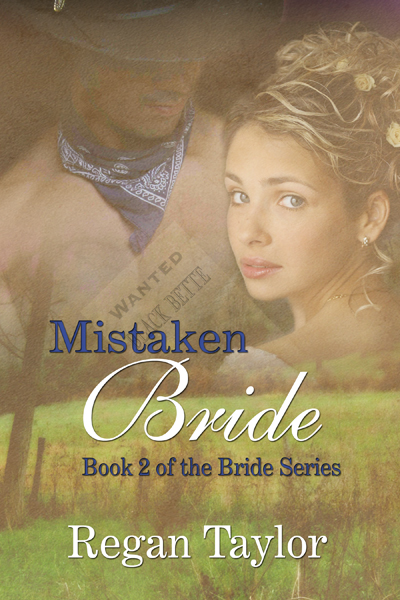
The recent death of my twenty-two year old kitty, Molly, and people's reactions to her death had me taking a look at how we mourn the loss of a loved one, be it human or animal. As a therapist, I'm no stranger to Elizabeth Kubler-Ross' stages of grief – denial, bargaining, anger, depression and acceptance. As a person who has lost loved ones I have felt the stages intimately. Of all the things our world of 140 characters seem to have taken away, i.e., having a lengthy conversation, writing in full words, breezing through life without truly feeling, it seems grief is the one thing that slows us down and allows us to reflect. And not only our own grief, but that of those around us. Grief seems to open the door to connect with people we never knew or weren't that close to. In the past month I've seen reaction range from the need to run away from the grieving person to coming to terms with a loss in the other person's life to everything in between. It is a common human bond. And it is a bond I have found is shared by other animals in the home.
In the animal community we have what we call the long goodbye. This is a death that comes about not because of an accident or sudden passing, but one where the animal is ill, we know it, we do what we can to treat the illness, yet we know the time will come when we have to say goodbye. While one may think the long goodbye doesn't hurt quite as much, it has its own unique pain – it is a battle we go into knowing we will lose but still hope to win. It is one where we question over and over again, what did we miss? What more could we have done?
In the days after Molly's death there were no two reactions alike. Her vet cried, openly, as did a few members of the staff who had known her. One co-worker came up to me the first day and held on to me, crying over the loss of her own dog several years before. For her it was a loss so devastating she couldn’t bring herself to adopt another. Another co-worker was so upset the avoided me for a day and then came to be sobbing because of all the emotions that arose from memories of her own cat who died a few years before. And, there was the one, the one we all dread, whose "sage" advice was, "well you can adopt another cat, right?"
In an attempt to make sense of my own grief and loss I picked up several books on death, dying and what is left for those who live on. That, in turn, led me to reflect on grief through the ages.
The earliest civilization we have really anything concrete to look at were the Egyptians. To some of us they had an almost morbid fascination with death. From the time of their birth, the upper classes made preparations for their death and rebirth. Grand pyramids were designed, treasures to bring with them into the afterlife accumulated, paintings completed showing them in their greatness. Every step of their lives focused around Ma'at and how Anubis would weigh their hearts against a single white feather. In a morbid sort of way I wondered, given the pre-occupation of transcending into the afterlife, those left behind mourned or felt a prick of jealousy that they had not yet reached that pinnacle. Michelle Moran's book, Nefertiti, takes her readers into the world of the ancient Egyptian death rituals and one I recommend as an excellent read for more than the preparation for death.
We know little of the common man's death, dying and rebirth hopes, but we know quite a bit of the pharaoh's and other near royalty. Organs were removed and placed in Coptic jars, the bodies were mummified, a multi-week process, then placed in elaborate sarcophagi to launch them into the afterlife. They were carried to their final resting places, adorned with their treasures, surrounded by paintings of depicting their greatest deeds and often their slaves were sealed within to serve them in the great beyond. I questioned whether or not those left behind would mourn as we do today.
At the turn of the 19th to 20th century, society decreed a period of one year as proper for a widow to mourn. She had to dress in black, refuse most visitors and comply with other societal constraints. After a year she might add gray and perhaps a bit of color to her wardrobe.
In the 1950's or thereabouts society decreed grief be allocated three days and then it was time to move on. My sister, Dorothy, died when I was eleven and she just turned four. I was fascinated with the process; the somberness of the family and the things they said and did. The Catholics blamed the protestant side of the family; the protestant side blamed the catholic side and they both blamed the metaphysical elements. I didn't see what a deity had to do with Dorothy's death; but at that time I hadn't read much about the Greek and Roman gods and goddesses and how jealous they could be. We sat in the viewing room for the requisite three days, all of us dressed in black, speaking low, crying and whispering when I was near. What stunned me was after the burial, instead of returning to our home with my parents so we could reflect on what happened, come to terms with my sister's passing, all of those people who had sat weeping showed up to a dining room laden with food. Coats were removed, dishes picked up and filled and the house reverberated with laughter. My head spun. We'd just buried my sister – what did these people have to be happy about. After they all finally left my mother took me shopping to buy me two new dresses. She wouldn't talk about the three days before except to tell me we had three days to grieve.
It wasn't until my cat, Toby, died and I went to visit my parents decades later that my mother broke down and cried about my sister's death. It took her over twenty years to cry for her loss. All I had told her was how, because Toby was quite ill, I would leave him at the vet each morning so they could care for him and how after work I would stop and bring him home if I could, or visit till they closed and brought him home with them. It was when I spoke of driving over a hill in the fog my mother broke down and cried, weeping uncontrollably for a long, long time. When the tears subsided I asked if she cried about Dorothy and she said no, we had our three days when she passed. Clearly she still grieved.
Today we theoretically still have three days to mourn, but in fact we don't. Most companies give you a day for bereavement. In passing one might hope their loved one dies on a Thursday so they can have their mourning done by Monday morning. People express their condolences and then move on; not wanting to talk about a life event that will at some point, touch all of us.
Some people said nothing more than a cursory, "I'm sorry" when they heard Molly died. Others, bit by bit, came to talk or write me about their own pet losses. One friend has come by and shed tears almost daily for several weeks about her own special cat. Molly's death didn't necessarily open up a closed wound; rather it gave her permission to express my friend's own sense of loss. When I went to pick up Molly's ashes to bring her home for the last time, her vet sat with me for a long while and cried her own tears for her cat who died several years before. The loss of a pet seems to open up a place in people's hearts that they normally would never expose.
Looking at my own reactions, my own sleepless nights, my own bargaining for just a few more hours if not days, I don't see how there can ever be a time limit on grief. How much smarter our 19th – 20th century ancestors were allowing for a year to mourn. I wouldn't agree with a forced period of a year; but to have that time if I needed it, would have been a gift. Of course I realize society, our society, would not condone a year of mourning for a pet. How much more sensitive the early Egyptians were in their reverence for the pet cats with families mourning their passing.
I don't recall many books, fiction books, set in our modern times that acknowledge what we feel with death. People die in books, particularly in mystery and romantic suspenses, but the story moves on, not delving into the emotions the fictional survivor might have, how grief may contribute to the heroine's decisions or how the hero may strive to hide his reactions. It is a reminder to me when I give my characters emotions that these too are part of our human experience and should be included in some fashion in our stories.
Labels:
Mourning,
Regan Taylor
I am Miss Missy, Empress of the Universe, Daughter of Satan, but you can call me Your Majesty.
Monday, June 7, 2010
Time Travel and Historical Research
When I was first invited to join this oustanding group of writers I was, in a word, thrilled. I've been a devoted fan of historial fiction and romance since my teens and my thirst for the genre has never dimmed. I have one series, at the moment, that is historical, my western Bride series. It often seems to me westerns, even western romance, is very much its own genre, but it is still historical.
Mostly I write time travels. Most of the time you see time travels listed as fantasy or perhaps science fiction. But they cross over into historical (or futuristic) either when the hero or heroine comes to the present or they travel back in time. I think time travels offer readers and authors a rich opportunity to explore the realm of "what if."
I had one of those "what if" moments while working on my last WIP this past week. I knew where I wanted to go with my antagonist, but I just wasn't getting there. I'd spent hours looking through medieval punishments, things we'd consider torture today and, in fact, they refer to it as torture on the websites. They had some mighty creative ways of punishing wrong doers back then. It's amazing what the human mind can come up with.
Among my favorites were the Brank where the The Brank was used to humiliate women who got involved in brawling with her neighbours or generally breaking the peace, or just being a public nuisance to the neighbourhood, women who gossiped with no purpose other than to offend, ridicule or lie about someone else were subject to this torture.
The device was a metal cage or mask that enclosed the head, often with ridiculous adornments designed to humiliate its victim. In some towns, the Brank had a bell attached to its rear only to announce the presence of the victim who was instantly mocked by the people she "endangered" through gossip.
The other was the Street Sweeper's Daughter which while it may have been used in Englaish, was mostly found in in Russia and the Middle East.
The Street Sweeper's Daughter worked by compressing the victim's body; just like The Rack, but inversely so. The torturer Could tighten the device or loosen it up, depending on the victim's offense.
This device although not very painful-looking, was often employed publicly to humiliate the victim. Those particularly hated individuals were often at the mercy of an angry crowd that often threw stones and fecal maters to the exposed victim. The immobilized victim was also frequently led to madness, as the torture period could last for weeks or months.
As to what this has to do with romance? Well, if someone was making your life difficult at best, wouldn't you love to have your hero give him, or her, a bit of a comeuppance? Justice can be grand.
I found, however, that while reading through these different devices was interesting, they weren't doing much to move my story along. Where did my villian go from there? I stumbled on a much more creative avenue, one that will lead to book 3 of the series. One that gives my heroine a much more romantic ending. While a year out before it is published, the possibilities are limitless.
Mostly I write time travels. Most of the time you see time travels listed as fantasy or perhaps science fiction. But they cross over into historical (or futuristic) either when the hero or heroine comes to the present or they travel back in time. I think time travels offer readers and authors a rich opportunity to explore the realm of "what if."
I had one of those "what if" moments while working on my last WIP this past week. I knew where I wanted to go with my antagonist, but I just wasn't getting there. I'd spent hours looking through medieval punishments, things we'd consider torture today and, in fact, they refer to it as torture on the websites. They had some mighty creative ways of punishing wrong doers back then. It's amazing what the human mind can come up with.
Among my favorites were the Brank where the The Brank was used to humiliate women who got involved in brawling with her neighbours or generally breaking the peace, or just being a public nuisance to the neighbourhood, women who gossiped with no purpose other than to offend, ridicule or lie about someone else were subject to this torture.
The device was a metal cage or mask that enclosed the head, often with ridiculous adornments designed to humiliate its victim. In some towns, the Brank had a bell attached to its rear only to announce the presence of the victim who was instantly mocked by the people she "endangered" through gossip.
The other was the Street Sweeper's Daughter which while it may have been used in Englaish, was mostly found in in Russia and the Middle East.
The Street Sweeper's Daughter worked by compressing the victim's body; just like The Rack, but inversely so. The torturer Could tighten the device or loosen it up, depending on the victim's offense.
This device although not very painful-looking, was often employed publicly to humiliate the victim. Those particularly hated individuals were often at the mercy of an angry crowd that often threw stones and fecal maters to the exposed victim. The immobilized victim was also frequently led to madness, as the torture period could last for weeks or months.
As to what this has to do with romance? Well, if someone was making your life difficult at best, wouldn't you love to have your hero give him, or her, a bit of a comeuppance? Justice can be grand.
I found, however, that while reading through these different devices was interesting, they weren't doing much to move my story along. Where did my villian go from there? I stumbled on a much more creative avenue, one that will lead to book 3 of the series. One that gives my heroine a much more romantic ending. While a year out before it is published, the possibilities are limitless.
Labels:
medieval prisons,
Regan Taylor,
time travel
I am Miss Missy, Empress of the Universe, Daughter of Satan, but you can call me Your Majesty.
Subscribe to:
Posts (Atom)


