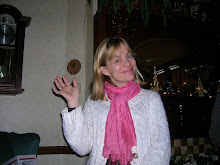
I met Cynthia Neale in the historical fiction group on She Writes. Her debut novel, Norah, about an Irishwoman in 19th century New York is just out.
I was impressed by the fact she has a book trailer, so I asked her:
What made you decide to have a book trailer?
Cynthia: My publisher, Lucky Press, recommended doing a book trailer. She is very progressive and there are other Lucky Press authors with book trailers that I took a look at. And then I also went on She Writes and looked at book trailers. I felt that if done professionally, a book trailer can be a great marketing tool. I had shivers watching a couple of book trailers and wrote down the titles of the books to buy in the future.
Did you do it yourself, or did someone else do it for you? If the latter, what sort of discussions did you have about its content?
My friend's son, Nathan Sorrentino, is a student at Geneseo College in New York State and he created a video for a course that caught the attention of Google who asked him to do some work for them. They live in Rochester, NY and when I visited there in October, we had dinner and brainstormed what kind of trailer I would like. He would do it for the experience and as a friend and I would give him a "tip." We e-mailed back and forth for a couple of months. I wrote up the text and he gave me links to music downloads with a one-time use fee (minimal). He found some images himself in archival material and I sent him photos of landscapes in Ireland I had taken in 2008. Nathan understood the legal requirements and the technical aspects of making this video, but he also could fathom the heart of what I wanted to relay in the video. He advised doing some tweaks here and there. I edited the text a few times and sent it to my publisher who also did some tweaks on my texts. Nathan is a talented young man and anyone who would like him to do a book trailer, should contact him. His information is on the credits at the end of the trailer.
Where did you source the images for the trailer, and how did you go about finding the music?
The sources are listed in the credits of the trailer. I listened to a lot of the music on various sites. I have a lot of Irish music I listen to and dance to, but I didn't want to go about getting permission, etc. I had even thought of asking some musician friends to play for the video, but time was of the essence. It took quite a few hours for me to pick out just the right music for the video, but I felt quite pleased with deciding on the tunes I found. And the cost was only about $30.00!
What sort of feedback have you had about the trailer and has it raised interest in your book?
Since the trailer went up mid-January, there has been nearly 1500 hits and many positive comments. Comments from some people in other countries, including Ireland. As an American writer, I wanted to be delicate, but strong, about the subject of The Great Hunger. I was not born in Ireland and many of the Irish-born still have a good deal of angst over this event in their history. I found that it was necessary to include the background (my first book material) of An Gorta Mor to make it understood what was at stake for the Irish, and especially Norah McCabe, to have immigrated to a city such as New York. I have had positive feedback from the Irish-born and from everyone who has viewed the trailer. Now...for a screenwriter!
Thank you Cynthia. Very best of luck with "Norah.
Deborah's Review Norah is a story of a young immigrant woman battling hardship, poverty and prejudice in New York in the 1850's. It has obviously been lovingly researched. The portraits of Norah McCabe and her family are beautifully drawn, and we catch most of the character of Norah from the attitudes of her Mam and Da who want the best for her but are unable to understand just how far she wants to climb. Cynthia Neale is particularly good at getting inside the minds of her characters to understand their motivations, although this is her first novel for adults - previously she has written books for children.
Make no mistake, although at times the language is lyrical, this tells it like it was, grit and all. All the hard facts of life for an Irish immigrant are between these pages; poor housing, the bordellos, street fights, and the cut and thrust of the gang underworld. At a time when to be black made you a second-class citizen, the book raises the question of what forms a person's identity, particularly for a white minority such as the Irish in New York.
Da discusses black equality with Norah:
"We all feel inferior, Norah."
"We all feel inferior? The Irish? Or all human beings?"
At times this novel is rather documentary in style, and it is certainly not the usual run-of-the-mill historical, but I can highly recommend it as a slice of real life for anyone with an interest in this period of New York history, particularly those with family or connections to Ireland.
***
Fancy making your own book trailer? Here's how with the excellent article by Brenda Coulter.
http://www.gather.com/viewArticle.action?articleId=281474977019853
And if you already have a book trailer out, or know of a particularly good one, please let me know!
http://www.deborahswift.co.uk/
http://www.deborahswift.blogspot.com/
Wednesday, April 13, 2011
Historical Fiction Book Trailers - Guest Cynthia Neale talks about her trailer for "Norah"
Labels:
"Norah",
Book Trailers,
Cynthia g. Neale
Tuesday, April 12, 2011
Romanticism ~ Its influences on Art and Literature
I thought I'd look back over the history of art and literature, to understand the influences which informed romanticism and later, romance novels
The Basics of Romantic Art - 1800-1860
Romanticism - or the Romantic Era, first appeared in the second half of the 18th Century. It was an artistic, literary and intellectual movement, a reaction to the Industrial Revolution, and a revolt against the aristocratic social and political norms of the Age of Enlightenment. It was also a reaction against the scientific rationalization of nature.
The strong emotions of horror, terror, awe and trepidation became an authentic source of aesthetic experience. When confronting nature, untamed and picturesque, it was called 'the sublime'. An example is Percy Bysshe Shelley’s poem Mont Blanc - the awe and spirituality the mountain inspires:
The secret Strength of things
Which governs thought, and to the infinite dome
Of Heaven is as a law, inhabits thee!
And what were thou, and earth, and stars, and sea,
If to the human mind's imaginings
Silence and solitude were vacancy?
The Industrial Revolution took hold in the latter part of the 18th century, beginning in England and spreading to France and America. This revolution, which although more peaceful than the French Revolution, wasn’t entirely free of violence, and brought with it a new market economy, based on new technology. The machine began to replace human tools and animal power. Villages became urban centers drawing people from farms and the countryside to work in the new factories. Not yet regulated, men, women, and children worked fourteen hour shifts, going weeks without seeing the sunlight. Cities grew and became dirty and crowded, the poor living in squalor, the air polluted by soot from smokestacks.
There were those who looked back with nostalgia to a romantic vision of the days when people worked the land under a clear sky, using animals to draw the plough.
Romantics rejected the philosophy of reason, turning instead to emotion, imagination, and intuition. A life filled with deep feeling, spirituality and free expression were seen as a way of dealing with the dehumanizing effects of industrialization. Human beings were infinite, with godlike potential.
This was reflected in poetry such as Wordsworth's Tintern Abbey:
Once again
Do I behold these steep and lofty cliffs,
That on a wild secluded scene impress
Thoughts of more deep seclusion; and connect
The landscape with the quiet of the sky.
The Chancel and Crossing of Tintern Abbey, Looking Towards the East Window, by JMW Turner, 1794. Tintern Abbey was a monastery founded in 1131 and rebuilt in the 13th century. Abandoned in 1536, it was left to decay for two centuries. Artist Joseph Mallord William Turner paid two visits to the site, and it inspired him to paint this piece which juxtaposes the smallness of man alongside and wildness of nature, the unstoppable power of which has reclaimed this man-made edifice. The haunting abbey was a popular muse for many Romantics
JMW TURNER Turner was fascinated by the mood of nature, her ever changing effects. He was always sketching the clouds, the sky, and his natural surroundings. Turner was particularly fascinated with the power of the ocean and said that he had once asked to be lashed to the mast of a ship in order to “experience the drama” of a mighty storm at sea. Romantics believed that God’s presence was embodied in nature and evidence of His existence. Turner saw light as a divine emanation and played with it in pictures to evoke that truth
JOHN CONSTABLE
Art began to demand an emotional response from the viewer, and a nostalgic yearning for a rural, pastoral life, the stirrings of life’s mysteries and an awareness of the power and grandeur of nature.
Frenchman Eugene Delacroix Liberty Leading The People. Art of this period also depicted the romantic ideal of Nationalism
Source: Wikipedia
The Norton Anthology of Poetry
Sydney University
Part II coming soon: The Romantic Novel
I write sensual historical romance where heroes meet their match in feisty heroines. Add a dash of adventure, a murder or two, a mystery or intrigue. What better time to set them than the Georgian, Regency and the late Victorian period on the brink of the 20th Century.
The Regency was a time of both opulence and abject poverty. Of economic and social change: the Napoleonic wars, the power struggle for the Americas, and the Industrial revolution when people began to desert the country for the cities.
Celebrity Lord Byron wrote dark romantic poetry, and Beau Brummell defined and shaped fashion into a period of simplistic elegance. Men abandoned brocades and lace for linen trousers, overcoats with breeches and boots, and women abandoned corsets for high wasted, thin gauzy dresses.
A spend-thrift aesthete known for his scandalous affairs, George IV, the Prince of Wales was made Regent in 1811 after his father was declared too mad to rein. Prinny presided over the elegant society of the ton, the Upper Ten Thousand, who defined themselves by an incredibly formal etiquette code which set them apart from the rising middle class.
Monday, April 11, 2011
Guest Abigail Reynolds: The Scandal of Eloping in Regency England

Linda Banche here. Today I welcome Abigail Reynolds and the latest book in her Pride and Prejudice Variations, What Would Mr. Darcy Do?. Since Lydia's supposed elopement with Wickham is the starting point of this Variation, Abigail tells us about the scandal involved in eloping during the Regency.
Leave a comment with your email address for a chance to win the copy of What Would Mr. Darcy Do? which Sourcebooks has generously provided. Abigail will select the winner. Check the comments to see who won, and how to contact me to claim your book. If I cannot contact the winner within a week of the selection, I will award the book to an alternate. Note, Sourcebooks can mail to USA and Canada addresses only.
I always ask the author to select the winner, but I haven't heard back from Abigail, so I'm making an executive decision. The winner is Peggy Gabriel! Peggy, if I don't hear from you by May 15, 2011, I will award your prize to an alternate.

Welcome back, Abigail!
All the regency romances notwithstanding, marriage in Regency England was in most cases a business arrangement, often entered into by the parents of the prospective bride and groom as a way to increase the family fortune and/or prestige. Husbands and wives often lived separate lives, with infidelity occurring on both sides. That doesn’t necessarily mean they were unhappy with their marriages; it was precisely what they’d always expected marriage to be like. Love and passion didn’t have a lot to do with it, but that didn’t mean love and passion didn’t exist.
Elopements were the result of love or passion without the family stamp of approval. Most young gentlemen didn’t have the remarkable luck to fall in love with a woman who would be acceptable to his parents as a bride or to his own sense of family duty. Gentlemen and ladies who were of age (over 21) could legally marry whoever they pleased whether their parents approved or not, but the family would shun the wedding and snub the bride. It would likely lead to significant family strife if not disinheriting. A minister who performed such a wedding could find his living endangered.
Elopement was a way out. A couple, even ones who weren’t of age, could go to Scotland, where they could be legally married. It didn’t even require a clergyman, only two witnesses. On the Old North Road, the first town over the border was Gretna Green, so that was the usual destination for eloping lovers. The blacksmith performed most of the weddings there, with his anvil serving as an altar. To this day, Gretna Green’s main business is weddings.
When the newly married couple returned home, they presented their family with a fait accompli. Often the families would try to make the best of a bad situation and pretend they approved in order to avoid the scandal associated with elopement. But there was no way to get around the fact that a couple who eloped had not only been disobedient to their parents and disloyal to their duty to their family, but they had also spent the better part of a week unchaperoned on their way to Scotland. A wedding ring couldn’t wash out the stain. A lady who eloped was considered something of a fallen woman.
The scandal also engulfed the family. It was a sign of ‘bad blood’; it made anyone else in the family a much poorer marriage prospect, and the family might well find themselves shunned. In A Pemberley Medley, my new book of short stories, there’s a variation where Elizabeth suffers that shunning to such a degree that she is left to adopt reckless plans. Families wanted to hush up elopements, and that’s why Elizabeth thought that Darcy would want nothing more to do with her after discovering her sister’s elopement. If he had in fact been concerned with maintaining a high social status, that likely would have been true. Fortunately for all of us, Darcy’s love proved stronger than his pride!
One interesting point that’s rarely discussed is Georgiana Darcy’s near-elopement with George Wickham. Had Darcy been unable to hush that up, Georgiana’s reputation would have been in shambles. But you’ll hear far more from me about that topic in the future since the new book I’m starting follows that path!
Thanks for inviting me!
WHAT WOULD MR. DARCY DO? BY ABIGAIL REYNOLDS
This sexy installment in the Pride and Prejudice Variations series explores one of the roads not taken in Jane Austen’s original. Before Darcy leaves the Lambton Inn after learning the scandalous news about Lydia and Wickham, he and Elizabeth declare their true feelings. Determined to give Darcy up rather than drag his name through the mud, Elizabeth will have to choose between what is right, and what she wants more than anything...
About the Author
Abigail Reynolds is a physician and a lifelong Jane Austen enthusiast. She began writing the Pride and Prejudice Variations series in 2001, and encouragement from fellow Austen fans convinced her to continue asking “What if…?” She lives with her husband and two teenage children in Madison, Wisconsin. For more information, please visit http://www.pemberleyvariations.com/ or http://www.austenauthors.com/.
Labels:
Abigail Reynolds,
What Would Mr. Darcy Do?
Welcome to My World of Historical Hilarity!I write witty, sweet/sensual Regency romances with nary a rake or royal in sight. Most contain humor, some fantasy, and occasionally a little paranormal or science fiction. But comedy is my love, and I've created my own wacky blend of humor and Regency with stories that can elicit reactions from a gentle smile to a belly laugh.
I live in New England and like aerobics and ducks.
So, laugh along with me on a voyage back to the Regency era. Me and my ducks. Quack.
Sunday, April 10, 2011
Review: WHAT WOULD MR. DARCY DO? by Abigail Reynolds

Note: Abigail Reynolds will guest blog here tomorrow, and give away a copy of What Would Mr. Darcy Do?
What Would Mr. Darcy Do? by Abigail Reynolds is a fast-reading sensual and emotional tale of love conquering all despite supposedly insurmountable odds.
In this latest of Ms. Reynolds's Pemberley Variations, Darcy, instead of concealing his feelings at Lambton, proposes to Elizabeth after she tells him Lydia has run away with Wickham. Despite his proposal, Elizabeth convinces herself the disgrace to her family is too high for his love to overcome. She requests time to consider, while ultimately planning to refuse. With reluctance, he accepts her delay, and then hurries to London where he deals with Wickham.
When he returns, he presses her for her answer. Misunderstandings continue until both Darcy and Elizabeth each explain the behavior which has so confused and angered the other. Love so long suppressed comes to the rescue.
This relatively short (227 pages) account of Darcy's and Elizabeth's tortuous journey to understanding, love and passion is a delight to read. Both have suffered for their pride and prejudice, but the self-knowledge gained and the explanations given for misconstrued conduct make their love the sweeter. I especially enjoyed their negotiations in setting and resetting their wedding day. Elizabeth wants the wedding a week after Jane's and Bingley's. Darcy wants it sooner. Both are so eager, they finally fix on the day immediately after the other wedding.
Two weddings in a row and twice the marital bliss. Another wonderful Pemberley Variation from Abigail Reynolds.
Thank you all,
Linda
ARC provided by Sourcebooks
Welcome to My World of Historical Hilarity!I write witty, sweet/sensual Regency romances with nary a rake or royal in sight. Most contain humor, some fantasy, and occasionally a little paranormal or science fiction. But comedy is my love, and I've created my own wacky blend of humor and Regency with stories that can elicit reactions from a gentle smile to a belly laugh.
I live in New England and like aerobics and ducks.
So, laugh along with me on a voyage back to the Regency era. Me and my ducks. Quack.
Monday, April 4, 2011
Fragonard's Stolen Kisses and Love Letters...
![]() |
| The Stolen Kiss, c. late 1780's |
Do you ever use art as inspiration for your writing? I do. In fact it was a painting that got me started on my very first story. People have asked me about the paintings featured on my website, so I thought I'd share the one in my header image. I actually have this print on a canvas on the wall above my laptop. I used it for inspiration for a scene in a WIP where the hero, Colin, goes after Elle and gets exactly what he was after, thank you very much!
The artist, Jean-Honoré Fragonard, (pronounced without the /d/ at the end) was a French painter whose work became all the rage for the wealthy art patrons of Louis XV's pleasure-loving, licentious court. Let’s face it, these people were all about the sex and this very tenet of the culture influenced what Fragonard painted: mostly scenes of love and voluptuousness. Even though his painting was considered scandalous, it remained hugely popular with the hedonists of the day. History lesson: Louis the 15th was the French king just before the one who lost his head in the French Revolution. So, the wild revelry was great while it lasted.
![]() |
| A Young Girl Reading, c. 1776 |
![]() |
| The Swing, 1767 |
The reading girl in the yellow dress is an image much copied and reprinted, so you may have seen it before. Another vastly popular painting is the one of the girl swinging while her lover checks under her skirts. Ahem, yes, those French boys were naughty that way.
The lady composing what appears to be a secret letter is also inspiring. What scandalous prose has she written? We are left only to ponder. The last one is my favorite. Aptly named, The Bolt, we get a clear understanding of the urgency of the scene and why he’s in such a hurry. As a device for creating tension in writing, the sliding or latching of a bolt always works well.
![]() |
| The Bolt, 1778 |
![]() |
| The Love Letter, 1770 |
For a half century after that he was ignored, not even mentioned in the 1873 edition of History of Art. Reevaluation by later scholars have changed that though, confirming his position among the all-time masters of French painting and one whose works will continue to inspire this writer every time she sets out to work on her stories.
All best history lovers,
Raine
Raine Miller loves exploring history from most any time. She finds herself best entertained by writing fiction based on the truth of the past. You can learn more about her writing and upcoming book by stopping by her blog:
Raine Miller Romance~where history comes...unlaced
http://www.rainemiller.com/
All best history lovers,
Raine
Raine Miller loves exploring history from most any time. She finds herself best entertained by writing fiction based on the truth of the past. You can learn more about her writing and upcoming book by stopping by her blog:
Raine Miller Romance~where history comes...unlaced
Labels:
A Young Girl Reading,
French Rococo painting,
Jean Honore' Fragonard,
The Bolt,
The Love Letter,
The Stolen Kiss,
The Swing
Saturday, April 2, 2011
Everyone loves a Wedding
With everyone in England getting a day off for the Royal Wedding, weddings are very much in people's thoughts and minds.
In the seventeenth century there were several interesting customs that our Royal pair might like to take up once they are married.
Ball -money
The first is that it is usual for the gentry to bestow charitable largesse on the poor, and for the bride to give out "ball-money" to her former female companions to help them buy finery and so find a husband.
In 1604 Dudley Carlton writes about a court wedding and says:
"there was none of our accustomed forms omitted; of bride cakes, sops-in-wine, giving of gloves, laces and points.... and at night there was sewing into the sheet, casting of the bride's left hose, and twenty other petty sorceries."
Bride cakes were a tradition where a cake of wheat or barley symbolising fertility would be broken over the heads of the bride and groom.
Lace and points
The Exeter merchant John Hayne laid out £5 13s for ribbons, posies, favours and points at his wedding in 1635. Gloves are given to the ladies and to the bell-ringers. Gloves symbolise the joining of hands, or the hand of friendship when sent to friends who care unable to be at the ceremony.The bride herself usually goes bare-handed.
Public Bedding
In order to make sure the marriage is consummated it is the custom for the wedding party to accompany the couple to bed. The bed is decorated with ribbons and herbs and flowers for the occasion - rosemary, myrtle (known as the herb of wedlock) and maiden's blush were common choices.
Sops-in-wine
The couple were then fortified for the night by a special posset made of wine and spices. I expect that alcohol might have been essential if most of your neighbours were to witness the act!
Stocking-throwing
When everyone crowds into the bedchamber there's a game played where the bride's garters are removed and the young men seize upon them to put in their hats as a trophy. Garters are traditionally blue as they are associated with the Virgin Mary.The bride's-maids carry the bride into the chamber and the groom is meanwhile undressed and put into a nightshirt elsewhere, with much rowdiness and lewd jesting. After the groom's-men bring him to the bed, the couple's stockings are handed out and the assembled company tries to throw the garments backwards over their shoulders to hit the couple.
"if the man's stockings thrown by the maids, fall upon the bridegroom's head it is a sign she will be quickly married herself and the same prognostic holds good for the woman's stockings thrown by a man."
from the diary of William Lawrence 1661
It is customary to wake the couple early next morning with loud music - usually a fiddle and drum, and for the neighbours to enquire whether "it is done" before the pair are allowed to make their sheepish escape.
The Royal Wedding will probably be more traditional than most - I shall watch with interest to see if any of these 17th century customs have been retained!
The wedding in this picture by Jan Steen of 1667 looks particularly riotous, the man in the foreground decidedly the worse for ale!
You can find out more about my books at www.deborahswift.blogspot.com/
In the seventeenth century there were several interesting customs that our Royal pair might like to take up once they are married.
Ball -money
The first is that it is usual for the gentry to bestow charitable largesse on the poor, and for the bride to give out "ball-money" to her former female companions to help them buy finery and so find a husband.
In 1604 Dudley Carlton writes about a court wedding and says:
"there was none of our accustomed forms omitted; of bride cakes, sops-in-wine, giving of gloves, laces and points.... and at night there was sewing into the sheet, casting of the bride's left hose, and twenty other petty sorceries."
Bride cakes were a tradition where a cake of wheat or barley symbolising fertility would be broken over the heads of the bride and groom.
Lace and points
The Exeter merchant John Hayne laid out £5 13s for ribbons, posies, favours and points at his wedding in 1635. Gloves are given to the ladies and to the bell-ringers. Gloves symbolise the joining of hands, or the hand of friendship when sent to friends who care unable to be at the ceremony.The bride herself usually goes bare-handed.
Public Bedding
In order to make sure the marriage is consummated it is the custom for the wedding party to accompany the couple to bed. The bed is decorated with ribbons and herbs and flowers for the occasion - rosemary, myrtle (known as the herb of wedlock) and maiden's blush were common choices.
Sops-in-wine
The couple were then fortified for the night by a special posset made of wine and spices. I expect that alcohol might have been essential if most of your neighbours were to witness the act!
Stocking-throwing
When everyone crowds into the bedchamber there's a game played where the bride's garters are removed and the young men seize upon them to put in their hats as a trophy. Garters are traditionally blue as they are associated with the Virgin Mary.The bride's-maids carry the bride into the chamber and the groom is meanwhile undressed and put into a nightshirt elsewhere, with much rowdiness and lewd jesting. After the groom's-men bring him to the bed, the couple's stockings are handed out and the assembled company tries to throw the garments backwards over their shoulders to hit the couple.
"if the man's stockings thrown by the maids, fall upon the bridegroom's head it is a sign she will be quickly married herself and the same prognostic holds good for the woman's stockings thrown by a man."
from the diary of William Lawrence 1661
It is customary to wake the couple early next morning with loud music - usually a fiddle and drum, and for the neighbours to enquire whether "it is done" before the pair are allowed to make their sheepish escape.
The Royal Wedding will probably be more traditional than most - I shall watch with interest to see if any of these 17th century customs have been retained!
The wedding in this picture by Jan Steen of 1667 looks particularly riotous, the man in the foreground decidedly the worse for ale!
You can find out more about my books at www.deborahswift.blogspot.com/
Labels:
17th century,
weddings
Tuesday, March 29, 2011
Regency Hygiene, or the Lack Thereof, Part II: Beau Brummell

George Bryan "Beau" Brummell (1778-1840) almost single-handedly brought frequent bathing into vogue in the Regency. The son of a clerk, he was not particularly distinguished for his good looks, education or connection. But he was always very neat, his clothes were a masterpiece of simple elegance, and both his garments and his body were always spotless.
Brummell insisted that a gentleman be clean--clean as in total body immersion in water. His efforts succeeded in part because he had gained the favor of the crown prince, George, later the prince regent. When Brummell converted the prince, the upper classes followed, with the lower orders not far behind.
Brummell turned personal hygiene into an art form. He was famous for his daily three-hour regimen of scrubbing every part of his body, removing all the hair from his face, and then wrapping himself in
immaculate, simple clothes that were the antithesis of the male fashions of the previous fifty years. Although his manner of dress was at first called "dandyism", Brummell created the masculine attire we still use today: shirt, tie, jacket and trousers, all well-tailored, on a meticulously clean body.When he was born, the standard of male beauty consisted of a wardrobe of costly, brightly-colored fabrics, powdered hair or wig, makeup (yes the men wore makeup) and high-heeled shoes. All over a dirty body and filthy hair, both heavily doused with perfume in an attempt to mask, usually unsuccessfully, massive body odor due to infrequent bathing. See previous post.
As an example, these stills from the 2006 BBC production Beau Brummell: This Charming Man show (left), the Prince of Wales before Brummell's influence, and (right), afterwards.

Brummell was not the first proponent of cleanliness. The return to bathing had started before he was born. In the mid 1700's, Philip Stan
hope, the fourth Earl of Chesterfield, wrote a famous series of letters to his son emphasizing personal hygiene. In France, Jean-Jacque Rousseau extolled cleanliness in his novel, Emile, or On Education (1762), although he personally was not that fastidious.But the English considered anything French suspicious, and they turned to copious amounts of soap and water only when the consummately British Brummell arrived on the scene.
Brummell's story did not end happily. He fell out with his patron, the Prince of Wales. Afterwards, his gambling debts forced him to flee to France, where he spent the rest of his life. His gambling debts increased as his health declined. He died at sixty-two due to the complications of tertiary syphilis.
Today, we remember Brummell as a male fashion plate. In time, advances in science and the wider availability of soap and hot water cleaned up a world mired in dirt. But Beau Brummell hastened that day by making cleanliness fashionable.
Thank you all,
Linda
Linda Banche
Welcome to My World of Historical Hilarity!
http://www.lindabanche.com
Welcome to My World of Historical Hilarity!I write witty, sweet/sensual Regency romances with nary a rake or royal in sight. Most contain humor, some fantasy, and occasionally a little paranormal or science fiction. But comedy is my love, and I've created my own wacky blend of humor and Regency with stories that can elicit reactions from a gentle smile to a belly laugh.
I live in New England and like aerobics and ducks.
So, laugh along with me on a voyage back to the Regency era. Me and my ducks. Quack.
Friday, March 25, 2011
Why not Avebury?
I've recently been watching and enjoying two UK TV series about the early pre-history of Britain (Neil Oliver's and Bettany Hughes's), and they brought back memories of stone circles. Not of Stonehenge, however, but of Avebury, where we spent some time when I was writing Bronze Lightning. I took my heroine Sarmatia to Avebury and used the powerful setting for some of the pivotal scenes in the story.
As a place Avebury remains impressive and intriguing, despite the ravages of time and the deliberate vandalism of some of the huge stones. It’s older than Stonehenge and much bigger, incorporating several circles, avenues and barrows. The ditch was dug by red deer antler picks and was 30 feet deep. Its proximity to the West Kennet long barrow and Silbury Hill, the largest man-made mound in Europe, has led some archaeologists to speculate that this is a vast ritual site.
I've noticed, though, that the star status of Stonehenge has tended to put Avebury a bit in the shade. Is it because the massive stones don't have lintels? Or because the tiny village of Avebury has grown up within the site and so it doesn't appear as broodingly untouched?
Anyway, when we were there, it seems ages ago now, there was a white pheasant squawking in the village, a flight of old Lancaster bombers flew over to mark a wartime anniversary and the chimney of the cottage had a birds' nest in it. I have a soft spot for Avebury.
Lindsay
http://www.lindsaytownsend.net/
Twitter
As a place Avebury remains impressive and intriguing, despite the ravages of time and the deliberate vandalism of some of the huge stones. It’s older than Stonehenge and much bigger, incorporating several circles, avenues and barrows. The ditch was dug by red deer antler picks and was 30 feet deep. Its proximity to the West Kennet long barrow and Silbury Hill, the largest man-made mound in Europe, has led some archaeologists to speculate that this is a vast ritual site.
I've noticed, though, that the star status of Stonehenge has tended to put Avebury a bit in the shade. Is it because the massive stones don't have lintels? Or because the tiny village of Avebury has grown up within the site and so it doesn't appear as broodingly untouched?
Anyway, when we were there, it seems ages ago now, there was a white pheasant squawking in the village, a flight of old Lancaster bombers flew over to mark a wartime anniversary and the chimney of the cottage had a birds' nest in it. I have a soft spot for Avebury.
Lindsay
http://www.lindsaytownsend.net/
Monday, March 21, 2011
The King's Highway
Loaded by Jen Black
The roads in Tudor times were designed to get people to
market. Where no towns existed, there were only rough tracks. Most people travelled on foot. Since fresh produce did not travel well, carts carried fruit and vegetables only short distances. Meat always travelled on the hoof, some of them great distances via the ancient drove roads.
market. Where no towns existed, there were only rough tracks. Most people travelled on foot. Since fresh produce did not travel well, carts carried fruit and vegetables only short distances. Meat always travelled on the hoof, some of them great distances via the ancient drove roads. People who were very old or ill sometimes travelled in a litter, either horse-drawn or carried by servants, but there were no coaches or carriages. The first coach in England was built for the Earl of Rutland by a Dutchman, Walter Rippon, in 1555. In 1564 he built one for Queen Elizabeth, but they were not common until the seventeenth century.
Couriers and government officials, pilgrims, scholars and merchants travelled great distances, but many English never left the parish in which they were born. Others did, and risked arrest and a flogging if they left their parish without a licence from the authorities and a good reason for travelling.
The foot traveller hoped to make twenty miles a day, and it was rare for an ordinary horseman to cover more than thirty. In bad weather, hilly or flooded country, the distance could be reduced to fifteen miles or less. Heavy wheeled carts wrecked roads and tracks alike, and without attention in a thousand years, the Roman roads were disintegrating.
During Mary and Elizabeth’s reign, some roads were paved. Four long-distance roads were maintained: The Great North Road from London through Durham, Newcastle and Alnwick to Berwick-on-Tweed, Dunbar, Haddington and on into Edinburgh. (During my childhood in Durham, Silver Street was still called the Great North Road). Watling Street ran from London to Chester, taking travellers to Ireland; Dover Road ran from Dover to London; and the great road from London to Exeter and on to Plymouth. Beyond Plymouth, the traveller went by tracks and byways.
The King’s messengers used relays of fresh horses kept at staging posts twenty miles apart on these four roads, and they covered much greater distances than the ordinary traveller. The Great North Road was one of only six north of York. One went from Newcastle to Otterburn across the Cheviots to Jedburgh. It
was the shortest route to Edinburgh, but inhabited by reivers and bandits who killed and robbed on either side of the Border. The King’s Street ran north from Lancaster to Penrith and Carlisle. Two roads went from east to west – from York to Catterick Bridge and Penrith, and the Newcastle to Carlisle road through Hexham and Haltwhistle along the north bank of the Tyne. The sixth road ran from York to the port of Scarborough which carried on a busy trade with Scandinavia.
was the shortest route to Edinburgh, but inhabited by reivers and bandits who killed and robbed on either side of the Border. The King’s Street ran north from Lancaster to Penrith and Carlisle. Two roads went from east to west – from York to Catterick Bridge and Penrith, and the Newcastle to Carlisle road through Hexham and Haltwhistle along the north bank of the Tyne. The sixth road ran from York to the port of Scarborough which carried on a busy trade with Scandinavia.The journey from London to Edinburgh took the normal traveller fourteen days at thirty miles a day. Messengers riding post could do it in five. The seventy miles of the Dover road could be done in two days, but the fit and strong courier could do it in a day. The 215 mile journey to Plymouth took the ordinary traveller a week; couriers thirty-six hours.
By contrast, when Henry and Elizabeth travelled ‘on progress,’ they rarely covered more than ten miles a day. Henry went to France, but he never travelled further north than York, and to that city only once. But there was one good thing about the scarcity of roads: you could be reasonably sure of meeting someone on a certain road on any given day.
Labels:
drove roads,
old roads,
roads,
Tudor England
Sign up for my newsletter and receive a free eBook (PDF) in return. You'll find info and news, and special offers. Please sign up - I love to hear from readers and authors!
Friday, March 18, 2011
Charles IX of France
Writing about the Valois was fascinating as they were such a troubled family. All Catherine’s sons seemed to be blighted, probably as a result of inherent syphilis, and all suffered from consumption. Yet they were highly intelligent, well educated, and with the exception of poor Alençon, good looking. Their tutor was the Humanist Jacques Amyot. He wrote poetry and a work on hunting, and his happiest moments were when he would sit up late into the night talking to writers and musicians. On these occasions he would be entirely calm and content.
Charles IX was the most sensitive of the brothers, often emotional and easily moved to tears by a poem or a sermon. He loved hunting and all field-sports but was weak and unstable. If his wishes were thwarted by the smallest degree, his golden brown eyes would grow fierce, his manner turn brusque and uncivil, which could quickly deteriorate into a temper tantrum, often caused by jealousy of his brother Anjou.
Catherine controlled his every waking hour. The time he must rise, insisting that once in his chemise, the lords and nobles, gentlemen of the bedchamber and his man-servants should be allowed in for the King’s lever, as was the custom in his father’s day. After this came council business and dispatches until ten, when he was expected to attend Mass. A walk before dinner, which was taken at eleven, to be followed twice a week by an audience. Time was allowed each afternoon for him to ride, joust, or perform some other sport, and he was also expected to visit the Queen Mother, and the Queen his wife, according to tradition, before preparing for supper which he took with his family.
In addition, she set out careful written instructions on how he must address his councillors, what questions to ask local governors, how to organise appointments and honours and not simply give to those who begged for favours.
He was remarkably obedient and dutiful to his mother’s wishes, which was her intention, but if Catherine pressed him too far he would fall into a rage. Even Margot, who was fond of him, could not deny that he was an odd boy. He would often sink into worrying moods of deep melancholy, stay in bed all day, or be gripped by a mad frenzy when he would don a mask, waken some of his wilder friends, and, taking lighted torches, would go on a rampage around the darkened streets of Paris. They’d call on some poor unfortunate, drag him from his bed and beat him senseless, purely for the pleasure of it. Or he might turn on his dogs or horses and thrash them instead. When the lust for violence came upon Charles, there was nothing anyone could do to stop it. The mere sight of blood seemed to both terrify and excite him. I believe this flaw in him was the reason Catherine was able to terrify into giving his support to the massacre.
Catherine accepted these flaws as she did not expect the boy to live long, and in this she was proved to be correct. When Charles ultimately succumbed to the disease that had claimed his late brother, Francis II, Anjou, Catherine’s favourite, whom she loved with an almost incestuous passion, took his place on the throne.
Charles IX only mistress was Marie Touchet (1549 - 1638) He loved and remained loyal to her for all his adult life. Besides his sister Margot, she was the only person able to control his mood swings, calming him and making him warm cinneman milk as if she were his nurse.
A pretty, gentle girl from a humble backward, she was in her late teens when she first became his mistress. She was well liked by Catherine, and when Charles married Elisabeth of Austria, fortunately his new bride had the wit to accept her as Marie created no problems. In time the two young women even became good friends. Marie bore him a son, which his wife sadly failed to do, Charles de Valois, who later became the Duke of Angoulême.
After Charles’s death, Marie married the marquis d'Entragues, Charles Balzac d'Entragues, and it was her daughter, Henriette, born in 1579, who became one of Henry IV’s most notorious mistresses. I've written about her in The Queen and the Courtesan,the last in the Marguerite de Valois trilogy which comes out in hardback in September.
Scene from Hostage Queen - in which Charles IX attempts to stand up to his mother, Catherine de Medici.
When the time came for the royal party to depart, Jeanne begged the King to allow her son to stay on an extended visit, and because Charles was soft-hearted and felt sorry for a mother being separated from her son, he readily agreed. Catherine entered the chamber just as Jeanne was thanking His Majesty for the favour.
‘What is this?’ she curtly demanded of her son, eyes cold. ‘Are you now making decisions on your own account, so soon after reaching your majority?’
Panic clouded his sensitive features, and Margot, feeling pity for the over-sensitive Charles, hurried to offer him her support. ‘I’m sure it would be but a short stay,’ she said, thinking what a relief it would be to be rid of Henry of Navarre for a while.
Charles agreed and hastily added, ‘Think how distressed I should be were we to be parted, Mother? Is it not unnatural for a family to be kept apart?
Such matters had never concerned Catherine, having rarely seen her own children as they were growing up, although she had frequently asked for portraits to be painted of them so that she could check on their progress. ‘I am sure the Queen of Navarre will think so.’
The two queens faced each other, the one furious, the other defiant. They might go through the motions of good manners and diplomacy, but they remained sworn enemies. The Queen Mother feared the lesser kingdom, with it’s strong Huguenot character, might raise an army against her with young Henry at its head.
Jeanne was afraid her precious son might be turned into a papist by the influence of the French Court and its Queen.
‘Pray leave us and permit me to discuss this delicate matter with the King.'
Jeanne curtseyed, paying the homage that was due to the other, more powerful, queen. ‘As you wish, Your Majesty, but the King has promised, and I trust him to keep his word.’
Alone with her son Catherine allowed her anger to show. ‘You had no right to make a political decision without consultation. Many factors need to be taken into account, and you do not possess the experience to make such a decision.’
Seeing how her brother’s eyes rolled back in his head, always a bad sign, Margot dared to interrupt. ‘Madame, the King is not well.’
‘Silence, girl!’
Charles clung fast to his sister, hating to be scolded. ‘I can think for myself. I am not stupid. I am the King!’
Seeing that her brother was growing agitated, Margot began to stroke his hair, trying to calm him, crooning soft words in his ear.
Catherine ground her teeth in fury. ‘Of course, and are you not the cleverest of my sons?’ It was a lie, meant to pacify him. Her beloved Henri was more brilliant in every way. ‘Yet you need good counsel in order to make wise decisions. I would not have you taken advantage of by these Protestants.’
‘I have many friends who are of the new faith, and Jeanne is my aunt. I have ever had a fondness for her.‘
There was a fever now in his gaze and a foaming at the mouth as he began to chew on his fingernails. ‘I am King! I can do as I like, and I have given my word.’
‘There are times when even a king must break a promise.’
‘No, I will not, I will not!’ Then he fell to the ground and began drumming his heels in temper. Terrified he might harm himself Margot dropped to her knees beside him, desperately trying to prevent the convulsions which would surely follow. Catherine strode from the room calling for his nurse, knowing she must relent. The King had promised that the young Prince of Navarre could stay for a short holiday with his mother, and a king’s word must be kept, even though she held the power and always would.
Hostage Queen, now available in paperback and as an ebook.
For more details about my books call in at my website www.fredalightfoot.co.uk
Charles IX was the most sensitive of the brothers, often emotional and easily moved to tears by a poem or a sermon. He loved hunting and all field-sports but was weak and unstable. If his wishes were thwarted by the smallest degree, his golden brown eyes would grow fierce, his manner turn brusque and uncivil, which could quickly deteriorate into a temper tantrum, often caused by jealousy of his brother Anjou.
Catherine controlled his every waking hour. The time he must rise, insisting that once in his chemise, the lords and nobles, gentlemen of the bedchamber and his man-servants should be allowed in for the King’s lever, as was the custom in his father’s day. After this came council business and dispatches until ten, when he was expected to attend Mass. A walk before dinner, which was taken at eleven, to be followed twice a week by an audience. Time was allowed each afternoon for him to ride, joust, or perform some other sport, and he was also expected to visit the Queen Mother, and the Queen his wife, according to tradition, before preparing for supper which he took with his family.
In addition, she set out careful written instructions on how he must address his councillors, what questions to ask local governors, how to organise appointments and honours and not simply give to those who begged for favours.
He was remarkably obedient and dutiful to his mother’s wishes, which was her intention, but if Catherine pressed him too far he would fall into a rage. Even Margot, who was fond of him, could not deny that he was an odd boy. He would often sink into worrying moods of deep melancholy, stay in bed all day, or be gripped by a mad frenzy when he would don a mask, waken some of his wilder friends, and, taking lighted torches, would go on a rampage around the darkened streets of Paris. They’d call on some poor unfortunate, drag him from his bed and beat him senseless, purely for the pleasure of it. Or he might turn on his dogs or horses and thrash them instead. When the lust for violence came upon Charles, there was nothing anyone could do to stop it. The mere sight of blood seemed to both terrify and excite him. I believe this flaw in him was the reason Catherine was able to terrify into giving his support to the massacre.
Catherine accepted these flaws as she did not expect the boy to live long, and in this she was proved to be correct. When Charles ultimately succumbed to the disease that had claimed his late brother, Francis II, Anjou, Catherine’s favourite, whom she loved with an almost incestuous passion, took his place on the throne.
Charles IX only mistress was Marie Touchet (1549 - 1638) He loved and remained loyal to her for all his adult life. Besides his sister Margot, she was the only person able to control his mood swings, calming him and making him warm cinneman milk as if she were his nurse.
A pretty, gentle girl from a humble backward, she was in her late teens when she first became his mistress. She was well liked by Catherine, and when Charles married Elisabeth of Austria, fortunately his new bride had the wit to accept her as Marie created no problems. In time the two young women even became good friends. Marie bore him a son, which his wife sadly failed to do, Charles de Valois, who later became the Duke of Angoulême.
After Charles’s death, Marie married the marquis d'Entragues, Charles Balzac d'Entragues, and it was her daughter, Henriette, born in 1579, who became one of Henry IV’s most notorious mistresses. I've written about her in The Queen and the Courtesan,the last in the Marguerite de Valois trilogy which comes out in hardback in September.
Scene from Hostage Queen - in which Charles IX attempts to stand up to his mother, Catherine de Medici.
When the time came for the royal party to depart, Jeanne begged the King to allow her son to stay on an extended visit, and because Charles was soft-hearted and felt sorry for a mother being separated from her son, he readily agreed. Catherine entered the chamber just as Jeanne was thanking His Majesty for the favour.
‘What is this?’ she curtly demanded of her son, eyes cold. ‘Are you now making decisions on your own account, so soon after reaching your majority?’
Panic clouded his sensitive features, and Margot, feeling pity for the over-sensitive Charles, hurried to offer him her support. ‘I’m sure it would be but a short stay,’ she said, thinking what a relief it would be to be rid of Henry of Navarre for a while.
Charles agreed and hastily added, ‘Think how distressed I should be were we to be parted, Mother? Is it not unnatural for a family to be kept apart?
Such matters had never concerned Catherine, having rarely seen her own children as they were growing up, although she had frequently asked for portraits to be painted of them so that she could check on their progress. ‘I am sure the Queen of Navarre will think so.’
The two queens faced each other, the one furious, the other defiant. They might go through the motions of good manners and diplomacy, but they remained sworn enemies. The Queen Mother feared the lesser kingdom, with it’s strong Huguenot character, might raise an army against her with young Henry at its head.
Jeanne was afraid her precious son might be turned into a papist by the influence of the French Court and its Queen.
‘Pray leave us and permit me to discuss this delicate matter with the King.'
Jeanne curtseyed, paying the homage that was due to the other, more powerful, queen. ‘As you wish, Your Majesty, but the King has promised, and I trust him to keep his word.’
Alone with her son Catherine allowed her anger to show. ‘You had no right to make a political decision without consultation. Many factors need to be taken into account, and you do not possess the experience to make such a decision.’
Seeing how her brother’s eyes rolled back in his head, always a bad sign, Margot dared to interrupt. ‘Madame, the King is not well.’
‘Silence, girl!’
Charles clung fast to his sister, hating to be scolded. ‘I can think for myself. I am not stupid. I am the King!’
Seeing that her brother was growing agitated, Margot began to stroke his hair, trying to calm him, crooning soft words in his ear.
Catherine ground her teeth in fury. ‘Of course, and are you not the cleverest of my sons?’ It was a lie, meant to pacify him. Her beloved Henri was more brilliant in every way. ‘Yet you need good counsel in order to make wise decisions. I would not have you taken advantage of by these Protestants.’
‘I have many friends who are of the new faith, and Jeanne is my aunt. I have ever had a fondness for her.‘
There was a fever now in his gaze and a foaming at the mouth as he began to chew on his fingernails. ‘I am King! I can do as I like, and I have given my word.’
‘There are times when even a king must break a promise.’
‘No, I will not, I will not!’ Then he fell to the ground and began drumming his heels in temper. Terrified he might harm himself Margot dropped to her knees beside him, desperately trying to prevent the convulsions which would surely follow. Catherine strode from the room calling for his nurse, knowing she must relent. The King had promised that the young Prince of Navarre could stay for a short holiday with his mother, and a king’s word must be kept, even though she held the power and always would.
Hostage Queen, now available in paperback and as an ebook.
For more details about my books call in at my website www.fredalightfoot.co.uk
Tuesday, March 15, 2011
A little bit about... St. Patrick

By: Stephanie Burkhart
St. Patrick was an interesting guy who helped to bring Christianity to Ireland. It's kind of hard to pin down when he was born, but it's believed he was born between 385-387 AD in Wales. He was born a pagan. When he was 16, Irish raiders kidnapped him and held him as a slave. It's believed he was held on the west coast of Ireland, near Mayo, but the exact location is unknown. While in Ireland he lived as a Shepard. It was lonely work, and Patrick turned to God for comfort. According to Patrick, God spoke to him in a dream telling him to leave Ireland. After 6 years, he escaped to Gaul where he studied and became a Christian.
In 432 AD he was called to go back to Ireland. When he returned, he helped to establish churches and schools. He used a shamrock to help teach the Holy Trinity to the people. The shamrock represented how the Father, Son, and Holy Spirit could all exist as separate elements of the same entity.
He died on 17 March 461 AD.
There can be no doubt St. Patrick left his mark on the Irish people. In 1903, Ireland made St. Patrick's Day an official public holiday.
Interesting fact: The Chicago River is dyed green in honor of St. Patrick's Day each year.
Interesting note: The shortest St. Patrick's Day parade takes places in Dripsey Cork. It's only a 100 yards (a football field!) between the town's two pubs.
Interesting myth: St. Patrick is known for driving the snakes out of Ireland, but its highly unlikely he did. The island was separated from Europe during the last ice age.
Ewww?
St. Patrick's jawbone was preserved in a silver shrine.
While there's not much Irish in my house, we have a good time being green for the day. My husband enjoys cooking a corned beef. My son, Andrew, gets into wearing shamrock socks and a button that says "Kiss me, I'm Irish." I'm a sucker for Bailey's Irish Cream & Harp.
I'd love to hear about your customs and traditions.
Let me leave you with a couple of Irish sayings:
There's no fireside like your fireside.
Good luck beats early rising.
A diplomat must always think twice before he says nothing.
Labels:
Ireland,
St. Patricks Day,
Stephanie Burkhart
Friday, March 11, 2011
A Profile in Courage - George VI

By Stephanie Burkhart
George VI was the right man for his times, but his life had never been easy despite his title. Recently, I saw the movie "The King's Speech." It is a brilliant peek into the personal courage that George VI embodied.
Born on a day full of heartache.
George VI was born on 14 December 1895, a great-grandson to Queen Victoria who was still on the throne. For Victoria, 14 December was the anniversary of her husband's death, Prince Albert. Unsure of how the Queen would take the news, George's parents offered to name their son Albert Fredrick Arthur George. Victoria was pleased. Interestingly, the Queen noted that "Bertie" as George VI was known by his family, was born on such a sad day, but was given a name so dear to her, it was a name that was great and good.
And Bertie would be a good king, despite the challenges he faced.
Bertie was the second son of George, Duke of York (George's father was King Edward VII, Victoria's son). Bertie's parents were not overly demonstrative, leaving their children to be raised by nannies. In "The King's Speech," Bertie tells Lionel of a particular bad nanny who used to pinch his cheeks and withhold food from him.
As a young child, Bertie suffered from ill health. He had to wear painful splints because he was knock-kneed and he developed a stammer. Left handed, young Bertie was forced to use his right.
These challenges only helped the young prince develop strong personal courage.
Bertie saw service in World War I as a midshipman in the Navy. His fellow officers referred to him as Mr. Johnson, in order to hide his identity and protect him. Later, he became involved in the Royal Air Force. After the war, he studied at Cambridge and on 4 June 1920, he was created Duke of York by his father, George V.
Then Bertie met Lady Elizabeth Bowes-Lyons at a children's birthday party. She gave him the glace cherry from her cake. Bertie was determined to win her heart.
While Lady Elizabeth had bloodlines going back to Robert the Bruce, she was considered a commoner by British law. Bertie pursed her wholeheartedly, but he had to buck up when she turned down his first marriage proposal. Displaying that dogged personal courage he had since birth, Bertie did not give up and finally Lady Elizabeth told him yes. They were married on 26 April 1923. In 1926, their daughter, the current Queen Elizabeth II was born.

What I find interesting about this historical tidbit, is that Bertie was given a lot of leeway from his royal parents to find a bride. Yes, Lady Elizabeth Bowes-Lyon was a commoner, but she was beloved. Queen Elizabeth II, knowing this about her parents, had still insisted her son, Charles, find a royal bride. (dare I add one that was virginal?) If she had followed her parents' example, I suspect Charles would have been as happy as his grandfather with his marriage the first time around. Now, with Prince William posed to marry Kate Middleton, a commoner, it seems the Queen has taken history to heart.
In 1925, Bertie gave a speech at Wembly in which he couldn't hide his stammer. Knowing the people expected more from the Duke of York, he sought help from an Australian born speech therapist, Lionel Logue. Lionel worked with Bertie to help him master his stutter and by 1927, Bertie spoke with much more confidence in public. Lionel kept working with Bertie through the 30's and 40's. In 1937, now King, George VI awarded Logue with the Royal Victorian Order, which recognized distinguished personal service to one's sovereign.
Bertie loved tennis and was very physically active, but he would need all his stamina when his brother, Edward VIII abdicated the throne in 1936.
Some find Edward VIII's story romantic, some find it appalling, but Bertie's older brother abdicated to marry the love of his life, Wallis Simpson on the eve of World War II.
Bertie came to the throne and styled himself George VI. He was 41. Interestingly, he had to buy Balmoral and Sandringham from his brother since they were private properties and didn't pass to him automatically.

When World War II struck, George VI displayed his personal courage once again for all to see, staying in London during the bombing raids of the Germans. London's east end was hit hard. When two German bombs exploded in a courtyard at Buckingham Palace, George stood by his wife when she declared, "I am glad we have been bombed. Now we can look the east end in the face." The couple's profile gave Britain the morale boost it needed.
Starting in 1949, George's health started to fail. The fact he was a heavy smoker didn't help. In September 1951, his left lung was removed when a malignant tumor was discovered. He died peacefully in his sleep on 6 February 1952.
While born under the shadow of sadness, Bertie and his great-grandfather, Prince Albert, shared the trait of great personal courage. (I consider Prince Albert the ultimate "beta" male – after all, he took a backseat to his wife, Queen Victoria, at a time when men should rule the marriage. This took a lot of confidence in himself and a lot of chutzpah to look his contemporaries in the face.) This courage defined them both, invigorating a nation, and proving they were the right men for their times.
About Stephanie: She enjoys history, especially British history. Some of her favorite monarchs include; Edward IV, George II, Queen Victoria, and George VI. You can find Stephanie on the web at her blog: http://sgcardin.blogspot.com or her website at: http://www.stephanieburkhart.com
Labels:
George VI,
Stephanie Burkhart,
The King's Speech
Saturday, March 5, 2011
Send more socks
I lost my day planner last week, and I've been lost without it.
So lost, in fact, that I completely forgot to post my blog yesterday when it was scheduled to run. For two days, I had the nagging feeling that I'd forgotten something...and this morning I remembered what it was.
Sigh. Does anyone else do this?
I'm not feeling particularly stressed out at the moment, but my life is cluttered with a lot of little chores and menial worries that clearly affect my brain function.
All this, oddly enough, makes me think of the letters of Vindolanda. So rather than post what was going to, I'm just going to continue with the theme of menial stressors.
My area of study was 11th and 12th century English history, but you need to learn a lot about the entire era to master a handful of decades. As a result, I studied Roman Britain extensively, and a few years ago I was able to visit the ruins and museum of Vindolanda.
Vindolanda was a Roman fort and settlement near Hadrian's Wall. Excavations have turned up a treasure trove of daily life: shoes of all shapes and sizes, utensils, and most importantly, hundreds of small wooden tablets on which letters were written. The letters include everything from a birthday invitation to a child's writing lesson to a soldier's letter home asking for more socks.
The best, though, and an example of what must of been a really big headache to the fort's commander is the one that suggests he had to submit expense reports to Rome. (Imagine having to explain your coffee and chocolate budget to Caligula--now that's a stressor!)
So what about your time period? What type of small stressors ruined their memories?
So lost, in fact, that I completely forgot to post my blog yesterday when it was scheduled to run. For two days, I had the nagging feeling that I'd forgotten something...and this morning I remembered what it was.
| Remains of a sewer drain at Vindolana |
Sigh. Does anyone else do this?
I'm not feeling particularly stressed out at the moment, but my life is cluttered with a lot of little chores and menial worries that clearly affect my brain function.
All this, oddly enough, makes me think of the letters of Vindolanda. So rather than post what was going to, I'm just going to continue with the theme of menial stressors.
My area of study was 11th and 12th century English history, but you need to learn a lot about the entire era to master a handful of decades. As a result, I studied Roman Britain extensively, and a few years ago I was able to visit the ruins and museum of Vindolanda.
Vindolanda was a Roman fort and settlement near Hadrian's Wall. Excavations have turned up a treasure trove of daily life: shoes of all shapes and sizes, utensils, and most importantly, hundreds of small wooden tablets on which letters were written. The letters include everything from a birthday invitation to a child's writing lesson to a soldier's letter home asking for more socks.
The best, though, and an example of what must of been a really big headache to the fort's commander is the one that suggests he had to submit expense reports to Rome. (Imagine having to explain your coffee and chocolate budget to Caligula--now that's a stressor!)
So what about your time period? What type of small stressors ruined their memories?
| Building's foundation and floor at Vindolanda |
Labels:
Keena Kincaid,
lost day planner,
stress,
stressors,
Vindolanda
Sunday, February 27, 2011
English Jacobites
Loaded by Jen Black
It is often forgotten that there were Englishmen amongst the Jacobite supporters
who rose in rebellion in 1715. If one name is remembered, it is usually that of James Radcliffe, 3rd Earl of Derwentwater, a Northumbrian and an illegitimate grandson of Charles II on his mother's side. (Anya Seton's novel Devil Water may have brought him a little fame.) He owned huge estates in Northumberland and Cumberland, and his loyalty to the Stuarts was undisputed.
He and his brother Francis went to Saint-Germain in 1702 as companions to James Francis Edward Stuart and became ardent Catholics. His first attempt to help restore James Stuart to the throne occurred during the failed invasion of 1708, when he was unlucky enough to be captured in a French ship.
It is often forgotten that there were Englishmen amongst the Jacobite supporters
who rose in rebellion in 1715. If one name is remembered, it is usually that of James Radcliffe, 3rd Earl of Derwentwater, a Northumbrian and an illegitimate grandson of Charles II on his mother's side. (Anya Seton's novel Devil Water may have brought him a little fame.) He owned huge estates in Northumberland and Cumberland, and his loyalty to the Stuarts was undisputed.He and his brother Francis went to Saint-Germain in 1702 as companions to James Francis Edward Stuart and became ardent Catholics. His first attempt to help restore James Stuart to the throne occurred during the failed invasion of 1708, when he was unlucky enough to be captured in a French ship.
In 1709 he settled on his estates in Dilston, Northumberland,
and very quickly developed a wide range of friendships among the Catholic and High Anglican gentry of Northumberland, Durham, Cumberland and Lancashire. He worked constantly to promote James Stuart’s cause and married a Catholic heiress, Anna Maria Webb, who was a devoted supporter of the exiled Stuarts.
and very quickly developed a wide range of friendships among the Catholic and High Anglican gentry of Northumberland, Durham, Cumberland and Lancashire. He worked constantly to promote James Stuart’s cause and married a Catholic heiress, Anna Maria Webb, who was a devoted supporter of the exiled Stuarts.Another key local Jacobite was William, 4th Baron Widdrington who had spent much of his youth at Saint-Germain. He lived at Stella on the Tyne, had extensive mining interests and was well known among the region's Catholic community. Both Derwentwater and Widdrington had large extended families of co-religionists across Northumberland and Durham. Other important Catholic Jacobite families were the Haggerstons, the Swinburnes of Capheaton and the Erringtons of Beaufront, near Hexham.
The Catholic families of Northumberland and Durham represented a wealthy and powerful force with considerable influence, and all favoured the cause of James Stuart.
Two local MPs, William Blackett of Newcastle and Thomas Forster of Bamburgh, though not Catholic, were deeply involved in Jacobite plots. Thomas Forster was High Anglican and Tory, and he believed that many Tories could be persuaded to come over to the Jacobite side once a rebellion had begun.
William Blackett was a successful Newcastle merchant who had bought Wallington from another Jacobite family, the Fenwicks. He was a Tory and was also a secret Jacobite. Being a successful member of the mercantile community, it was hoped he would be able to bring over the political establishment of Newcastle. These men were the ring leaders of Jacobite activities in Northumberland and Durham and were to be key players in the failed Rising of 1715.
Lords Derwentwater, Widdrington, Nithsdale, Carnwath, Wintoun, Kenmure and Nairn were impeached for high treason. Forster, John Clavering, Thomas Errington, William Shafto and eight Lancastrians were also impeached for conspiring against church and state, inciting the people and raising rebellion in Northumberland, Durham, Cumberland and Lancashire.
On 19 January all but Wintoun admitted their guilt before the Commons. Lord Chancellor Cowper asked each of the Lords if they had anything to say before sentence was passed. Derwentwater gave a strong assurance of his future loyalty and appealed to Cowper to consider his wife and children. Widdrington, Kenmure and Nairn made similar pleas.
Cowper was unmoved. All seven lords were immediately sentenced to death. The Countess of Derwentwater, together with several family members and influential friends, gained audience with the King and begged for clemency. Her heart-rending pleas were in vain, though a reprieve was offered on condition that the Earl renounced his religion and conformed to the Established Church.
Derwentwater turned the offer down down on grounds of honour and conscience. Nairn, Widdrington and Carnwath were more fortunate, being reprieved shortly before their execution. Nithsdale and Wintoun managed to escape from the Tower.
Derwentwater was led out to Tower Hill and just after midday 24th February 1716 had his head severed from his body by the axe-man. Kenmure followed him to the scaffold.
Meanwhile, in Liverpool on 12 January trials had been prepared against thirty-six Scots and thirty-eight English. Four were Northumbrians. Thirty-four of them were executed in various towns in Lancashire. They included John Hunter and George Collingwood. Collingwood's wife desperately tried to win a reprieve for him, but in spite of Lord Lonsdale's involvement, he was hung, drawn and quartered on 25 February.
Labels:
1715,
Derwentwater,
Jacobites,
Northumberland,
Radcliffe
Sign up for my newsletter and receive a free eBook (PDF) in return. You'll find info and news, and special offers. Please sign up - I love to hear from readers and authors!
Friday, February 25, 2011
The Putney Debates
By summer 1647, the Roundheads were winning the English Civil War. Oliver Cromwell's New Model Army had crushed the Cavaliers at Marston Moor and Naseby, and King Charles was in custody at Hampton Court Palace; albeit an easy captivity for he was allowed to see his children, entertain his friends, play bowls and go hunting.At this time, the New Model Army officers, among whom were Puritans and Levellers, could see an end to their usefulness and the generals, the ‘Grandees’ feared Parliament, who, suspicious of the religious fanaticism of the army, feared they would disband them.
Keen for a final settlement with the King, Parliament also wanted to cut soldiers' pay, disband regiments, refuse indemnity for war damage and pack them off to Ireland. Worse, they looked set to betray the religious and political ideals the New Model Army had spent five years fighting for. The soldiers complained: ‘We were not a mere mercenary army hired to serve any arbitrary power of a state, but called forth ... to the defence of the people's just right and liberties.’
The ‘Grandees’ responded by inviting the Leveller Agitators to debate their proposals before the General Council of the Army at a gathering that took place between the 28th October and 9th November. With Oliver Cromwell in the chair, the New Model Army came together at St Mary the Virgin Church at Putney, in October 1647, to argue the case for a transparent, democratic state free from parliamentary or courtly corruption.
The Debates
The leading grandees were Sir Thomas Fairfax, Oliver Cromwell and Henry Ireton, The prominent Levellers were, Colonel Thomas Rainsborough, ‘Honest’ John Lilburne, Richard Overton, Edward Sexby and John Wildman.
The Issues:
- Should they continue to negotiate a settlement with the defeated King Charles I?
- Should there even be a King or a House of Lords?
- Should suffrage (a civil right to vote, known as the franchise) be limited to property-holders?
- Would democratic changes lead to anarchy?
- Would religious toleration be granted to Puritans, Quakers, Anglicans and Presbyterians?
- As King Charles made no effort to negotiate and had brought ‘foreigners’ [Scots] into the country to fight his people – what should be done with him?
Levellers
The Grandees submitted, ‘The heads of the proposals’ – a conservative document that did little to challenge the existing power structures, in effect offering to hand the crown back to King Charles with few concessions.
The Levellers offered their own manifesto entitled the ‘Agreement of the People’, which set out a constitutional settlement urging religious toleration, a general amnesty, an end to conscription, a system of laws that applied equally to everyone with no discrimination on grounds of tenure, estate, charter, degree, birth or place. They also demanded regular, two-yearly parliaments and an equal distribution of MPs' seats by number of inhabitants.
They believed in human liberty and a conviction that politicians were as dangerous as princes when it came to undermining personal freedom, and that all those who placed themselves under government should have the right to elect it.
The wealthy, socially conservative Grandees were horrified, assuming this would mean anarchy and corruption with wealthy politicians buying up the votes of the uneducated, dependent masses.
Instead, Cromwell's son-in-law, Henry Ireton, proposed that the franchise be limited to those with a ‘fixed local interest’, that is, the independent property owners.
Colonel Rainsborough declared this a betrayal of the civil war sacrifice, and finally a compromise was reached that the vote should be granted to all adult males - excluding servants, apprentices, foreigners, beggars and, of course, women.
As for the King, the mood had by this time hardened against that ‘man of blood’ and general opinion turned to putting him on trial for high treason.
The issues of the Putney Debates - liberty of conscience; a government dependent upon the sovereign will of the people; equality before the law - would, via the ministrations of John Locke, make their way into the American constitution. In Britain, these philosophies remained buried late into the 19th century mainly thanks to ASP Woodhouse's 1938 work, Puritanism and Liberty, which implicitly conjoined the struggle against fascism with Rainsborough's cry of liberty.
What the Levellers proposed nearly 400 years ago was precisely the kind of secular constitution that guaranteed freedom of conscience and speech alongside a sovereign parliament.
Why Putney?
Putney in 1647 was a small Thames-side town of about 900 people, strung out along the High Street and the river bank, with London six miles away and easily accessible by horse, coach or boat.
The inhabitants of the town no doubt bitterly resented having soldiers billetted upon them without being paid compensation. There were plenty of attractive billets for officers both in Putney and Fulham, Lord Thomas Fairfax stayed at William Wymondsold’s, the largest house in Putney. Cromwell lodged at Mr Bonhunt’s, [possibly Thomas Bownest], and Henry Ireton, stayed at Henry Campion’s near the corner of the High Street and Putney Bridge Road.
The New Model Army’s headquarters were at Putney, so officers and soldiers must have been a familiar sight on the streets. Thomas Rainsborough was able to stay at his brother’s house in Fulham, while the agitators lodged at Hammersmith, and presumably passed to and fro on the Fulham ferry, but they met at least once at Hugh Hubbert’s house, close to Putney church.
Inscribed inside St Mary’s Church, are the immortal words from the Debates of Colonel Rainsborough, the highest ranking officer to support the ordinary solders:
'I think that the poorest he that is in England hath a life to live, as the greatest he’
Subscribe to:
Posts (Atom)