Friday, July 1, 2011

'To Touch the Knight' now out!

My latest Kensington medieval romance is now out and available for sale in shops and at ebook stores (UK paperback due in August). To Touch the Knight is set during the time of the Black Death, when almost a third of the people in Britain died due to the plague. It was a period of massive change and terror, but also, for the survivors, a chance for a better life. You can find more, including an excerpt and buy links, here.

Lindsay

Wednesday, June 29, 2011

Release Day! GIFTS GONE ASTRAY, Regency comedy


Today is the release day for my latest Regency comedy novella, Gifts Gone Astray.

BLURB:
A gift is a wonderful surprise. Or maybe not.

At the Earl of Langley's family gathering, everyone receives a gift, including the servants. Tutor Stephen Fairfax expects a small token, but the present from family member Mrs. Anne Copely, the widow who's caught his eye, is a dream come true.

Until he opens it. What a gift! How did that demure lady acquire such a book? And she wants to "study" it with him? If he accepts her offer, tempting as it is, he could lose his job.

Anne has no idea why Mr. Fairfax is in such a flutter. Her present is a simple book of illustrations. The subject interests them both, and she would like nothing better than to examine the book--and Mr. Fairfax--more closely.

EXCERPT:
She glanced at the mantel clock. "Oh, look at the time! I must return to the drawing room. So much to do before the family party tonight. But, before I leave..." She swallowed. "We had some trouble with the gifts today. Yours went missing. I apologize—"

"But I received a gift. Someone left it outside my door."

"Thank the stars." She pressed her hand to her bosom.

Stephen's gaze followed her hand down and his throat dried.

"I worried your present was lost."

She worried about me. Capital! He tore his eager gaze from her breasts and lifted his head. "I have not yet unwrapped it. A book, I take it?"

"Yes. The volume belonged to my husband. He was a scholar, and that book was one of his favorites. Mine, too. We spent many happy hours enjoying it." Another dazzling smile curved her lips. "I selected it with you in mind."

His pulse thumped. I have a chance. "You flatter me with your consideration."

"My pleasure." She flashed another of her heart-stopping smiles. "As much as I long to, I will not ruin the surprise by telling you what the book is." She smoothed her face into a blank stare, but her glorious chocolate eyes twinkled.

So, she wanted to play games. He gave an inward smirk. He would love to play games of a different sort. But he would settle for a guessing game. For now.

Available at:

The Wild Rose Press

Note, depending where you are, the links might not yet be active.

Thank you all,
Linda
Linda Banche
Welcome to My World of Historical Hilarity!
http://www.lindabanche.com

Sunday, June 19, 2011

Prostitution during the Victorian era. ~ New Release SURRENDER TO DESTINY

 The Great Social Evil, as prostitution became known in the mid-19th Century, was brought about by the shift from a moral/religious cause to a socio-economic one. The 1851 consensus revealed the population was approximately 18 million, which amounted to 750,000 women who would remain unmarried because there were too few men. These women were labelled 'redundant and superfluous' and many ended up in prostitution.
While the Magdalene Asylums had been "reforming" prostitutes since the mid-18th century, the years between 1848 and 1870 saw a veritable explosion in the number of institutions working to "reclaim" these "fallen women" from the streets and retrain them for entry into respectable society — usually for work as domestic servants. Many girls were orphans and many came from the country, often tricked into "the life" and unable to return home. Some were as young as eight years old!

Prostitutes were often presented as victims in literature such as Thomas Hood's poem The Bridge of Sighs, Elizabeth Gaskell's novel Mary Barton, and Dicken's novel Oliver Twist. The emphasis on the purity of women found in such works as Coventry Patmore's The Angel in the House led to the portrayal of the prostitute and fallen woman as soiled, corrupted, and in need of cleansing.
This emphasis on female purity was allied to the stress on the homemaking role of women.

While making a movie about Giovanna Russo’s life in Victorian London, Astrid Leclair and Dylan Shaw steam up the screen with their passionate scenes.
Two men desire the beautiful artist’s model, Giovanna Russo. One intends to make her his mistress and the other wants her dead.
Buy Link: http://www.newconceptspublishing.com/books/SurrenderToDestiny.html


LONDON 1890
Gina Russo looked up at the attic window where driving rain had caused a leak to form. It dripped down onto the floorboards, forming a pool at her stepfather's feet. He seemed completely unaware of it, but then, when he was painting, the building could burn down around him.
"You must move your easel, Milo," she ordered him, placing her hands on her hips. "Your trousers will get wet and in this miserable, moldy climate, you'll catch your death."
He looked up blankly, paintbrush poised above the canvas where he painted a still life. "But, the light, Gina!"
"I do not intend to be orphaned in this cold-hearted city. What would I do without you?"
He laughed and wiped his brush on a cloth, then threw it down onto a table piled with brushes and half-squeezed tubes of paint. "You have made a good point. You're not just pretty, my girl, you've got something up here," he tapped his forehead.
She helped him move his things away then ran to place a bowl under the drip.
"When will you pose for me again, Gina? I have great hopes for the last painting I did."
"When you have sold another painting and we can afford some coal," she said firmly. "I am not stripping off in this cold. And we need decent food."
"Aah. I can taste a tender turkey breast stuffed with sweet Italian sausage and chestnuts. That would be most welcome."
"We shall be eating your Still Life with Apples, Milo, long before that." Gina watched as he settled at his easel once more, and pick up his brush. There would be no more conversation for the afternoon.
She grabbed the broom and began to sweep the floor at the far end of the room. She worked to warm herself. She'd swept the floor that morning, but no matter how many times she cleaned it, it always looked dirty. Work also helped to clear her head. She was constantly thinking up schemes to leave horrid, foggy London. She had been thirteen years old when her mother brought her to England, old enough to remember the sunny days and green hills of Tuscany.
She turned to study the bowl of wizened fruit and vase of wilting flowers she had purchased from the market that morning for Milo to paint. Surely, the sun-ripened fruit of her homeland was sweeter. Her mother had been like a delicate flower, she had not thrived in an English winter. She hated the cold and fog. She was fond of saying that Italians knew how to live and the men knew how to love.
It was certainly true that the Englishmen who pursued Gina had money where their hearts should be. They knew nothing of a love that took hold of you, mind, body, and soul. To them she would be an acquisition, someone they could flaunt in front of their friends and boast about in their clubs. She would have none of it. She had promised her mother.
When her mother had married Milo and came to England, she had become a much sought after artist's model. Even after her death, Gina and Milo remained loyal to their friends of the demi-world, the shadow world of fellow artists, models, writers, thespians, courtesans and musicians, through which the upper classes wandered, paying for anything they desired. It could be an exciting world, but had a dark side of despair, poverty, ruin and untimely death.
Her mother had died of inflammation of the lungs at thirty-six. She was already ailing when she married Milo, fifteen years her elder. She knew he would take care of Gina after she was gone. Even when her health was failing, she would drag Gina to church every Sunday. Her final words still echoed in Gina's ears. "We have a saying in Italy, sweet child. You never forget your first love. I loved your father and if only he'd lived.... No matter how hard life gets, don't ever be tempted to sell your body, for that will destroy your soul. Remember you are a good Christian girl. Promise me!"
Gina touched the hair-bracelet on her wrist, made with her mother's lovely golden hair. When she had asked her mother about her father, she would always turn away. "Better that you don't know." Her standard reply left Gina wondering what made her so sad and reluctant to reveal the past. Had her mother and father been married?
"Bah," Gina said, swatting at some imaginary speck of dirt. She was sick of being grindingly poor. The struggle to live tore the heart out of you and dragged you down. She hated London, its miles of rat infested, filthy cobblestone alleys and shabby brick and stucco houses, the noise and the smells and the dirt. She hated feeling desperately sad for the tatty, barefoot children. She hated her cheap dresses, and longed to have something store-bought and pretty. She hated their ugly, leaky attic rooms that no amount of cleaning could turn into a home, most of all.
A block away, the street prostitutes trolled between the gin shop and the pawnshop, younger than she, some of them. Green from the country, they quickly become addicted to the drink and their gentle eyes turned hard. Lying in bed at night, she'd listen to them out there under the gaslights. Dancing, drinking, and singing into the small hours. The sounds of their hollow laughter made her want to weep and pull a pillow over her head.
As she put away the broom, Gina's thoughts turned to Milo. How did he produce such beauty in his paintings, in a place like this? She put her hand to her mouth. How could she be so ungrateful?
"Did you say something, mio caro?" Milo asked, adding a highlight to a painted apple. The apple had become his signature and appeared in most of his paintings. His painted apple was so much fresher and redder than the one in the bowl. Perhaps that was his secret, he saw life through rose-colored glasses.
"No, Milo," she said, going to stir the minestrone soup that with bread and cheese, would have to do them until the end of the week.
"You're a good daughter, Gina," he said absently.

http://www.maggiandersenauthor.com

Wikipedia
A Dictionary of Victorian London Lee Jackson

Wednesday, June 15, 2011

Now released! The House of Women

I'm so excited that my historical novel, The House of Women, is now released.

Blurb
Leeds. 1870. Lonely and brokenhearted, Grace Woodruff fights for her sisters’ rights to happiness while sacrificing any chance for her own.
    The eldest of seven daughters, Grace is the core of strength around which the unhappy members of the Woodruff family revolve. As her disenchanted mother withdraws to her rooms, Grace must act as a buffer between her violent, ambitious father and the sisters who depend upon her. Rejected by her first love and facing a spinster’s future, she struggles to hold the broken family together through her father’s infidelity, one sister’s alcoholism, and another’s out-of-wedlock pregnancy by an unsuitable match.
    Caring for an illegitimate half-brother affords Grace an escape, though short-lived. Forced home by illness and burdened with dwindling finances, Grace faces fresh anguish –and murder– when her first love returns to wreck havoc in her life. All is not lost, however. In the midst of tragedy, the fires of her heart are rekindled by another. Will the possibility of true love lead Grace to relinquish her responsibilities in the house of women and embrace her own right to happiness?

Excerpt

   Grace blinked to clear her frozen mind as her mother and Verity climbed the staircase. If Verity was here then was William here too? Movement at the door caused Grace to close her eyes. She couldn’t bring herself to open them and see the one man she’d longed for since she was sixteen.
    ‘Miss Woodruff?’ Doyle inquired at her shoulder.
    Startled, she spun to face him, but she was blind to him, blind to everything but the sensation of having William here. Crazily, she wondered if she would swoon like a maiden aunt.
    Doyle’s hand reached out, but he quickly tucked it behind his back. ‘What is it, Miss Woodruff?’
    Grace swallowed, feeling the fine hairs on her arms and nape prickle. He is here.
    'Good evening, Grace.’
    At the sound of William’s deep velvety voice, her heart stopped beating, only to start again at a rapid pace. Her stomach clenched and her legs felt unable to support her anymore. Slowly, she swivelled to gaze into William’s blue-green eyes and knew she was lost again. William smiled his captivating smile. He had aged, no, matured since their last meeting. He looked leaner, but broader in the shoulders. There was an aura about him, something that females of any age wanted. He made all other men around him seem insignificant. A magnetism, a mystical air surrounded him, catching Grace in its clutches once more.

Order The House of Women from Amazon.com, or The Book Depository, which has free postage.
http://www.bookdepository.com/House-Women-Anne-Whitfield/9780956790187

For more information about me or my books, please visit my website.
http://www.annewhitfield.com

Friday, June 10, 2011

Trencarrow Secret Released Today


I am pleased to announce my Victorian Gothic Romance, Trencarrow Secret is released today by MuseItUp Publishing.

Isabel Hart is afraid of two things, the maze at Trencarrow where she got lost as a young child, and the lake where her brother David saved her from drowning in a boating accident.

With her twenty-first birthday and the announcement of her engagement imminent, Isabel decides it is time for her to face her demons and ventures into the maze. There she sees something which will alter her perceptions of herself and her family forever.

Isabel’s widowed aunt joins the house party, where her cousin confides she is in love with an enigmatic young man who surely cannot be what he pretends, for he is surely too dashing for homely Laura?

When Henry, Viscount Strachan and his mother arrives, ostensibly to use her ball as an arena for finding a wife, Isabel is determined not to like him.

As more secrets are revealed, Isabel doubts she has chosen the right man, although her future fiancé has more vested in this marriage than Isabel realizes and has no intention of letting her go easily.

Will Isabel be able to put her preconceptions of marriage behind her and take charge of her own life, or is her life destined to be controlled by others? 

Available from MuseItUp Publishing Bookstore. Click Here 
Book Blog: http://trencarrowsecret.blogspot.com
Author Blog: http://thedisorganisedauthor.blogspot.com


Friday, June 3, 2011

Suffragettes

My latest title, Angels at War, out this month in paperback, is the sequel to House of Angels, although the story will stand alone. Again this book is set in the Lake District, partly in the beautiful Kentmere Valley around the time of the First World War It’s a beautiful quiet corner of England which hasn’t changed much since. The nearest village is Staveley, situated between Kendal and Windermere, and the hills can offer some of the best walking the Lakes. Here is picture to tempt you to visit.


But this book is also about suffragettes. The suffragette movement in Great Britain was focused around Manchester as that is where Emeline Pankhurst and her family lived. The general election of 1905 brought it to the attention of the wider nation when Christabel Pankhurst and Annie Kenny interrupted Sir Edward’s speech with the cry: ‘Will the Liberal Government give votes to women?’

They were charged with assault and arrested. The women further shocked the world by refusing to pay the shilling fine, and were consequently thrown in jail. Never before had English suffragists resorted to violence, but it was the start of a long campaign. Their headquarters were transferred from Manchester to London and by 1908, and now dubbed the suffragettes, they were marching through London, interrupting MP’s speeches, assaulting policemen who attempted to arrest them, chaining themselves to fences, even sending letter bombs and breaking the windows of department stores and shops in Bond Street. They went on hunger-strikes while incarcerated, brutalised in what became known as the ‘Cat and Mouse Act.’ This ‘war’ did not end until 1928 when women were finally granted the vote in equal terms with men. They showed enormous courage and tenacity, were prepared to make any sacrifice to achieve their ends.

Livia is one such woman. She is fiercely independent – a ‘modern’ woman in her eyes, and having suffered at the hands of a brutal father, she is reluctant to give up her independence and subject herself to the control of any male. She dreams of bringing back to life the neglected drapery business, but standing in her way is the wealthy and determined Matthew Grayson who has been appointed to oversee the restoration of the business. His infuriating stubbornness clashes with Livia’s tenacity and the pair get off to a bad start. She then joins the Suffragette Movement which puts further strain on her relationship with Jack, the other man in her life, who she has promised to marry one day.

I’ve written about suffragettes before, as the subject fascinates me. How passionate these women must have felt to put their lives at risk in the way they did. Here is a description from the book of the force feeding ritual.

 Excerpt:
This morning when the cell door banged open, instead of the tempting tray of food brought to plague them, came a small, stocky man with side whiskers and a mole on his chin. The wardress shook Livia awake.

‘Get up girl, the doctor needs to examine you. We can’t have you die on us for lack of food.’
There followed a humiliating examination in which she was again poked and prodded, a stethoscope held to her chest, her pulse taken. When he was done he turned to the wardress and gave a nod. The wardress smiled, as if he’d said something to please her. ‘If you will not eat of your own accord, then we must find a way to make you.

There were four of them now crowding into the cell, huge Amazonian women with muscles on them like all-in wrestlers, and they brought with them such a bewildering assortment of equipment that even Mercy paled.

‘Dear lord, they’re going to force feed us.’

They dealt with Mercy first. She fought like a tiger while Livia cried and begged them to stop, and finally sobbed her heart out as her protests were ignored. The four women held Mercy down, shoved in the tube and poured the liquid mixture into her stomach. When they were done they dropped her limp body back on the bed.

Then it was Livia’s turn.

She tried to run but there was no escape. They picked her up bodily and strapped her into a chair by her wrists, ankles and thighs, then tied a sheet under her chin. The sour breath and stale sweat of the women’s armpits made her want to vomit; their heavy breasts suffocating her as they held her down. The wardress was panting with the effort of trying to force open her mouth, while another woman held her nose closed. Livia did her utmost to resist, heart racing, teeth clenched, but she could scarcely breathe.

Then she felt the cold taste of metal slide between her lips. The implement, whatever it was, cut into her gums as the wardress attempted to prise them open. Livia tried to jerk her head away but it was held firmly by one of the women standing behind her. Once again pictures flashed into her mind of the tower room at Angel House, the place where her father had carried out unspeakable tortures upon the three sisters, bullying one in order to control the other.


Livia hadn’t been able to escape then, and she couldn’t now. The constant stabbing at her gums and teeth was every bit as painful as having one drawn. The steel probe scraped against her gums, and Livia tasted the iron saltiness of her own blood, felt it trickle down her throat. She heard the rasp of a screw, felt the inexorable pressure of a lever. Either she opened her teeth beneath the unrelenting pressure of the steel instrument, or they would shatter. That’s if she didn’t die of suffocation first.

As Livia snatched at a breath a tube was instantly shoved down into her stomach. ‘Gocha!’ the woman cried in triumph.

It scraped down her dry throat, causing the muscles to convulse. Then the screw, or lever, whatever it was, jammed firmly between her teeth so that she could resist no more as a curdled mix of milk and egg was poured into her.


Livia felt as if she were choking, as if her entire body were filling up with the liquid and drowning her. When the tube was finally pulled out, the whole mess seemed to explode out of her, spraying the clean aprons and hard, unyielding faces of her assailants. They were furious and flung her on to the hard bed, gathered up their equipment and left her blessedly in peace, stinking of sour milk and vomit.

Angels at War, published by Allison & Busby - now released.

Wednesday, May 25, 2011

On olives, longevity and litigiousness


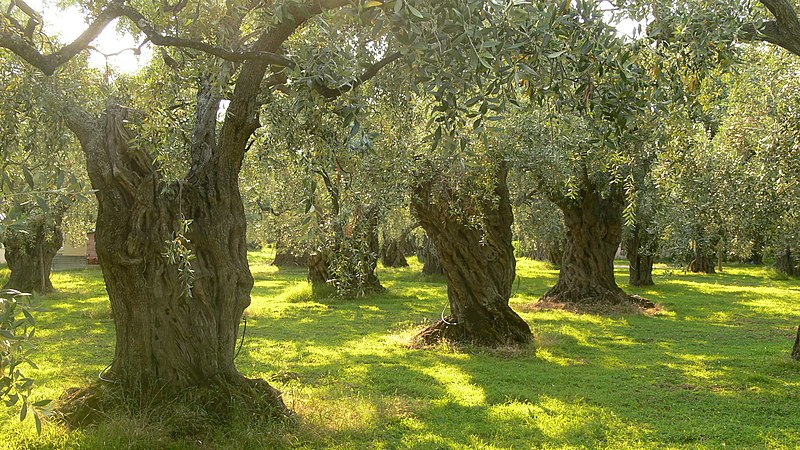
There's something serious about olive-trees. Gnarled, ironhard, producing grey-green leaves and succulent salty fruits often for centuries on end, they are frankly a bit special. Nowadays there is a connoisseur trade in ancient olive-trees, symbols of a timeless rustic lifestyle, old masters with bark on them.

In Greece olive oil was essential as a staple crop for local consumption and export, as it still is, and in Athens the trees were under regular inspection. Amongst them the sacred olive-trees were especially precious, as the un-named defendant of a lawsuit in around 395BC knew well. Scattered across the farms of Attica, some of them little more than stumps with fences around them, these trees were thought to descend from one presented to the infant city by Athene herself and were protected by religious law.

We know of the case, though not its outcome, from the speech written for the defendant by the professional speechwriter Lysias. The piece of land in dispute had once been confiscated from a discredited oligarch and since then resold to the defendant, who had proceded to rent it out to a series of tenants. The accusation had been made, for reasons unknown, that he had uprooted and removed a sacred olive stump from his land. This could have resulted in his exile and the confiscation of his property by the state, so the man's defence was robust.

The speech touches on several aspects of Athenian society. First the defendant denies that there had ever been this olive-stump on his land in the first place, then blames the Peloponnesian War, in which the Spartan army had devastated olive-trees, which take a generation to grow large enough to bear fruit, as a scorched-earth tactic. Why, he went on, should he do anything so stupid as to destroy a sacred object in broad daylight, when anyone could report him? Even if he had managed to keep it secret, his own slaves could have blackmailed him for ever after. In any case, there were no other olives on that piece of land and its absence would have been obvious for all to see. He has offered those same slaves for torture - a common tactic implying an absence of anything to hide - but his generous offer was spurned by his accuser, who dismissed slave evidence as unreliable.

The details go on, but the speaker ends with a familiar appeal. Since Athenian law concentrated not purely on the case but on the characters of the plaintiff and defendant, he plays up his services to the city - financing a trireme for the navy, supplying funds for a play at one of the dramatic festivals (themselves semi-religious affairs) - and piles on the sack-cloth and ashes. How unfortunate I would be, he says, driven into exile, torn from my children, leaving my mother destitute and my house deserted!

All about a tree-stump. But in the Athenian context it was a matter of enormous importance, bringing together religious belief, social and political jealousy, the master-slave relationship, past history, civic identity and the love of going to law. Being rich enough to equip a warship meant that this defendant was also rich enough to hire Lysias, but he had to deliver every word of the speech himself. On the Hill of Ares, before the King-Arkhon and jurors, with the prospect of exile in front of him, this unknown man was on his own.

It's in this context that I wrote A Pig in the Roses, which includes a trial held in this court - full details are at http://peteralanorchard.net/, along with my children's story The House in Athene Street, my short story collection Voices in the Past and the latest Anglo-Saxon story, Starlight.

STOP PRESS: A Pig in the Roses is a miserly $1.99 this week at Smashwords if you use coupon ST73U (offer ends on June 3).

Peter
http://www.peteralanorchard.net/
http://twitter.com/peteraorchard

Monday, May 23, 2011

Regency Romance and Cats


Grace Elliot - cat lover and romantic


I recently met another English historical novelist on Facebook - Grace Elliot, and was interested to discover that by day she is a vet.
I interviewed her to find out how historical romance and the world of science and animal medicine might meet, as they seem strange bedfellows. Although people might think it a little odd, incongruous even – evidence based science versus flights of imagination - Grace expained that the two very different occupations make perfect companions.

Grace said:
"Vetting is an emotionally draining job and as a professional I must hold my feelings in check, whereas writing is about expression and helping others to experience emotion. After a demanding day’s work, writing is my therapy; a completely different skill that helps me leave the pressures of work behind. Immersing myself in plot and description has taught me how to switch off from the real world and escape for a while to a time of satins and silks, where real men rode stallions and a woman with opinions was considered rebellious.

Deborah: What made you embark upon writing historical romance?


"Until five years ago, despite being an avid reader, I was prejudiced against the romance genre. Mistakenly, I had the impression romance was light weight fiction, a flimsy read for ‘losers’ (Before you throw things at the screen, let me say that it took me reading Prince Charming by Gaelen Foley, to see how utterly wrong I was.) In a eureka moment I realized there was enough pressure and angst in the real world, to make the escapism of reading historicals a sensible way of staying sane.
I describe myself as a ‘guerrilla’ writer. As a wife, mother and working woman, I take advantage of every spare moment and ruthlessly hunt out moments that would otherwise be lost to watching TV soaps (or doing housework!), to spend them writing instead."

Deborah:Tell us about your Regency debut novel, "A Dead Man's Debt" and what inspired you to write that particular story.

‘A Dead Man’s Debt’ is a story of blackmail, duty and unexpected love. I wanted to explore how an independent minded woman (Celeste Armitage) would fair in the Regency world of etiquette and restrictions. As a foil to unconventional Celeste, the hero, Lord Ranulf Charing, is a man hamstrung by duty who subjugates his own desires to protect the family’s reputation.
The inspiration behind the story for ‘A Dead Man’s Debt’ sprang from a portrait of the young Emma Hart (who later married Lord Hamilton and became Horatio Nelson’s mistress) The painting by George Romney shows an innocent yet lush young woman, scantily clad with a hint of bosom, brazenly staring out of the canvas with an allure that is quite hypnotic. It struck me as sensational for an 18th century work, that the sitter was not prim, proper, straight backed and starchy. At the time the picture must have been utterly scandalous.
So what if the woman in the portrait wanted to shock? From this, Lady Sophia Cadnum, (Ranulf’s mother) was born; a woman used as a brood mare, who resented her children. What if years later, this same portrait threatened to disgrace her son, forcing him to do the very thing she resented and marry from duty…"


Thanks Grace for taking the time to talk to me. You can find out more about Grace at
http://www.graceelliot-author.blogspot.com/
‘A Dead Man’s Debt’ is available on Amazon, Smashwords, Fictionwise as well as other eBook stores.


For more about Deborah -


Friday, May 20, 2011

Macaroni! And I Don't Mean Pasta


Every era has its extremes of dress. The Sixties had micro-minis. The Roaring Twenties had flapper dresses. Georgian England had macaronis.

Although today most fashion is geared toward women, the macaronis were men. "Macaroni" or "maccaroni", from the Italian word, maccherone, which literally means a boorish fool, described the height, and often the extremes, of male fashion in the mid 1700's.

Brought from the continent by idle young men on their Grand Tour, macaroni dress took the standard male wardrobe of wig, coat, waistcoat, breeches, stockings and shoes to absurd lengths. The express purpose was to shock people. And shock they did. Coats were tight. Huge buttons decorated short waistcoats. Narrow, dainty shoes sported buckles almost larger than they were. And copious amounts of lace, ribbon, ruffles and whatever other outrageous decoration took the wearer's fancy trimmed the outfits, with everything in gaudy colors and showy fabrics like silks and satins.

Perhaps the most obvious feature of macaroni fashion was the wig. As in these pictures, macaroni wigs were excessively elaborate and tall, and, by contrast, crowned with a tiny hat that literally could be removed only with the point of a sword.

Macaroni clothing was never mainstream. While the fashion provided a wealth of fodder for caricatures, most people laughed it off as the blatant posturing of immature males.

The word remains in the vocabulary, although today its definition has constricted to pasta. But several vestiges of its original meaning linger to confound us.

The Macaroni Penguin, a large crested penguin native to Antarctica and the southern tip of South America, owes its name to the Georgian macaronis. English mariners in the Falkland Islands, off the coast of Chile, named the bird. With its flamboyant, colored head feathers, the penguin reminded the sailors of the macaronis back home.

And Yankee Doodle "stuck a feather in his hat and called it macaroni".

Next time, Yankee Doodle and macaronis.

Thank you all,
Linda
Welcome to My World of Historical Hilarity!
http://www.lindabanche.com

Saturday, May 14, 2011

A Rake's Progress Through Literature

 HOW TO TAME A RAKE
Blake, Viscount Dangerfield must marry Wilhelmina Corbet, his cousin three times removed, or lose his inheritance. It is a codicil in his despised father’s will. That he must marry at eight and twenty, when life is just as he likes it comes as a shock, but to marry a drab hoyden just out of the schoolroom,  a hayseed from Northumberland, is deplorable. The last time he saw her she had her hair down and was climbing a tree.
When Willy comes to stay at Hawkeswood, she proves to be everything Blake feared and more, riding his father’s untamed horse and rescuing a fox cub with a broken leg. Blake grits his teeth and decides that after they marry, he will leave her in the country to raise his child, while he returns to London, where his men friends and the ladies of the opera know how to live.
http://www.amazon.com/How-Tame-Rake-ebook/dp/B003XYETXO/ref=sr_1_1?ie=UTF8&m=A24IB90LPZJ0BS&s=books&qid=1305336890&sr=1-1

RAKE is short for rakehell, a historic term for a man of immoral conduct, who uses women heartlessly for his own ends.
In Restoration English comedy  (1660-1688) the rake was a carefree, witty, sexually irresistible aristocrat. The merry gang of courtiers, of which the 2nd Duke of Buckingham and the Earl of Dorset were a part,  combined riotous living with intellectual pursuits and patronage of the arts. After the end of Charles II rein, however, the rake took a dive into squalor. His fate was  sealed in debtor's prison, venereal disease or in the case of William Hogarth's A Rake's Progress, insanity in Bedlam.
In 18th Century England, a rake was seen to be someone who wasted his inherited fortune on gambling, wine and women incurring vast debts. He was also a man who seduced innocent young women and left them pregnant.
 This thoroughly unattractive rakehell has been turned into a brooding hero by authors such as the Bronte sisters, and later, Georgette Heyer and Barbara Cartland. In modern historical romances, he continues to be redeemed by a feisty heroine.
My three novellas are available in e-book and are coming to print in an anthology, Regency Bucks soon.
HOW TO TAME A RAKE
STIRRING PASSIONS
LOVE AND WAR
http://www.maggiandersenauthor.com

Wednesday, May 11, 2011

Free historical short story


My historical short story, A New Dawn, is now available for FREE on my publisher's website.


Burb

Escaping a brutal father, Briony runs to James, the man she loves.
With his family’s blessing, they marry and prepare for a new life in a new country – America.
A wedding gift of two tickets to travel on an ocean liner is a wonderful surprise.
Full of anticipation and hope, they set sail.
Only, fate has sent them a challenge that tests, not just their strength and love, but their very survival.

Sunday, May 1, 2011

Ancient Greece for mystery-lovers... and for children

As I wrote my ancient Athens mystery, A Pig in the Roses, I grew rather fond of the hero's family: Diokles himself, the determined but harrassed merchant with a lot on his mind; his wife Helike, a bustling country girl making a go of city life; their young daughter Xanthippe, bright-eyed and curly-haired, desperate to achieve some grown up dignity in spite of the activities of her much younger brother Euphemos, a self-absorbed bundle of chaos.

One of the elements I tried to maintain in what is in places quite a dark book - it contains several deaths and some murky social undertones - was the picture of a normal family coping with a desperate situation while trying to maintain their normality. There was no criminal investigation in ancient Greece, and it was the duty of the family to pursue an offender and bring cases to court, so Diokles is knocked sideways when his wife's uncle Makron, earning a living in town as a stonemason and living with his hypochondriac ex-slave mistress in Diokles' house, is hauled before a magistrate and accused of murdering his brother, an elderly farmer.

The book is set in 431 BC, at the beginning of the Peloponnesian War between Athens and Sparta, a time of country folk abandoning their villages to cram themselves into every available living-space in Athens, of tensions and divided loyalties. The chain of events involves several murders and all the family becomes involved. Diokles bears the brunt of it, with his persistence, trading contacts and tendency to jump in with both feet, but Helike makes important contributions through her dealings with other wives and spiky encounters with another key figure, Melitta, a young Samian courtesan.

Xanthippe and Euphemos, too, have their parts to play, and it was involving the children which made me think there was a story for young readers to be made out of the family, or characters based on them. The result was The House on Athene Street, a 10,000-worder for the 9-12s. This is a much more straightforward plot. Those who read both books will recognise the family, but most of the names are changed and the hero is an elder brother, the 13-year-old Hermippos, created for the children's story. Athene Street keeps the social context, ditches the politics and goes for a kidnap and chase plot involving the youngest child, the Egyptian girl Tiya, who keeps a perfume-stall, Tiya's uncle Wenamun, a length of rope, a pottery horse and rider and a stroppy red-head up a tree. Hermippos, naturally, saves the day, with lessons learnt about loyalty, bravery, co-operation, difference and the persistence of small brothers.

The difference in writing between the two? Not much, really. The Pig is much the more complex and has elements which children will not (probably should not) follow, but still qualifies as a 'cozy'. The parents are seen in a protective role in Athene Street, with the children to the front of the action, and nobody comes to much harm except the villain's dignity.

Both books are Smashwords titles, are available in all the usual formats and are scheduled to appear at the main ebook sellers as part of Smashwords' premium programme. All the details, summaries, buy links and excerpts are on my website, http://www.peteralanorchard.net/, and my Smashwords page.

Saturday, April 23, 2011

Never let the facts get in the way of a good story

A very fanciful news item made the rounds a few weeks ago: the discovery of the first gay caveman. When I saw the story, I figured the headline writers were just being salacious, as such writers are. However, the "gay caveman" was the conclusion of the lead archeologist.

A few weeks later, a similar news item on the discovery of nine skeletons, mostly children, led to the lead: “The screams must have been unbearable.” The story goes onto say, “Dozens, maybe even hundreds, of women, babies and children were strangled, stripped of possessions and tossed into the ditch that encircled the fort.” The writer based the beginning entirely on supposition.

My former city editor used to say, “Never let the facts get in the way of a good story.” He was being sarcastic, of course, and I can only imagine his words—most of them unprintable—if either of these two news stories came across his desk.

The facts, in both cases, comprise of skeletons, and the items the bodies were or weren’t buried with. In the first case, a man from the Corded Ware culture was found buried in a manner previously only seen in graves for females. According to the article, the society, sometimes called the Battle Ax or the Single Grave culture, typically buried people with gender-specific tools—weapons for men, pots and jugs for women.

So what does this mean? Apparently that the man was gay. Lead archeologist Kamila Remisova Vesinova said, “From history and ethnology, we know that people from this period took funeral rites very seriously so it is highly unlikely that this positioning was a mistake. Far more likely is that he was a man with a different sexual orientation, homosexual or transsexual.”

Far more likely? Far more likely that the archeologist either is looking for publicity or she forgot to check her biases at the door. Almost all societies did—and do—take burial rites seriously.

I’m not saying that the man in question wasn’t gay. The fact is, we have no idea who he was, what he was, or why he was buried as a woman. As a novelist, I could spin quite a tale about how he came to be buried in such a manner. But that's the fun part of writing fiction. Nonfiction writers and journalists need to stick to the facts even as they questions them.

In the second story, we have no idea why the three adults, teenager, toddler and four infants ended up in a mass grave minus any possessions. The archeologist in charge believes it could be—could be—possible that more skeletons will be found in the ancient ditch, all victims of intertribal fighting during Britain’s Iron Age. While the theory is solid, “could be” is a long way from unbearable screams and unheeded pleas for mercy.

Am I the only one bothered by such lapses in academic and journalistic objectivity?

Wednesday, April 20, 2011

Interview: Diane Scott Lewis

Today at Historical Belles and Beaus we welcome historical author Diane Scott Lewis.

Diane has a new historical release, Elysium, a story about Napoleon and his exile on the island of St Helena and the people who went with him, including the delightful Amélie Perrault.

Diane, what inspired you to write this book?

Anne, thank you for having me here. When I wrote my first novel, The False Light, in my original ending (now deleted) I had my heroine travel to St. Helena to visit her old friend, Napoleon. I started to research his time on this rugged, remote, island, and became fascinated by his character, the politics that trapped him there, the people who traveled with him and the possibility he may have been poisoned. The island is intriguing with unusual flora and fauna and topographical features—a character in itself.

I decided I needed to write an entire book with Napoleon as a main character. I also created my heroine, AmĂ©lie, a strong-willed woman—the fictional daughter of the head chef—who would rally his soul and love him for himself. She suspects an assassin has been sent with their entourage to murder Napoleon, and ferrets out the culprit.

How did you choose the title?

In my research, Napoleon’s chamberlain—who took dictation and wrote the ex-emperor’s memoires—said he spoke like a spirit on the Elysian Fields. I chose the shorter, Elysium, which in Greek mythology is a “delightful paradise where the gods are sent to die.” Of course, it’s also very tongue-in-cheek, because St. Helena was far from delightful for Napoleon. To AmĂ©lie it was her paradise because she found love.

What is your writing process?

I rise early, because mornings are my best time with the most energy. I’m afraid I write by the seat-of-my-pants; in other words, I don’t follow an outline. All my early novels were conceived this way, just throwing ideas onto the computer screen, then researching as needed. This process led to long, rambling stories without enough focus. The False Light and Elysium were first created over ten years ago, and I had to trim them down after I learned about plot, theme and structure. From now on I plan to be more disciplined and at least have some idea where I need the story to go.

How hard, or easy, was the research for Elysium?

In the time before the internet, I spent hours at the Library of Congress researching books on Napoleon’s final exile. Some of the books were actually written during his time there, one in 1817, a marvellous resource. I purchased books recommended, such as historian Octave Aubry’s detailed Sainte-HĂ©lène. I read books written by Napoleon’s valets who suffered with him on the island. I spoke regularly to a Napoleonic scholar who had visited St. Helena several times.
The research wasn’t easy, but I enjoyed the process.

Did you learn anything from writing and publishing this book? What?

I learned so much, I could have written another novel about the characters on St. Helena. In fact, I had to delete actual historical personages from the story because it grew too huge. Through my careful research, I learned that Napoleon wasn’t at all the extreme villain many have portrayed him as, and I tried to show that in this novel. I’m sure I’ll hear disparagement—as I did in one contest—over my effort to make him a rounded human being who desired love as we all do. I also discovered that many escape schemes were formulated to rescue the ex-emperor from his exile. I played on this theme in Elysium. Could Napoleon have escaped? In trying to publish Elysium, I found that mainstream agents and editors weren’t comfortable with me fictionalizing Napoleon, so I chose an innovative small press.

What is your favourite time of year?

The spring. I’m originally from California, where we had mild winters. Now I live in Virginia where it actually, gasp, snows! I run my heating bill up so high just to keep warm. When spring arrives, like now, and the flowers bud, the birds sing, I can stand on my front porch and not shiver, it’s like a reprieve from the Arctic.

What are you working on now?

Another historical—my favorite genre—Ring of Stone. The story is set in the late eighteenth century in Cornwall, England. My heroine, Rose Gwynn, aspires to practice as a physician, uncovers evil village secrets and finds love in the least expected place.

Do you have another release coming out soon?

I hope to have my sequel to The False Light, Without Refuge, out early next year.

Thank you for visiting us, Diane.

Elysium Blurb:
In 1815, Napoleon Bonaparte is exiled to remote Saint Helena. AmĂ©lie Perrault, the daughter of Napoleon’s head chef, is determined through healing herbs to rise in importance and is fascinated with the fallen French Emperor. After her beautiful singing voice catches Napoleon’s attention, she is drawn into his clash with their British jailers, court intrigues and a burgeoning sexual attraction.
Napoleon is soured on love. Since political maneuvers fail to release him, he desires freedom no matter the risk. AmĂ©lie suspects someone in their entourage is poisoning the emperor. Now she must uncover the culprit and join in Napoleon’s last great battle plan, a dangerous escape.

Elysium can be purchased here:
http://www.amazon.com/s/ref=nb_sb_noss?url=search-alias%3Dstripbooks&field-keywords=elysium+diane+scott+lewis

Or visit Diane’s website: http://www.dianescottlewis.com/

Friday, April 15, 2011

The Smuggler Squire


During the English Civil War, a new tax on domestic consumption, excise, was levied by Parliament to pay for the war. By 1660, this applied to items like chocolate, coffee, tea, beer, cider and spirits. Also in this year, all exports of wool was forbidden to promote the English wool trade, the penalty being the gallows for transgressors, or ‘owlers’ as they were called due to the fact they worked at night. In 1688, the excise was extended to include essentials such as salt, leather, and soap.

Collecting taxes was a cumbersome and inefficient process with a hostile population where communication and transport links were slow and inefficient, so whole communities tended to become involved in the 'free-trade', as it was euphemistically known. The farm labourer helped carry goods inland; the parson bought cheap tea and wine; the local squire lent his horses for transport; the wealthy merchant obtained cut-price supplies of silks and lace; and at the very pinnacle of society, members of the gentry conducted foreign business through intermediaries involved in smuggling. In the West Country, some houses would have a bottle bottom set in the plaster below a gable end of the house to indicate the owners were smugger sympathisers.

Whilst researching 17th Century smuggling in the Exeter area, I came across a character named Thomas Coumbe, known as The Smuggler Squire. Born in Devon in 1620, he married a tall, auburn haired beauty named Bridget, who was much younger than himself and reputed to be a descendant of Sir Ralph de Blanchminster, a Cornish Knight who followed Richard Coeur de Lion on the Third Crusade.

Coumbe became a church warden in 1666, and grew very wealthy from his association with the smugglers at Bude on the North Devon coast, where signal flares could be seen by the smugglers at sea.

In the 17th Century, sand was used to break up the heavy loam of Devon before the employment of artificial manures. The Smuggling Squire made a weekly trip between Tavistock and Exeter on his sand cart, in which he hid tobacco, silk, brandy and wine.

According to old deeds, he owned land from "Sea to Sea", i.e. from Exeter on the South Devon coast to Bude on the north, a distance of 53 miles. He had a number of illegitimate children, to whom no doubt some of the farms were bequeathed. Described as:

a brown, hard, stern looking man with one blue eye, over the other he wore a patch having lost an eye in a duel, and regularly dressed in leather with a *bob wig.

How could I resist adding this colourful man to my story?

* The most popular undress wig was the shorter, bob wig originally worn by tradesman who could not afford the longer wigs. Bob wigs were also the standard wig worn by Protestant clergymen of the 17th Century