Friday, January 18, 2013

Women in World War I by: Stephanie Burkhart


Prior to the 20th Century, a woman's job was to tend the home. They usually worked as domestics or raised children. They also found opportunities in nursing and teaching, but it wasn't until World War I did women's roles expand in a male dominated society.

Due to their service, dedication and hard work, women earned the right to vote in America in 1918.

In Great Britain, women over 30 were given the right to vote in 1918.

Women in Great Britain
With men heading off to war, women filled in the gaps men left. They found work in transpirations, driving buses,  working on the rail lines, nursing, factories, (ammunition) and in the RAF as mechanics on planes.

Young women received basic medical training and went to the war zone as nurses. They tended to the wounded men, cleaning wounds, and changing bandages. These nurses used aspirin and morphine as painkillers,  Known as VAD (Voluntary Aid Detachment) they weren't paid.

FANY's (First Aid Nursing Yeomanry) were also women with challenging jobs as well. They:
Drove ambulances
Disinfected rooms with wounded soldiers
Ran soup kitchens

On the home front, they became more active in farming and in the factories. In farming, they planted seeds by hand and used horses to till the soil, since the resources used to do those jobs were diverted to the war effort.

Women in America
When World War I began, the Navy enlisted close to 13,000 women. (The Army couldn't figure out how to get around the War Department's red tape. The Navy ignored it.)

Women worked as nurses, physical/occupational therapists, cooks, telephone operators, journalists, and entertained the troops.

In World War I at least 3 Army Nurses were awarded the Distinguished Service Cross (the Nation's 2nd highest military honor), the Distinguished Service Medal, and the French Croix de Guerre.

Women in Russia
During World War I in the Czarist period, women were so involved in the war effort, they even took part in combat. Most dressed as men to join, but the Czar did allow women to openly serve. The most famous is Maria Botchkareva. She earned the respect of male counterparts on the battlefield. She was noted for bayoneting a German soldier to death and dragged several wounded to safety after a machine gun fight. Maria was allowed to recruit an all women's battalion. The women in Maria's Battalion of Death proved they were fierce fighters in war.

Women in Germany
The Prussian culture of Germany at this time was believed to have glorified brute force, supported a man's domination of women, and treated children poorly. When war struck, women went to work in munitions factories and served as civilian workers for the military in the rear as nurses, and clerks. After the war, German women were also given the right to vote.

Question: If you were a woman during this time, would you be drawn to military service? How would you choose to serve? What nation would you want to serve?

Author Bio: Stephanie Burkhart is a 911 dispatcher for LAPD. From 1986-1997 she served in the US Army in the Military Police Corp. She spent 7 years assigned overseas in Germany and she was awarded the Army Commendation Award (3x) during her tenure. She earned a Gold Schutzenschnur (German Armed Forces badge of Marksmanship) and went on 2 Reforgers with the British Army in Northern Europe. During her tour from 1986-8, she was stationed in Munster, Germany, and worked with British soldiers on a daily basis.

Danube in Candlelight
Blurb: Morgan befriends a wolf who eventually turns her into one. Can she learn to live and love as a werewolf?

Opening:
Morgan Duma sat back in her seat and looked out the train's window. She raked a hand through her hair and let out a slow breath. The train slowed to a stop at the Sopron station. A handful of people gathered near the doors. Her journey from England to Hungary had been long. Thank God her sister, Emily, was making it with her. Budapest was only an hour away now. It would be heaven to sleep in her own bed tonight. She rested her chin in her hand as several passengers disembarked.

Then she saw him. Adam Varga, shuffling toward the train, a duffle bag slung over his shoulder. At least, she believed it was Adam. The last time she had seen him was four years ago, before she'd left for England.
5 Stars, Reader's Favorite:
This story is the closest I have ever come to reading a book that feels like a movie!

4 Hearts, Sizzling Hot Book Reviews:
Once again, Stephanie Burkhart has touched my imagination and with her writing brings 1922 Hungary to life. Danube in Candlelight is a very romantic, yet spicy read. This is a must read if you enjoy the paranormal werewolf stories or even if you merely enjoy a great romance.

Book Trailer on You Tube: http://www.youtube.com/watch?v=dgzUIHCRN0I

AMAZON KINDLE BUY LINK: http://www.amazon.com/Hungarian-Moon-Book-Three-ebook/dp/B0061XJFG0/ref=sr_1_1?s=digital-text&ie=UTF8&qid=1320188529&sr=1-1
BARNES & NOBLE NOOK BUY LINK: http://www.barnesandnoble.com/w/hungarian-moon-book-three-stephanie-burkhart/1107039692?ean=2940013659148&itm=1&usri=danube%2bin%2bcandlelight


Monday, January 14, 2013

Unputtdownable new book from Jen Black!

The Dowager Duchess of Yaxley escapes from an abusive son-in-law to become a housekeeper in a remote Northumbrian village. The Master of the house, Jarrow, is a widower with a delightful daughter, but few funds. Jarrow has his scars, but he also has a secret life that unnerves Melanie when she discovers what it is that occupies his nights. This historical romance with its great sense of time and setting, leads the reader through the clash of the scarred personalities, troubles with excise men to a resolution which surprises them both.

Available only from Kindle: here


“Fascinating and beautifully created characters, plenty of secrets, and a compelling love story between a hero and a heroine that tugs at your heart strings, makes this a must read.”

Excerpt

‘Gavington House, Miss.’

The coachman, no doubt anxious to reach his journey’s end before dark, was briskly polite as he drew the coach to a halt on the road between Corbridge and Morpeth. Descending unaided and with some difficulty, given her hooped skirt, she saw he had deposited her bag beside the imposing stone pillars of an open gateway. He tipped his hat to her and sprang back up to his perch with a cry to his horses. She watched the coach roll along the lane, and waved away the cloud of dust and grit that flew up behind the large wheels.

Green hedgerows divided greener fields, and there was not a dwelling in sight. Looking around, Melanie shivered. The snarling griffins with claws dug into the top of the stone gateposts added to her feeling of unease. Stepping closer, she realised the griffins protected a date incised into the stone beneath them: 1524. Gavington House had stood here for three hundred and forty years.

A little unnerved by such a span of time, Melanie stooped, gripped the handles of her portmanteau and marched between the gate posts with a determined stride. The gates had been opened and then abandoned some time ago, for tall weeds grew on both sides of them. Odd, she thought, as she walked along the weedy gravel drive that led through a shadowy clump of pine trees. Though she had packed only the necessities and a fresh gown for tomorrow’s interview, her leather bag was heavy and the gravel drive did not make for easy walking. Full of shallow gradients and curves, it wound through the trees in a most annoying way. Now and then, through gaps in the foliage, she caught sight of what must be Gavington House.

Had she been in the comfort of a sprung carriage, she would have found the approach charming and no doubt been delighted with each pretty vista as it appeared. But after twenty minutes of energetic walking, Melanie hesitated. The drive was about to take one of its unnecessary bends away from the house, which was plainly visible two hundred yards away in the opposite direction.

With a frustrated sigh, Melanie gripped her bag firmly, brushed through the low hanging branches and strode out across the lawn. If she were shot for it, she would not follow that drive an instant longer. Hurrying across the open stretch of recently scythed grass, she glanced over her shoulder, half expecting an irate gardener or gamekeeper to chase her off the hallowed turf.

Excerpt 2

‘Circumstances change, sir. A new master appeared, with staff of his own.’ In a way, that was true. Her step-son, the new duke, had summoned his lawyer friends and cheated her out of the dower house and everything else to which she had been entitled.

A grim smile touched the corners of Lord Jarrow’s mouth. ‘Well, at least your mistress was prepared to give you good references. These are excellent.’

‘Thank you, sir. I hoped they would serve.’

His eyes narrowed, and Melanie’s stomach clenched in response. Her tone had been a little too pert. Lord, it was so difficult to strike the right balance. Dipping her head, she surveyed her clasped hands and waited to see what direction he would take. Be subservient, she told herself. Think subservience, and you will practice it. If you do well, you will be his housekeeper, and have the security of a roof over your head.

‘Gavington is perhaps not what you expected,’ he said slowly, sitting forward with his forearms on his desk. ‘The house is virtually closed. I keep few staff, only those necessary for the comfort of myself and my daughter. I do not welcome visitors. Now you have seen how isolated we are, do you still wish to be considered for the post?’

‘Of course, sir.’

‘Why?’

Jolted, she met his quizzical glance. ‘Why, sir?’

‘It is a simple question, Miss Grey. Why do you, a young and attractive woman, wish to disappear into the countryside when you have had command of a house such as Rockford?’ He looked down at her reference ‘Why, there must have been forty staff there when I visited Middlesex three years ago. Here, we have less than six.’

Dear God, he’d been to Rockford House! Three years ago? She blinked, frantically searching her memory. Had he been a guest at dinner? No, she would have remembered him. But if he’d paid a call on the duke in the estate office at the far end of the west wing, she might never have seen him. That must be what had happened. Thank goodness he showed no sign of remembering her.

Available only from Kindle: here

Thursday, January 10, 2013

Mapping it out.


When writing a historical novel, research is naturally a vital instrument in making the story rich in detail and as authentic as possible to the reader, sweeping them up and transporting them back in time to a place that is as true to the real thing as we, the writer, can make it, then allowing the reader's imagination to take them the rest of the way.
Part of my research that I find very important and enjoyable is studying maps of the areas I set my books. I have spent hours pouring over the smallest details on printed maps that I've managed to find drawn from the eras I write. By having maps of those eras at hand, I am able to send my characters down the correct roads, across the right rivers, and climb the named moors and mountains of the area. To my characters, who have lived in that area they need to know the places, roads and rivers as well as if they actually lived there, as do I.
A good map will always be of valuable use to a writer, and in turn, that information will be of great benefit to the story and hopefully make it more enjoyable and real for the reader.

For example, in my book The House of Women, which is set in Leeds, West Yorkshire, I have found maps of 1870 to help me get a feel of the area my characters would travel.


The House of Woman, example:
The rumble of the carriage wheels sounded loudly in the slum quarters of the town. A half moon shone in the star-littered black sky, etching the town in long shadows. They passed revellers and private parties where the light and noise spilt onto the street, but the chill of the cloudless night kept most indoors. Too many of the town’s inhabitants, New Year’s Eve was an ordinary night and tomorrow’s start of another year gave them no cause for celebration. Nothing was going to alter their circumstances, no matter what the year date proclaimed.
A tomcat’s cry rang out through the narrow lane as Doyle assisted Grace from the carriage. Back-to-back hovels lined either side of the lane. She lifted her skirts from the sludge-covered stone flags.
‘This way.’ The messenger showed them towards an archway between the houses. No glow of light filtered from windows to help them to find their way through the cut. Its limited width forced them to walk single file. The short passage opened onto a square yard bordered by rundown houses that seemed to lean against each other for support. Even in the shadowed gloom, the filth and waste was visible. A lingering stench assaulted their noses, making breathing unpleasant.
‘Your aunt lives here?’ Grace was alarmed to think of the dapper Mrs Bates living amongst such conditions.
‘No, she lives a few streets away, she covers the whole area,’ the man replied, opening a door. He waited until they were beside him in the dark stairwell. ‘This is a place where people go who’ve a penny to spare for a bed.’
‘A penny for a bed.’ Grace shook her head as they followed him up the rickety stairs to the next landing. There, he paused, before opening another door and stepping back to allow Grace and Doyle to enter on their own.
‘Oh my…’ Grace breathed. She stared at the bunks of beds lining the walls and grouped in the middle of the room. Women and children lay huddled together; some coughed the phlegm cough of the dreaded tuberculosis. Few spoke in low voices, but most slept letting their weary bodies get what rest they could. As Grace passed the beds, those awake clutched at their meagre belongings thinking they might be stolen.
‘Put your handkerchief to your nose, Grace.’ Doyle muttered. ‘I hate the thought of you within the confines of this hideous house.’
A single lantern, suspended from a beam, issued a weak light. Grace walked on. Her eyes, now accustomed to the dimness, picked out Mrs Bates at the end of the long room. She hurried to her side, only to stop short upon seeing the figure on the bed. Stifling a cry, Grace bent low to stare at the woman on the bottom bunk. Mrs Bates is wrong. This cannot be Letitia.

The House of Women can be purchased in paperback or in ebook formats from various places such as Amazon USA and Amazon UK.


Saturday, December 22, 2012

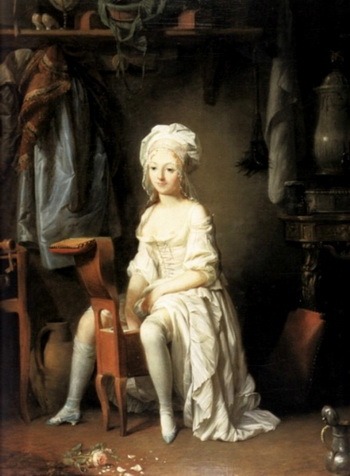
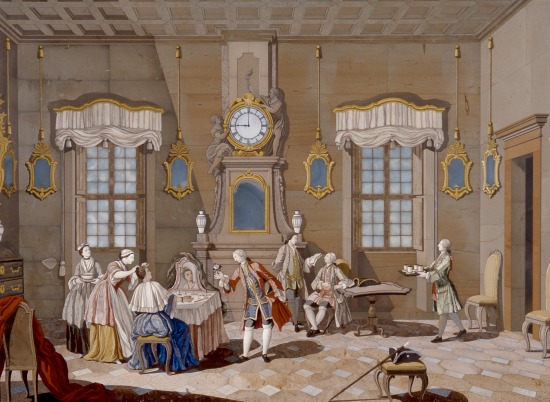
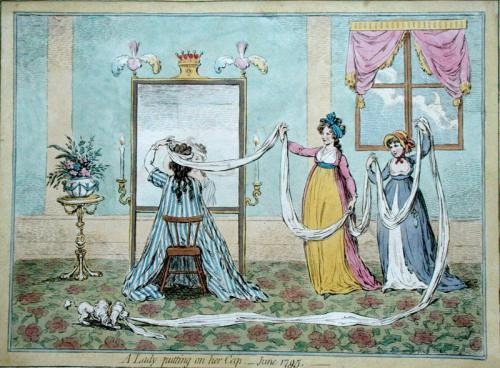
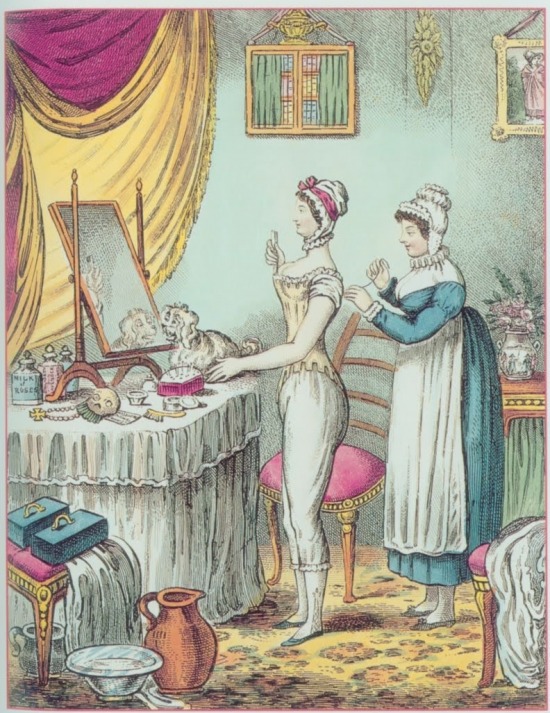
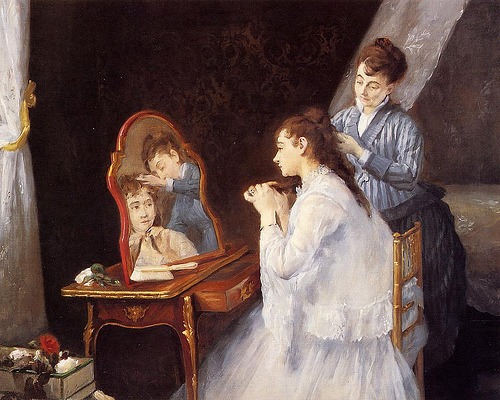
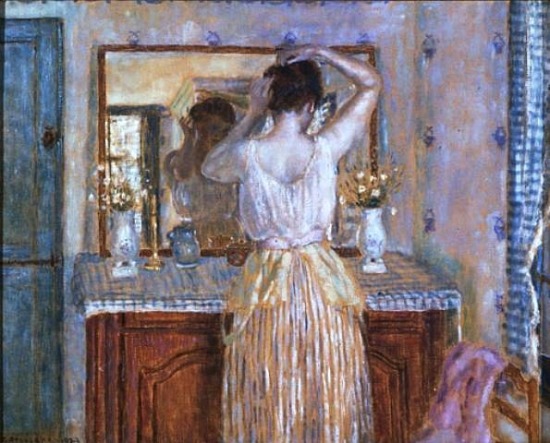
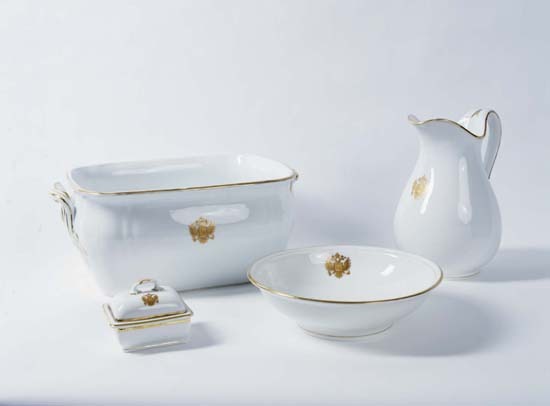
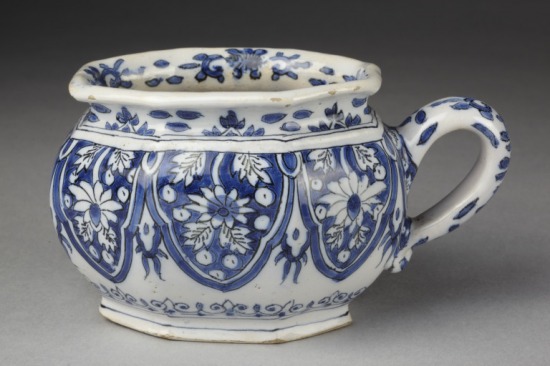
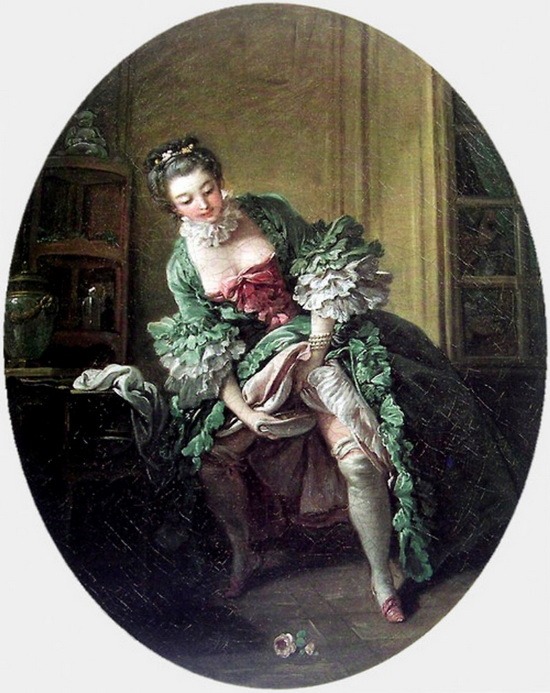
WOMEN AT THEIR TOILET IN THE 18TH CENTURY. And an excerpt from THE RELUCTANT MARQUESS Free on Kindle today!


Francois Boucher - La Toilette, 1742


Louis-Léopold Boilly (1761-1845) 


Morning routine, 1750s

James Gillray caricature, 1795 

James Gillray, 1810 

Eva Gonzales - Le Petit Lever, 1875-1876

Frederick Frieseke, 1922


Franz Joseph tools - image: Hofmobiliendepot


Chamber Pot : V & A
Francois Boucher leaves little to the imagination.

 FREE ON KINDLE TODAY!

AMAZON KINDLE
Also available in print!

Blurb: Charity Barlow wished to marry for love. The rakish Lord Robert wishes only to tuck her away in the country once an heir is produced.

A country-bred girl, Charity Barlow suddenly finds herself married to a marquess, an aloof stranger determined to keep his thoughts and feelings to himself. She and Lord Robert have been forced by circumstances to marry, and she feels sure she is not the woman he would have selected given a choice.

The Marquess of St. Malin makes it plain to her that their marriage is merely for the procreation of an heir, and once that is achieved, he intends to continue living the life he enjoyed before he met her.

While he takes up his life in London once more, Charity is left to wander the echoing corridors of St. Malin House, when she isn’t thrown into the midst of the mocking Haute Ton.

Charity is not at all sure she likes her new social equals, as they live by their own rules, which seem rather shocking. She’s not at all sure she likes her new husband either, except for his striking appearance and the dark desire in his eyes when he looks at her, which sends her pulses racing.

Lord Robert is a rake and does not deserve her love, but neither does she wish to live alone.

Might he be suffering from a sad past? Seeking to uncover it, Charity attempts to heal the wound to his heart, only to make things worse between them.

Will he ever love her?

In this excerpt, Charity prepares for a ball.

Brigitte had just begun the finishing touches to Charity’s toilette, when a knock sounded at the door. Charity gave a nervous start. “That must be Robert.” Had he come to inspect her and see if she looked regal enough?

She swallowed as feelings of inadequacy consumed her.

A footman bowed. “Lord Southmore is below, my lady. He wishes to attend while you dress.”

“Watch me dress?” Appalled, Charity frowned into the mirror and pulled her wrap over her bosom. “What can he mean?”

“He asks to come to your boudoir, my lady,” Brigitte said, “to assist with the placing of your patches, jewelry and hair adornment. It is often done.”

“Indeed?” Charity thought this a most deplorable fashion.

“You would insult him should you refuse, my lady.”

Charity remembered Robert’s warning about his friend, but it only served to make her rebellious. Would Robert be just a little jealous to find he’d been here? “This is the way of things?”

“Oh yes, my lady. I have seen it many times.”

She was sure that Lord Southmore didn’t wish her to look regal. “Have him come up,” she said.

Shortly afterward, the elegant man, dressed in peach satin, entered the room and came to kiss her hand. “Lady St Malin.”

How civil he was. And quite attractive, she hadn’t noticed that before. She felt sure that a man such as he would never give a woman a moment’s heartache. “Lord Southmore.”

He settled on a chair beside her as Brigitte opened the box containing patches. “Now let me see. One here, I think.” He traced her cheekbone with a feather light touch. “And one at the very corner of your mouth, to highlight one of your best features.” He brushed her bottom lip with the tips of his fingers before withdrawing his hand.

Charity wanted to giggle, but as Lord Southmore appeared quite serious, she said, “Thank you, my lord. I appreciate your assistance.”

His gaze moved over her, the warm light in his eyes failing to match his impersonal tone. “Now for the hair.” He turned to study her waiting gown. “An excellent choice. That lovely shade of green will pay homage to your eyes. For your hair, those silk gardenias are perfect.”

Brigitte began to tuck the flowers into Charity’s hair. “Superb,” Lord Southmore said. “Now, I recommend — “

“Emeralds,” a sharp voice came from the doorway.

Charity turned to find her husband entering the room, a muscle clenching in his jaw. She trembled at his steely expression, but raised her chin and held his gaze.

Lord Southmore rose and bowed. “St Malin. You are just in time for the gown.”

“So I see,” Robert said through his teeth.

Charity hurried behind the painted screen. She slipped off the wrap. Brigitte helped her step into the gown, then her deft fingers worked at the hooks.

Brigitte smoothed a silk ruffle. “There, my lady.” Charity stepped out to face the two men.

“Perfect. I was right about the color enhancing your eyes,” Lord Southmore said, a mocking smile playing at the corners of his mouth. “Wouldn’t you say, St Malin?”

Robert’s eyes narrowed, and he didn’t answer. He opened a velvet box. She expected the diamonds, but he drew from it an exquisite emerald necklace. The deep green stones, set in a bed of diamonds, looked like pretty spring flowers. He tossed the box to the maid and clasped the necklace around Charity’s throat.

Charity felt his fingers at the nape of her neck. She anxiously watched his face in the mirror. He looked as if he would prefer to throttle her rather than adorn her with jewels. She would not allow him to spoil the evening.

“Thank you, St Malin.” The use of his title felt strange on her tongue, and she saw by the surprise in his eyes that she’d scored a hit. “Another beautiful necklace. I declare you spoil me.” She turned to Lord Southmore. “And my thanks to you, my lord, for your skillful artistry.”

Lord Southmore bowed. “A pleasure.”
She took her cloak and gloves from Brigitte. “Shall we go, gentlemen?”


Compliments of the Season!

Maggi Andersen
MY WEBSITE  
Join me on FB: Maggi Andersen Author
Twitter: @maggiandersen

Research: My thanks to Silouette for the images.

Thursday, December 13, 2012

O, Christmas Tree, Part 1

Viggo Johansen 1891

By: Stephanie Burkhart

Ah, there's nothing like the woodsy outdoor smell of a Douglas Fir to put me in the Christmas spirit. Throughout the years a Douglas Fir or a Scotch Pine have been the most popular types of Christmas tree. I remember growing up as a little girl in New Hampshire, we'd go cut us down a pine. The smell was invigorating to the bones. Nowadays I have an artificial Douglas Fir that I put up in the my California home. Thank goodness for Yankee Candle who have a great selection of Christmas scents including pine, balsam, and fir. I may be missing the snow, but for me, the Christmas tree is an announcement that Christmas is coming. Now is the time to prepare.

In my research, I discovered Romans, Egyptians, and Celtics used to hang evergreen boughs to keep away evil spirits or decorate homes during the winter solstice. The customs weren't quite the same thing as a Christmas tree, but they speak to the tradition during this time of the year, setting a prescient for the trees to come.

Interestingly, evidence of the first Christmas tree comes from modern day Latvia and Livonia dating back to 1510. The use of the Christmas tree spread to Germany. There's a reference to a tree that one was put up in Bremen, Germany in 1570. The tree was decorated with apples, nuts, dates, pretzels and paper flowers. Bremen is a town in northwestern Germany. I would pass by it on my way to Bremerhaven during the late 1980's.

Martin Luther even has a footnote in the Christmas tree saga, adding candles to the tree because they reminded him of the stars that appeared on the night Jesus was born. The intent of the tree is to tell the story of Christ's birth with a star or angel topper and lights. Other decorations help to fill out the tree.

The Christmas tree became popular in Germany and followed the Hanovers to England. When Anne died, George 1 from Hanover, Germany was invited to take the throne. He brought his Christmas tree with him. The tree, however, didn't catch on with the public in Britain. Several European courts though began throwing up trees. Princess Henrietta put one up in Austria in 1816. France began putting up trees around this time. Denmark's Countess Wilhemine of Holsteinborg decorated hers in 1808.

13-year-old Queen Victoria even had a Christmas tree. In 1832 she wrote in her journal:

"We then went into the drawing room near the dining room. There were 2 large round tables on which were placed 2 trees hung with lights and sugar ornaments."

But the Christmas tree still hadn't caught on.

Victoria goes public with her tree.

In 1846 (or 1848, I find conflicting dates) Victoria, now Queen posed with Prince Albert and her children around her Christmas tree for the "Illustrated London News."

She was a big hit. Everything Victoria did was fashionable and that year she made the Christmas tree a household tradition.

Decorations consisted of homemade crafts, apples, nuts, quilted snow flakes, paper baskets with almonds, and tinsel.

Did you know?

In 1610, Tinsel was invented in Germany. They used real silver for tinsel right up until the mid-20th Century.

Glass Christmas ornaments made in Lauscha, Thuringia, Germany became popular in Britain and were often used to decorate the tree.

In the late 1880's in Britain, trees grew tall and were packed with decorations. Themed trees like the "Oriental" tree or "Egyptian" tree became popular.

Victorian passed away and so did the nation's passion for Christmas trees until the 1930's. Christmas offered a sense of security and Britain was ready to capture that feeling with the uncertainty festering around the world at the time.

Next: How did the Christmas tree get to America? Look for part 2 coming soon on my blog http://sgcardin.blogspot.com on 20 DEC 2012.

Question: What do you put on the top of your tree? A star? An angel? Something else? What theme or story does your tree tell? I'd love to hear your decoration ideas.

Author Bio: Stephanie Burkhart is a 911 Dispatcher for LAPD. Prior to that she spend 11 years in the US Army. Her latest release is "A Gentleman and a Rogue," Book 2 of The Windsor Diaries, her steampunk romance series.

Reviews:

"I was hooked in it and did not want it to end. All of you romantic historical fans don’t miss this one – it is a winner." - 5 Stars, Trudi LoPreto for Reader's Favorites

"It’s the Amazing Race with energy sources in Stephanie Burkhart’s second steampunk." - 5 Stars, Muddy Rose Reviews

PUBLISHER'S BUY LINK:

http://stores.desertbreezepublishing.com/-strse-366/The-Windsor-Diaries-Book/Detail.bok

ALL ROMANCE EBOOKS:

https://www.allromanceebooks.com/product-thewindsordiariesbookthreeagentlemanandarogue-996194-141.html

BARNES & NOBLE (NOOK)

http://www.barnesandnoble.com/w/the-windsor-diaries-book-two-stephanie-burkhart/1113777499?ean=2940015869538

AMAZON (KINDLE:)

http://amzn.com/B00A5CF24C

FIND ME ON THE WEB AT:

WEBSITE: http://www.stephanieburkhart.com

TWITTER: http://twitter.com/StephBurkhart

FACEBOOK: https://www.facebook.com/StephanieBurkhartAuthor

GOOD READS: http://www.goodreads.com/author/show/4031660.Stephanie_Burkhart

YOU TUBE CHANNEL: http://www.youtube.com/user/botrina?feature=mhee

PINTEREST: http://pinterest.com/sgburkhart/

Monday, December 10, 2012

OPERA IN THE GEORGIAN ERA by Maggi Andersen


Queen's Theatre, Haymarket, the 18th-century predecessor of the theatre; watercolour by William Capon (V&A)


When my heroine, Miss Horatia Cavendish, attended the theatre in London for the first time in A Baron in Her Bed, in1816, it was very different than it is today. Opera goers gossiped with friends, peered at the audience through opera glasses and hissed weak performances while appreciating a well-performed aria.
Today, opera is regarded as a ‘work’ based on the composer’s intentions for that work.  In the 18th and early 19th centuries opera and theatre was seen as an event. And as an event, people were free to roam around during the performance and converse, as the actors and singers performed. The event itself was the focal point, even from the perspective of most composers, and the spectators were important participants in the event, although talent onstage was necessary to draw a full house. As The Times acknowledged in 1789, for instance, “The total want of variety at this once elegant Theatre, (the King’s Theatre) the wretched dancers, have driven away those who used to make it a point to see and be seen.

The social aspects of opera going were not entirely distinct from aesthetic concerns, Although many spectators attended for social reasons, the interactive behavior of the Georgian opera audience was framed within the context of the event orientation.  
As mentioned in the letters of Lady Sarah Bunbury in 1764, members of the elite were more interested in the singers than the composers, to the arias particularly, and were not centrally concerned with the story. She wrote: “I hear the Opera is in high fashion, & Manzoli is vastly liked; the woman is a good singer, & I am told is excessively like me.” At the opera that Saturday: “I had a vile place & nobody to speak to, so I attended to the Opera, & I assure you without affectation that I was vastly amused, & liked the man vastly; so I did the woman, but she was not fashionable, which mortified me, for she is really very like me, only she squints a little.”  It was the talent of the singers which drew them. Many spectators, even those who were not connoisseurs, were quite knowledgeable about music and opera, but the scope of their knowledge was defined by Georgian tastes and standards, and thus it differed from the ideal laid out by supporters of the work-concept
Because of their focus on solo arias, Georgian spectators were not required to give unrelenting attention in order to understand and appreciate an opera. This freed them up to socialize.
By the 1820s, members of the elite usually knew the names of the leading singers but focused on similar characteristics. Harriet Arbuthnot was one of the many opera-goers who reflected on the rivalry between Giuditta Pasta and Henriette Sontag in 1828: “We have got a new singer over who is, they say, to faire furor, Mlle Sontag. She was cried up before she came as the greatest beauty that ever was beheld but, however, in that respect she is not particularly admired. She sings beautifully, not equal to Pasta but with a facility & execution that is really enchanting.” Like Lady Bunbury, Harriet Arbuthnot focused on the singer’s beauty and technique.
The introduction of Mozart’s operas, which dominated the repertoire at the King’s Theatre from 1816 to 1820, began to change the concept of opera as an event when audiences revered Mozart as a musical genius and flocked to hear his 'work'.  His operas began to solicit silent, inwardly focused attention, while Rossini’s music could be enjoyed while socializing with friends. 

RESEARCH: FASHIONABLE ACTS, Opera and Elite Culture in London, 1780-1880. Jennifer Hall-Witt, University of New Hampshire Press.

Maggi Andersen is an author of Historical Romance and Romantic Suspense novels. Her latest release is A Baron in Her Bed ~ The Spies of Mayfair Series, Book One.


Friday, December 7, 2012

Ellis Island

Ellis Island, the reception centre for all new immigrants to New York, newly opened in 1900 after the earlier wooden structure burned down. Ships arrived daily, filled with hopeful immigrants by the score, as many as 10,000 people to be processed. Russian Jews seeking escape from persecution, Hungarians, Slovakians, Poles, Italians, all speaking to each other in different tongues, eating strange foods, suffering the dangers and indignities of the crossing in grim silence. They came for free education, a free vote, low taxes, high wages, no religious repression, no kings or compulsory military service. They often left behind loved ones, poverty, starvation, unemployment, congested living conditions, oppression. In America they dreamed of living in a free land, with the hope of a good future.

Conditions on board had been deplorable, but arrival would surely end their agony? Unfortunately a new one almost instantly began. Thousands of people jostled ashore. Rations would run short, children crying, weather conditions, whether too hot or too cold, making the waiting almost worse than steerage, and anxiety was high. Uniformed officials alarmed those who had escaped from a military regime back home. Often they were brusque and rude, shouting and swearing at the frightened immigrants. They too were tired, hot and hungry, as well as overworked, often having done a 12 hour shift on low pay. Patience was short.

Immigrants arrived laden with sacks, carpet bags, small trunks, rolled-up bundles tucked under their arm or balanced on their head. Luggage would be stowed on the ground floor while they proceeded up the stairs.

Everyone must first walk up the stairs to be inspected. Children over two had to walk unaided to prove they weren’t disabled. Anyone limping or short of breath was hauled out of line for further health checks. Anyone too carefully watching their step was suspected of having an eye problem. Fractious children or sulky teenagers could be pulled out of line and given a test for the feeble-minded. These stairs came to be known as ‘the six second exam.’


When they reached the top they would indeed catch their breath in amazement at what they saw. A huge, grand, high-ceilinged hall divided into railed channels along which they were herded like cattle. 

After that came the inspections. There would be a long wait in a queue, often for hours. Some would strike up music on an accordion or banjo, and do a little impromptu dance, while waiting. At the end of each line a doctor, dressed in the blue uniform of the US Health Service, carefully scrutinised every man, woman and child for physical or mental defects. Hair, face, neck and hands were closely examined, including the scalp for ringworm. Coats were unbuttoned to check for a goitre or tumour, or pregnancy.


There followed many more tests in which the immigrant would be asked for the details as outlined in the manifest:Name, age, sex, marital status, nationality, occupation, last residence, destination in America, how much money they had, and whether the immigrant could read and write. Also, had they paid their own passage, and did they have tickets through to their final destination. Had they ever served time in a prison or poorhouse, or suffered from any deformities or illnesses. A lone female, unless met by a man, would be returned from whence she came, although sexual favours could gain admittance to the US. If she was suspected of being a prostitute she would be forced to endure a bodily search by a female attendant.

There were any number of reasons for rejection. If the person failed any of these rapid and perfunctory inspections, or gave the wrong answer, a chalk mark was placed on their back. C for conjunctivitis; Ct for trachoma; K for hernia; L for lameness; Pg for pregnancy; S for senility; and many more. One in five failed. These people were pulled out of line, even if wrongly labelled, in a most callous and impersonal manner, and made to wait in a special holding area, namely a detention pen which was enclosed by wire screens. Then they would be sent back from whence they came, often alone, on the same ship which had brought them to America, and was now obliged to take them away for no extra charge.

Rosie Belsfield feels as if her life has ended when she is rejected from Ellis Island and has to return alone to England leaving her family behind. But having boarded the ship with one identity, fate decrees that she leave it with another. The promise of a new life beckons, one of riches and even a title in beautiful Cornwall, but it is also one fraught with danger as she becomes caught up in a web of lies not of her making.

Wednesday, December 5, 2012

Victorian Fashion with a Steampunk Twist

By: Stephanie Burkhart

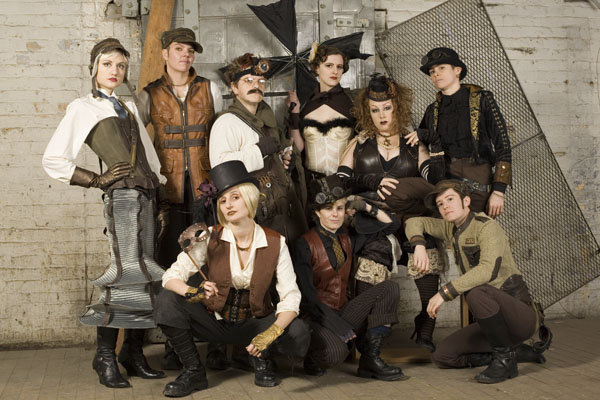
One genre picking up steam these days is steampunk. It's a bunch of fun to write but the genre insists on a certain look and feel to it.

In a nutshell, a steampunk story is generally set in the early industrial period, where steam power is more widely known. Popular settings include Victorian England and the American West, but the story can placed anywhere. I've read stories that take place in Brazil and Egypt. Steampunk adds a second element such as science fiction, speculative fiction, fantasy or paranormal. Also, the majority of steampunk stories are set in alternative/parallel universes.

HG Wells, Jules Verne, and Mary Shelley are considered some of the founding "fathers" of the genre. What I find fascinating is that they would all be considered steampunk contemporaries considering the time period they were writing in.

Dressing up your steampunk characters

Generally, steampunk characters are a bit "grittier" and "earthy." There's an emphasis on form and functionality in the clothes. They've got to give and stretch. Items involving brass, iron, wood, and leather are common in design.

There's no set design in the clothes which can include traditional gowns, corsets, petticoats, vests, cloaks, and boots, however in steampunk, there's always a twist – the gown is made of leather, the vests are black with steel rivets for buttons and the clothing always falls on the earthier side.


Accessories make the man or woman when it comes to steampunk fashion. Expect to find military styled garments and fantastical timepieces made of brass, iron, goggles, and even ray guns. (Transmogrifiers) And let's not forget the steel earrings.

In my novel, "A Gentleman and a Rogue," Lord Ridgecroft embodies the steampunk look:

What made Ridgecroft stand out in a crowd was his manner of dress. He looked like he belonged in a circus poster. Ridgecroft wore leather pants and black boots that came to his mid- calves. He possessed a heavy leather jacket, almost a copper-brown color with thick creases. He was never without his goggles and if he didn't have them on his eyes, giving him a bug-eyed appearance, they hung around his neck like an old friend. The cherry on the top was the stash of cigars he always seemed to be able to hide in the jacket, though Keira never knew where they would fit.

His daughter, Jocelyn, is the apple of his eye:


His daughter, Jocelyn, inherited her fashion sense from her father. Jocelyn was Keira's age, and while Keira had had a more traditional education at Cambridge, Jocelyn received hers from tutors her father approved of. Tonight she wore a dress made of leather that went straight down to her ankles. Her leather jacket accentuated her upper body and her goggles protruded out of the belt that hugged her waist. Keira thought Jocelyn didn't wear a corset simply because she had no idea how it fit. Her thick ebony hair tumbled over her shoulders and down her back. She wore a heavy layer of black mascara -- or was it midnight blue -- on her eyelids, but aside from the makeup around her eyes, her cheeks and lips were not done up. Brass hoop earrings hung from a clip on her ear. Most men avoided her like the plague -- except for Jonas and Jax Ruston. Jax worked with his father at the Ruston's metal works building heavy duty steam-powered equipment and locomotives. The Rustons were well known for their quality.

Steampunk fashion strives for a retro-futuristic look and is only limited by your imagination. As Jocelyn might say: "Accessorizing can be shocking."

Author Bio: Stephanie Burkhart is a 911 Dispatcher for LAPD. Prior to that she spend 11 years in the US Army. Her latest release is "A Gentleman and a Rogue," Book 2 of The Windsor Diaries, her steampunk romance series.


Reviews:

"I was hooked in it and did not want it to end. All of you romantic historical fans don’t miss this one – it is a winner." - 5 Stars, Trudi LoPreto for Reader's Favorites

"It’s the Amazing Race with energy sources in Stephanie Burkhart’s second steampunk." - 5 Stars, Muddy Rose Reviews

PUBLISHER'S BUY LINK: http://stores.desertbreezepublishing.com/-strse-366/The-Windsor-Diaries-Book/Detail.bok

ALL ROMANCE EBOOKS: https://www.allromanceebooks.com/product-thewindsordiariesbookthreeagentlemanandarogue-996194-141.html

BARNES & NOBLE (NOOK) http://www.barnesandnoble.com/w/the-windsor-diaries-book-two-stephanie-burkhart/1113777499?ean=2940015869538

AMAZON (KINDLE:) http://amzn.com/B00A5CF24C

FIND ME ON THE WEB AT:

WEBSITE: http://www.stephanieburkhart.com

TWITTER: http://twitter.com/StephBurkhart

FACEBOOK: https://www.facebook.com/StephanieBurkhartAuthor

GOOD READS: http://www.goodreads.com/author/show/4031660.Stephanie_Burkhart

YOU TUBE CHANNEL: http://www.youtube.com/user/botrina?feature=mhee

PINTEREST: http://pinterest.com/sgburkhart/